
 Aditya Birla Management Corporation
 UPL
 DCM Shriram Industries
 Tata Steel
 JSW Steel
 ITC (Agri Business Division)
 Godrej & Boyce
 Grasim Industries (Century Rayon)
An instant noodles plant makes fried and non-fried noodles with seasoning sachets, packed as retail packs or cups for distributors, modern trade and private label buyers. Entrepreneurs choose it for steady convenience-food demand and the room private label offers to new brands. An experienced instant noodles plant consultant helps you fix capacity, technology and budget before you commit money. NPCS supports you with feasibility work, machinery selection and approvals planning.
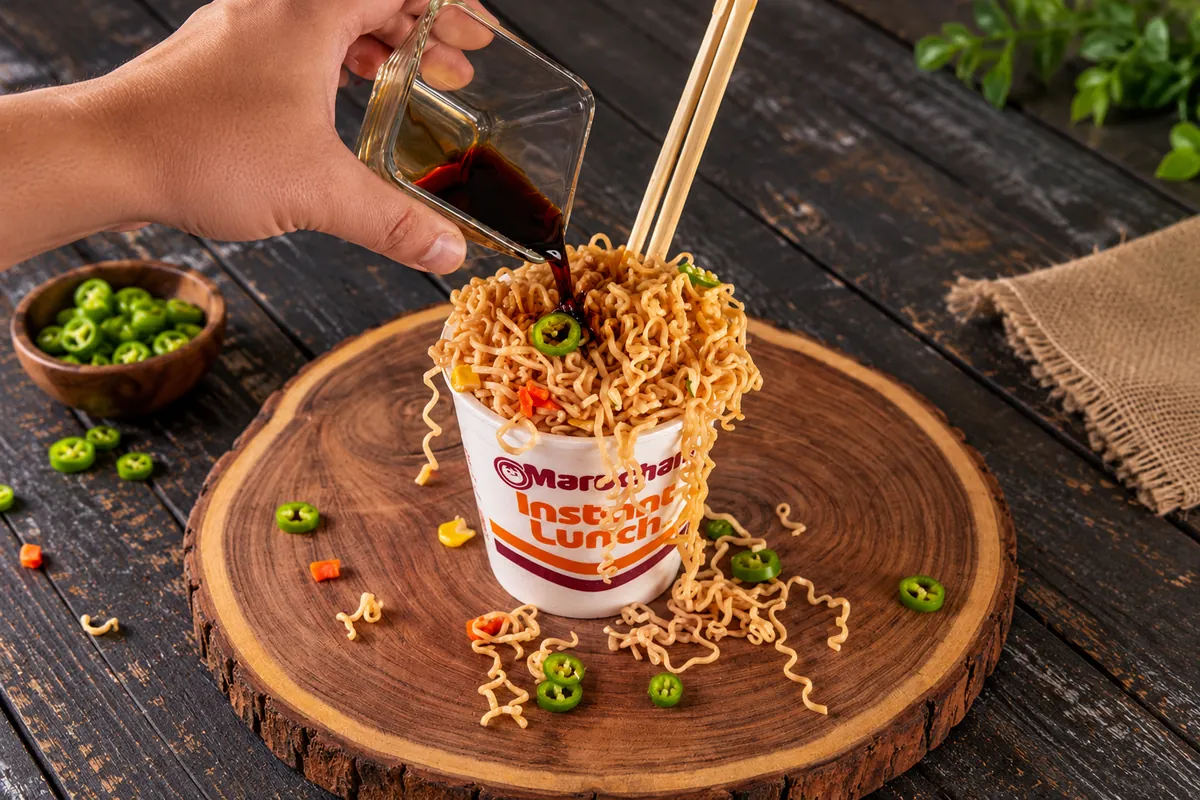
Instant Noodles Plant at a Glance
| Typical capacity | ~1–10 lakh packs per day |
|---|---|
| Land | ~2–6 acres |
| Power load | ~500 kW–2 MW |
| Water | Moderate |
| Manpower | ~50–200 |
| Indicative investment | ~₹15–80 crore |
Investment basis: excludes land.
Figures are indicative ranges. Your project report works them out for your capacity and location.
Market Demand for Instant Noodles in India
Demand for instant noodles in India is driven by convenience foods, urbanisation and the rise of private label. Production is concentrated in Uttarakhand, Haryana, Gujarat, Andhra Pradesh and Karnataka. Seasonality is low, so output can run evenly through the year. Export potential is low to medium, so most new units plan around the domestic market.
- Distributors serving general trade
- Modern trade chains
- Private label brands
- Institutional buyers
Instant Noodles Products You Can Make
Most new units start with fried noodles because the line costs less. Non-fried air-dried noodles suit buyers who want a health positioning. Cup noodles, atta and millet noodles and hakka noodles can follow once your base product sells steadily.
- Fried instant noodles, non-fried (air-dried) noodles, cup noodles, atta and millet noodles, hakka noodles
Instant Noodles Plant Process Explained
The instant noodles plant process turns wheat flour dough into steamed, dried noodle blocks packed with a seasoning sachet. The main choice comes after steaming: frying in palm oil gives the traditional product, while hot-air drying gives the non-fried version. Cup lines add their own filling and packing steps.
Quality is controlled at several points. Teams typically check moisture, oil content, acid value and rehydration time, and follow FSSAI standards for noodles.
- Dough mixing
- Sheeting and compound rolling
- Slitting and waving
- Steaming
- Cutting and folding
- Frying or hot-air drying
- Cooling
- Seasoning sachet insertion
- Packing
Raw Materials and Machinery for Noodle Production
Wheat flour is the main input and is available from flour mills across the country. Palm oil is imported, while spices and seasoning ingredients are sourced domestically. You'll also need starch, salt, kansui, which is an alkaline salt blend that gives noodles their bite, and packaging. The compound roller, steamer, and fryer or dryer decide product quality and output.
- Mixer
- Compound roller
- Slitter
- Steamer
- Cutter
- Fryer or dryer
- Cooler
- Sachet machines
- Packing line
Instant Noodles Plant Licence and Approvals
Start with business registration, then apply for consent to establish from the State Pollution Control Board before construction. Food processing is generally Green below 10 KLD wastewater without a boiler, and Orange with a boiler or 10 KLD or more. An FSSAI Central licence is needed, and consent to operate follows once the plant is ready.
- FSSAI Central licence
- Factory licence
- Legal Metrology registration
- EPR registration for packaging
| Pollution category | Food processing: Green below 10 KLD wastewater without boiler (CPCB S.No. 56.2); Orange with boiler or 10 KLD+ wastewater (56.1) |
|---|---|
| HSN code | 1902 30 (prepared pasta and noodles) |
| GST | 5% under GST 2.0 for pasta and noodles |
| BIS / quality control order | No QCO |
| FSSAI | FSSAI Central licence |
| Other licences | Legal Metrology; EPR for packaging; factory licence |
Choosing Between Fried, Non-Fried and Cup Noodle Lines
Fried lines have lower capex and suit entrepreneurs who want to reach volume quickly at a competitive cost per pack. Non-fried lines cost more but support a health-led position, which can help private label and modern trade buyers. Cup lines serve a separate premium format. Your budget, target buyers and brand plan should decide the route.
Choosing the Right Instant Noodles Plant Size
Plant size is a major cost decision because capacity typically runs from about 1–10 lakh packs per day. Investment spans roughly ₹15–80 crore, excluding land. Land needs and power load rise with scale too. A smaller line lets you test distribution first, while a larger one suits secured private label orders.
Government Schemes and Project Finance for Noodle Units
Two schemes are relevant: PLI for food processing in the ready-to-cook category, and PMFME. NPCS reports are used for bank loans and government programmes such as PMEGP, MSME schemes, Mudra and NABARD-linked projects, subject to each lender's requirements. A well-built project report gives lenders clear costs, margins and repayment assumptions.
What Decides Success in an Instant Noodles Plant
Successful operators get taste, seasoning and cost per pack right, then back them with strong distribution. Broken noodles can be reworked or sold as feed.
- Competition from dominant brands
- Palm oil price movements
- Building distribution before scaling capacity
How NPCS Helps You Set Up an Instant Noodles Plant
NPCS helps with the decisions that shape your plant: capacity, fried or non-fried technology, machinery specifications and vendor selection. Our team also supports plant layout, approvals planning and the financial model that lenders review. Installation and commissioning assistance is available once you move ahead.
NPCS's published client list records 4 assignments on instant noodles projects between 2015 and 2025 for clients in 1 state and 1 country, including bankable project reports and techno-economic feasibility studies.
What Your Instant Noodles Plant Project Report Covers
- Project introduction and BIS specifications
- Manufacturing process with flow sheet
- Market survey (demand, imports/exports, existing units)
- Personnel
- Plant and machinery with suppliers
- Land and building with layout
- Raw materials with sources and rates
- Financials (project cost, working capital, cost of production, profitability, break-even, 5–10 year cash flow, projected balance sheet, IRR/NPV/payback)
Instant Noodles Plant: Frequently Asked Questions
How much investment is needed to start an instant noodles plant?
Investment typically falls in an indicative range of ₹15–80 crore, excluding land. The final figure depends on capacity, fried or non-fried technology and whether you add cup lines. A project report works it out for your plan.
Which licences are needed for an instant noodles plant?
You need an FSSAI Central licence, a factory licence, Legal Metrology registration and EPR for packaging. Pollution category is generally Green below 10 KLD wastewater without a boiler, and Orange otherwise. There is no QCO.
How much land and power does an instant noodles plant need?
Typically about 2–6 acres of land and a power load of roughly 500 kW–2 MW, depending on capacity. Water need is moderate. These are indicative figures, and your layout and line choice will refine them.
How do I start an instant noodles plant business?
Begin by fixing capacity, technology and target buyers, then prepare a project report. Next, secure land, register the business, obtain consent to establish and the FSSAI licence, and order machinery. NPCS can guide each of these steps.
How can NPCS help with my instant noodles project?
NPCS prepares detailed and bankable project reports, feasibility studies and market research. Our team also guides machinery selection, vendor choice, plant layout and commissioning. Share your capacity and location, and we'll outline costs and approvals for your project.