
 ITC (Agri Business Division)
 Thermax (Chemical Division)
 SRF
 DCM Shriram Industries
 Deepak Nitrite
 Gujarat Ambuja Exports
Hospitals, steel fabricators and beverage makers all depend on a steady supply of oxygen, nitrogen, argon and carbon dioxide, and that demand is why entrepreneurs set up gas plants. An industrial gas plant consultant helps you decide whether to fill cylinders from bulk liquid, install on-site PSA skids or build a cryogenic air separation unit. Our team prepares the project report, shortlists machinery and maps the PESO and pollution approvals before you commit capital.
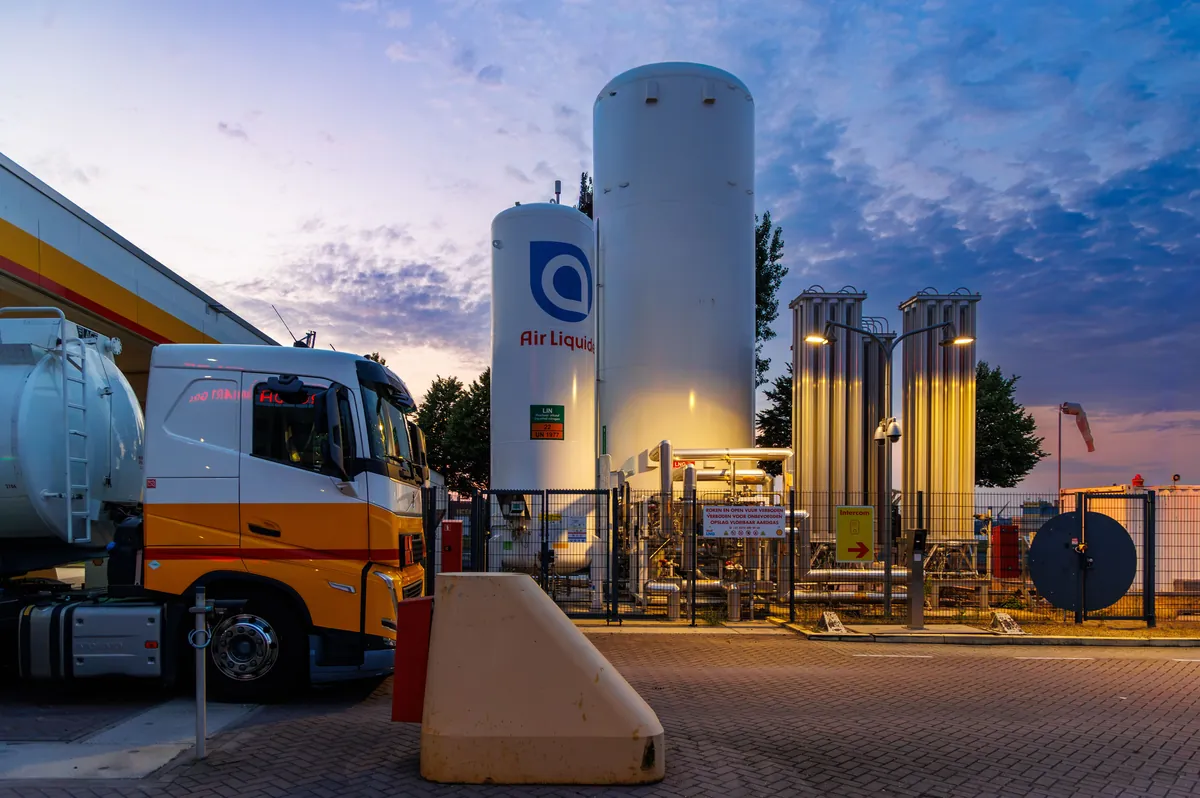
Industrial Gas Plant at a Glance
| Typical capacity | Filling station: 100–1,000 cylinders/day; PSA: 10–200 Nm3/hr; cryogenic ASU: 50–500+ TPD |
|---|---|
| Land | ~0.5–5 acres |
| Power load | High for ASU (power-intensive); low for filling stations |
| Water | Moderate, cooling |
| Manpower | ~10–80 |
| Indicative investment | ~₹50 lakh–₹2 crore (filling station) to ₹50–300 crore (cryogenic ASU) |
Investment basis: wide range because filling stations and ASUs are different businesses; excludes land.
Figures are indicative ranges. Your project report works them out for your capacity and location.
Market Demand for Industrial Gas Plants in India
Demand for industrial gases comes mainly from healthcare, manufacturing and infrastructure, and food processing. Every state has industrial belts, but cylinder logistics limit how far a plant can serve, so most units sell within a regional radius. Export potential is low and seasonality is low, which makes local contracts the core of the business.
- Fabricators and steel units buying oxygen for cutting and welding
- Hospitals needing medical oxygen
- Food and beverage makers using CO2
- Pharma and chemical plants using nitrogen blanketing
- Laboratories and electronics users
Industrial Gas Products You Can Make
Most new units begin with industrial oxygen or nitrogen for nearby fabricators, then add medical oxygen once the drug manufacturing licence is in place. CO2 suits plants close to distilleries or breweries, and dry ice or welding mixtures can follow as the customer base grows.
- Industrial oxygen
- Medical oxygen
- Nitrogen (gas/liquid)
- Argon
- Liquid and food-grade CO2
- Dry ice
- Welding gas mixtures
Industrial Gas Plant Process and Technology
The industrial gas plant process depends on the route you pick. In a cryogenic unit, air is compressed, purified and cooled, then separated by distillation into liquid products that are stored and vaporised for filling. PSA units skip liquefaction and draw gas through zeolite or carbon molecular sieve beds. CO2 plants capture, scrub, dry and liquefy off-gas. Quality control centres on purity, moisture and, for medical oxygen, the Indian Pharmacopoeia standard. Industrial oxygen is typically checked at 99.5%+ purity, and food-grade CO2 must meet its own specifications.
- ASU: air compression
- Purification
- Cooling
- Cryogenic distillation
- Liquid storage
- Vaporisation and cylinder filling. PSA: adsorption on zeolite/carbon molecular sieve
- Product gas. CO2: capture
- Scrubbing
- Compression
- Drying
- Liquefaction
- Storage. Filling station: liquid
- Vaporiser
- Manifold filling
Raw Materials and Machinery for an Industrial Gas Plant
Power is the main input for air separation, while CO2 units depend on off-gas from distilleries, breweries or fertiliser plants. Filling stations buy bulk liquid gas and need a healthy cylinder fleet. The machines that matter most are the air compressors, cold box and cryogenic tanks for an ASU, PSA skids for on-site gas, and vaporisers with filling manifolds.
- Air compressors
- Purifiers
- Cold box
- Expansion turbine
- Cryogenic tanks
- Vaporisers
- Filling manifolds
- Cylinders
- PSA skids
- CO2 recovery and liquefaction plant
Industrial Gas Plant Licence and Approvals
Start with business registration and the pollution category check, then apply for consent to establish before construction. PESO licences for cylinder filling, storage and cryogenic vessels come next, along with a factory licence. Medical oxygen also needs a drug manufacturing licence. Consent to operate follows once the plant is ready. Cylinders must be BIS-marked and PESO-approved, and the State Pollution Control Board decides the category of large air separation units.
| Pollution category | Compressed oxygen from crude liquid oxygen (separation only): White (CPCB S.No. 71); medical oxygen: White (74); CO2 recovery: Green (37); large cryogenic air separation units are categorised by the State PCB on cooling-water and DG-set use, generally Green |
|---|---|
| HSN code | 2804 (oxygen, nitrogen, argon); 2811 21 (carbon dioxide) |
| GST | Industrial gases: 18%; medical-grade oxygen: 5% (from 12%) w.e.f. 22-09-2025 |
| BIS / quality control order | No QCO on gases; cylinders must be BIS-marked and PESO-approved |
| FSSAI | Food-grade CO2 used in beverages must meet FSSAI additive specifications |
| Other licences | PESO licences under the Gas Cylinders Rules, 2016 (filling, storage) and SMPV(U) Rules (cryogenic vessels); drug manufacturing licence for medical oxygen; factory licence |
Choosing the Right Industrial Gas Technology
Cylinder filling stations carry the lowest capex and suit first-time entrants who can buy bulk liquid gas. PSA or VPSA units make sense when a hospital or factory wants on-site gas and a long contract. Cryogenic air separation is for investors targeting liquid products at scale, with power cost and safety compliance shaping the economics. Your project report should compare all three against your budget and customer base.
Choosing the Right Industrial Gas Plant Size
Capacity in this business spans a very wide range, from 100–1,000 cylinders per day at a filling station to 50–500+ TPD for a cryogenic ASU. Investment moves with it, from roughly ₹50 lakh–₹2 crore to ₹50–300 crore, excluding land. Small units depend on cylinder logistics and local contracts. Large units depend on power tariffs and anchor customers, so size should follow secured demand.
Government Schemes and Project Finance for Industrial Gas Plants
Some states offer incentives for medical-oxygen self-reliance, mainly for PSA plants, and state industrial policies may apply to other units. NPCS reports are used for bank loans and programmes such as PMEGP, MSME schemes, Mudra and NABARD-linked projects, subject to each lender's requirements. A bankable report with clear financials helps lenders assess your proposal.
What Decides Success in an Industrial Gas Plant
Operators who do well control power cost, run a reliable cylinder fleet and sign long-term supply contracts. A clean safety record also matters. The main risks are competition from multinational gas majors, high power bills and strict safety regulation.
- Negotiate power tariffs early
- Plan cylinder fleet and delivery routes
- Secure supply contracts before commissioning
- Sell waste nitrogen or argon where large ASUs allow
How NPCS Helps You Set Up an Industrial Gas Plant
Our team works through the decisions that shape this project: technology route, capacity, machinery and vendors, plant layout and approvals. We prepare the industrial gas plant project report with financials that lenders can read, and assist with installation and commissioning. Everything you share stays confidential.
NPCS's published client list records 11 assignments on industrial and medical gas projects between 2009 and 2025 for clients in 6 states and 1 country, including detailed project reports, bankable project reports and techno-economic feasibility studies.
What Your Industrial Gas Plant Project Report Covers
- Project introduction and BIS specifications
- Manufacturing process with flow sheet
- Market survey (demand, imports/exports, existing units)
- Personnel
- Plant and machinery with suppliers
- Land and building with layout
- Raw materials with sources and rates
- Financials (project cost, working capital, cost of production, profitability, break-even, 5–10 year cash flow, projected balance sheet, IRR/NPV/payback)
Industrial Gas Plant: Frequently Asked Questions
How much does industrial gas plant setup cost in India?
Costs depend on the route. A filling station is indicatively ₹50 lakh–₹2 crore, while a cryogenic ASU is ₹50–300 crore. These figures exclude land. Your project report works out the cost for your capacity and location.
Which licences are needed for an industrial gas plant?
You need PESO licences under the Gas Cylinders Rules, 2016 and SMPV(U) Rules, a factory licence and pollution board consents. Medical oxygen also needs a drug manufacturing licence. Cylinders must be BIS-marked and PESO-approved.
What is the pollution category of an industrial gas plant?
Oxygen separation from crude liquid oxygen and medical oxygen are White, and CO2 recovery is Green. Large cryogenic units are categorised by the State Pollution Control Board on cooling-water and DG-set use, generally Green.
How much land and power does an industrial gas plant need?
Land is typically about 0.5–5 acres. Power load is high for an air separation unit and low for a filling station. Water need is moderate, mainly for cooling. Exact figures depend on your chosen capacity.
How does NPCS help me start an industrial gas plant business?
We prepare a detailed project report, compare technology routes, select machinery and map approvals. Share your planned capacity and location, and our team will outline the project cost and the steps to begin.