
 ITC (Agri Business Division)
 Thermax (Chemical Division)
 SRF
 DCM Shriram Industries
 Deepak Nitrite
 Gujarat Ambuja Exports
India imports most of its hydrazine, so a domestic hydrazine hydrate plant serves a real supply gap. Manufacturers, chemical groups and investors set up these units to supply agrochemical makers, pharma intermediate producers, ADC blowing agent makers and power plants. A hydrazine hydrate plant consultant helps you pick the right route, estimate capex and line up hazardous chemical approvals before you commit money. NPCS has supported chemical projects since 1994.
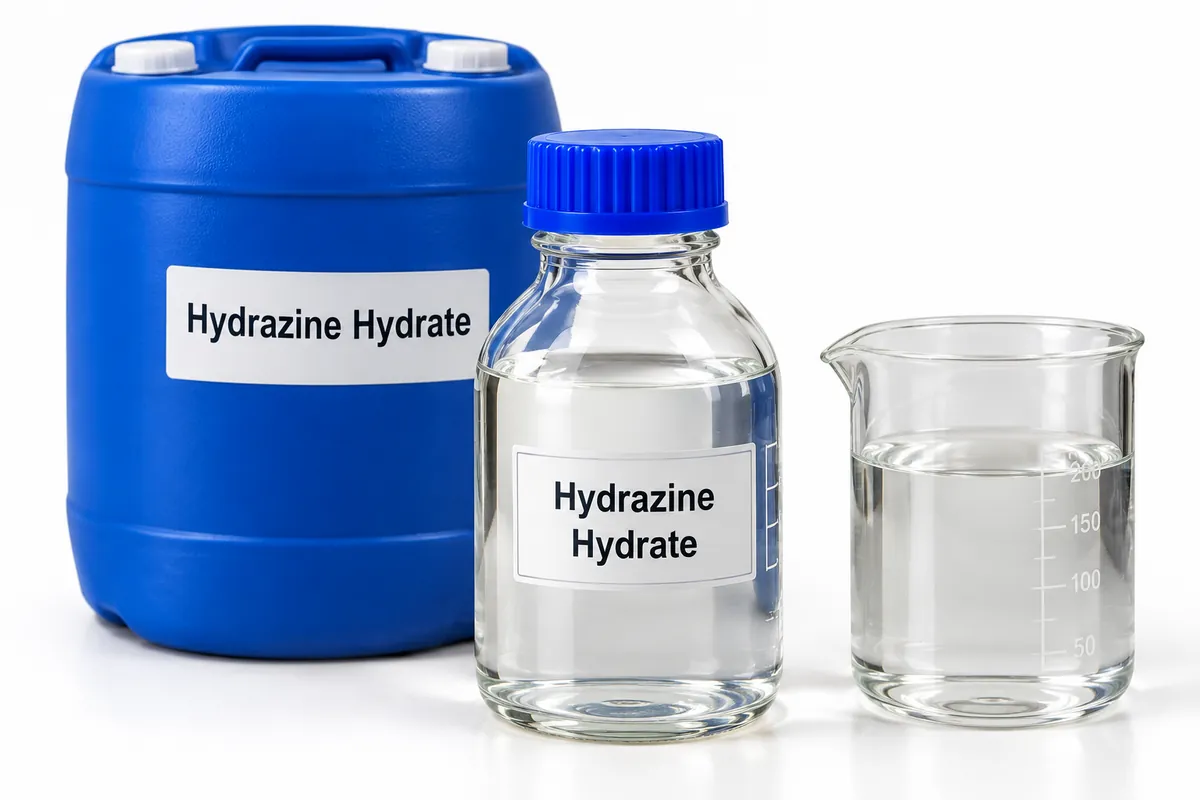
Hydrazine Hydrate Plant at a Glance
| Typical capacity | ~2,000–20,000 TPA |
|---|---|
| Land | ~5–15 acres |
| Power load | ~1–3 MW |
| Water | Moderate |
| Manpower | ~40–100 |
| Indicative investment | ~₹50–250 crore |
Investment basis: excludes land.
Figures are indicative ranges. Your project report works them out for your capacity and location.
Market Demand for Hydrazine Hydrate in India
Demand rests mainly on import substitution, because India imports most of the hydrazine it consumes. Buyers use it as a building block and as an oxygen scavenger, so demand is steady rather than seasonal. Gujarat and Maharashtra are the main clusters, close to agrochemical and pharma customers. Export potential is low, so plan around the domestic market.
- Agrochemical manufacturers using it as an intermediate
- Pharma intermediate producers
- ADC producers making blowing agents
- Power plants using it for boiler oxygen scavenging
Hydrazine Hydrate Grades You Can Make
Most plants sell hydrazine hydrate in concentrations from 40% to 100%, along with hydrazine derivatives. Lower strengths usually suit boiler water treatment, while higher strengths go to agrochemical, pharma and blowing agent buyers. Your buyer list should decide which grades you build for first.
- Hydrazine hydrate 40%, 64%, 80%, 100%
- Hydrazine derivatives
Hydrazine Hydrate Plant Process
The hydrazine hydrate plant process starts with ketazine formation and ends with concentrated product held in stainless steel storage. Two routes are common: the peroxide-ketazine route, which creates less salt waste, and the hypochlorite route. Your choice affects effluent load, capex and the technology licence you need.
Quality control sits mainly at the distillation and concentration stage. Finished product is tested for assay, chlorides and metals before dispatch, since pharma and agrochemical buyers set tight impurity limits.
- Ketazine formation
- Hydrolysis
- Distillation and concentration
- Storage in stainless steel
Raw Materials and Machinery for a Hydrazine Hydrate Plant
Ammonia, sodium hypochlorite or hydrogen peroxide, and acetone or MEK are the main inputs. Ammonia and peroxide are available domestically, which keeps supply straightforward. Reactors, distillation columns and scrubbers matter most, because they decide yield, purity and how safely toxic vapours are handled.
- Reactors
- Distillation columns
- Concentration units
- Scrubbers
- SS storage
Hydrazine Hydrate Plant Licence and Approvals
Hydrazine hydrate synthesis falls in the Red pollution category, so approvals need early planning. Start with company registration, then apply for consent to establish from the State Pollution Control Board before construction. Environmental Clearance may apply depending on the project. Consent to operate follows once the plant is built.
- MSIHC compliance, since hydrazine is a hazardous chemical
- PESO approval for storage and handling
- Environmental Clearance where applicable
- No QCO applies to this product
| Pollution category | Hazardous chemical synthesis: Red; Environmental Clearance may apply |
|---|---|
| HSN code | 2825 10 (hydrazine and its salts) |
| GST | 18% |
| BIS / quality control order | No QCO |
| Other licences | MSIHC compliance (hydrazine is a hazardous chemical); PESO; Environmental Clearance where applicable |
Choosing the Right Hydrazine Hydrate Technology
The peroxide-ketazine route produces less salt waste, which eases effluent treatment in a Red category plant. The hypochlorite route is an alternative, but it generates more salt effluent. Technology licensing is a key success factor here, so compare licensors on yield, safety record and support before you finalise the plant design.
Choosing the Right Hydrazine Hydrate Plant Size
Capacity typically ranges from about 2,000 to 20,000 TPA, with investment from about ₹50–250 crore excluding land. A smaller unit limits capex but may struggle on cost per tonne. A larger one needs a secured buyer base and more land and power. Size the plant against confirmed offtake from your target customers.
Government Schemes and Project Finance for Hydrazine Hydrate
Chemical park incentives and import substitution policy support projects of this type. Because capex is high, lenders look closely at the report. NPCS reports are used for bank loans and government programmes, subject to each lender's requirements, and a bankable hydrazine hydrate plant project report sets out costs, cash flow and payback clearly.
What Decides Success in a Hydrazine Hydrate Plant
Operators who do well treat process safety and technology access as the base of the business. The main risks are toxicity, heavy capex and salt effluent disposal.
- Secure a proven technology licence early
- Design scrubbers and storage for toxic material
- Plan salt effluent treatment from the start
- Confirm buyers before committing capex
How NPCS Helps You Set Up a Hydrazine Hydrate Plant
Our team supports the decisions that matter most in this project: route selection, capacity, machinery specifications and vendor choice. We also guide plant layout, approvals planning and the financial model lenders will review. Reports are tailored to your capacity, budget and location, so the numbers reflect your plan.
NPCS's published client list records 164 assignments across chemicals and petrochemicals projects between 2009 and 2026, for clients in 20 states and 23 countries.
What Your Hydrazine Hydrate Plant Project Report Covers
- Project introduction and BIS specifications
- Manufacturing process with flow sheet
- Market survey (demand, imports/exports, existing units)
- Personnel
- Plant and machinery with suppliers
- Land and building with layout
- Raw materials with sources and rates
- Financials (project cost, working capital, cost of production, profitability, break-even, 5–10 year cash flow, projected balance sheet, IRR/NPV/payback)
Hydrazine Hydrate Plant: Frequently Asked Questions
How much does hydrazine hydrate plant setup cost in India?
Investment typically falls in an indicative range of about ₹50–250 crore, excluding land. The final figure depends on capacity, technology route and safety systems. A project report works out the cost for your capacity and location.
Which licences and pollution category apply to a hydrazine hydrate plant?
Hazardous chemical synthesis falls in the Red category, and Environmental Clearance may apply. You'll also need MSIHC compliance and PESO approval. Consent to establish from the State Pollution Control Board is needed before construction begins.
How much land and power does a hydrazine hydrate plant need?
Plants typically need about 5–15 acres and a power load of about 1–3 MW, depending on capacity. Water requirement is moderate. Exact figures depend on your chosen route and scale, so confirm them in the project report.
How do I start a hydrazine hydrate plant business?
Begin with a feasibility study covering demand, technology route and capacity. Then secure a technology licence, land in a chemical cluster such as Gujarat or Maharashtra, and hazardous chemical approvals. Finance and machinery orders follow once the report is ready.
How can NPCS help with my hydrazine hydrate project?
NPCS prepares the detailed project report, helps compare technology routes, and guides machinery selection and approvals planning. Our team also supports vendor selection and plant layout. Share your planned capacity and location to begin.