
 ITC (Agri Business Division)
 Aditya Birla Management Corporation
 UPL
 Gujarat Ambuja Exports
 Tata Steel
 JSW Steel
 Godrej & Boyce
 Grasim Industries (Century Rayon)
Ayurvedic makers, nutraceutical brands, cosmetic companies and exporters all buy processed herbs, and entrepreneurs set up units to supply them with cleaned herbs, powders and extracts. A medicinal and herbal plant processing consultant helps you decide how far up the value chain to go, which machines to buy and which approvals apply. NPCS has supported project planning since 1994, and our team prepares reports built around your capacity, location and product mix.
Medicinal and Herbal Plant Processing at a Glance
| Typical capacity | ~1–20 TPD herbs |
|---|---|
| Land | ~0.5–3 acres |
| Power load | ~50–500 kW |
| Water | Moderate |
| Manpower | ~10–60 |
| Indicative investment | ~₹50 lakh–₹20 crore |
Investment basis: extraction lines raise cost; excludes land.
Figures are indicative ranges. Your project report works them out for your capacity and location.
Market Demand for Medicinal and Herbal Plant Processing in India
Demand for processed herbs is driven by global herbal demand and the growth of AYUSH. Buyers want consistent quality, so units that supply standardised material tend to find steadier orders than those selling only raw herbs. Export potential is high, which adds another route for well-documented products.
Sourcing and processing activity is concentrated in Madhya Pradesh, Uttarakhand, Gujarat and Kerala. Your main buyers will usually be:
- Ayurvedic and herbal medicine makers
- Nutraceutical companies
- Cosmetic brands
- Exporters of herbs and extracts
Medicinal and Herbal Products You Can Make
Most new units start with cleaned herbs and powders, which need simpler equipment. Extract buyers, such as nutraceutical brands, often ask for standardised extracts defined by a marker compound. Herbal teas can add a retail-facing line once your quality systems are stable.
- Cleaned and graded herbs, herb powders, dry and soft extracts, standardised extracts (by marker compound), herbal teas
Medicinal and Herbal Plant Processing Process
Processing begins with cleaning, sorting and drying, then moves to size reduction for powders. For extracts, the herb goes through water or hydro-alcoholic extraction, followed by filtration, concentration and spray or vacuum drying. Standardisation and packing come last.
Quality control runs through the whole flow. Typical checks include identity by TLC or HPTLC, marker compounds, heavy metals, microbial limits and pesticide residues, measured against Ayurvedic Pharmacopoeia standards. Testing incoming herbs matters as much as testing the finished extract.
- Cleaning and sorting
- Drying
- Size reduction
- Extraction (water or hydro-alcoholic)
- Filtration
- Concentration
- Spray or vacuum drying
- Standardisation
- Packing
Raw Materials and Machinery for Herbal Processing
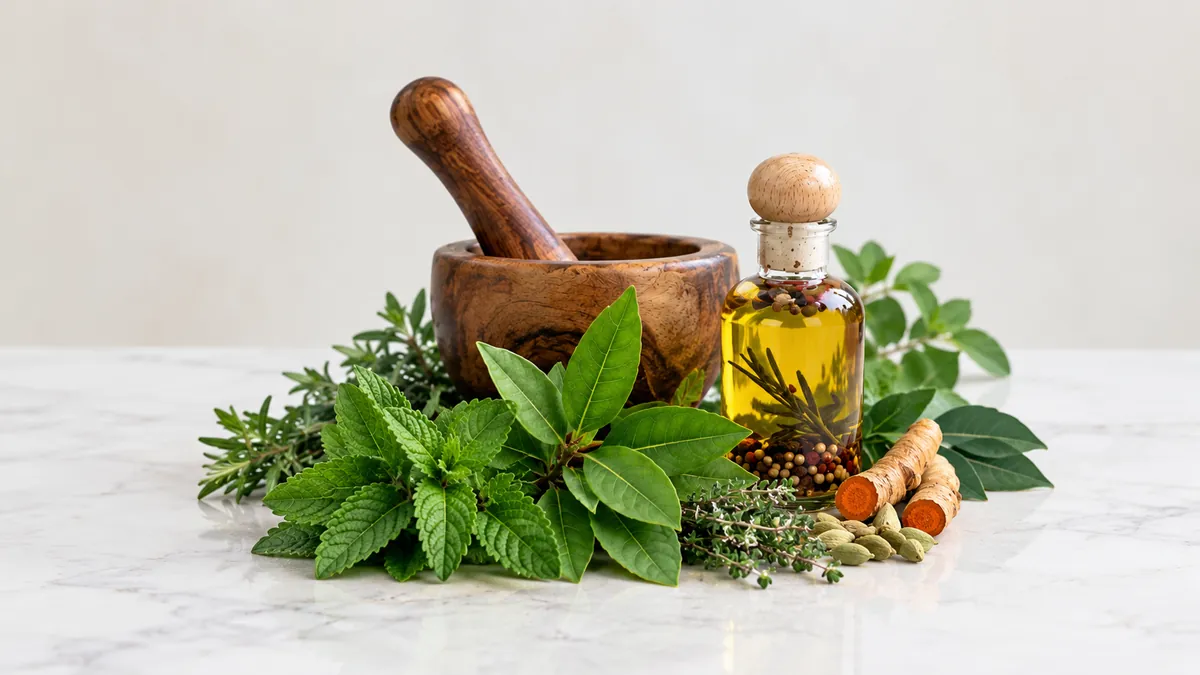
Your inputs are cultivated or wild-collected herbs such as tulsi, giloy, amla, shatavari and brahmi, plus solvents like water and ethanol. Herbs come mainly from Madhya Pradesh, Uttarakhand, Rajasthan, Gujarat, Kerala and Himachal Pradesh. The pulveriser and sifter matter for powders, while extractors, an evaporator and a spray dryer define an extraction line.
- Washer
- Dryers
- Pulveriser
- Sifter
- Extractors
- Filter press
- Evaporator
- Spray dryer
- Blender
Medicinal and Herbal Plant Processing Licence and Approvals
Start with business registration, then apply for consent to establish from the State Pollution Control Board before construction. Powdering is generally Green, while extraction with solvents and a boiler is generally Orange. No QCO applies. The product licences below depend on what you sell.
- AYUSH manufacturing licence for ayurvedic products
- GMP under Schedule T
- FSSAI licence for food and nutraceutical uses
- NMPB-linked registration for exports of certain plants
| Pollution category | Powdering is generally Green; extraction with solvents and boiler is generally Orange |
|---|---|
| HSN code | 1211 (plants used in pharmacy), 1302 (extracts) |
| GST | Classification-dependent by form; applied in the project financials |
| BIS / quality control order | No QCO |
| FSSAI | FSSAI licence for food and nutraceutical uses |
| Other licences | AYUSH manufacturing licence for ayurvedic products; GMP under Schedule T; NMPB-linked registration for exports of certain plants |
Choosing Between Powder Units and Extraction Plants
A powder-only unit is the lighter route, with lower cost, simpler approvals and a Green category in most cases. An extraction plant with solvent recovery costs more and generally falls in Orange, but it serves nutraceutical and export buyers who pay for standardised extracts. Many promoters begin with powders and add extraction once buyers are secured.
Securing Authentic Herb Supply
Harvest seasons vary by herb, so supply planning decides whether your plant runs steadily. Contracting with growers or collectors in the sourcing states helps, and so does storing dried stock. Adulteration risk and raw material traceability are the main concerns, so record the origin of each lot and test it on arrival.
Government Schemes and Project Finance
National Medicinal Plants Board schemes, the National AYUSH Mission and PMFME may be relevant, depending on your product and unit size. NPCS reports are used for bank loans and government programmes such as PMEGP, MSME schemes, Mudra and NABARD-linked projects, subject to each lender's requirements.
What Decides Success in Medicinal and Herbal Plant Processing
Successful operators get three things right. Plan for the risks too, as listed after them.
- Authentic sourcing of herbs
- Marker standardisation of extracts
- Certifications buyers expect
- Adulteration risk in bought-in herbs
- Raw material traceability
- Spent herb, which can be sold as compost or fuel
How NPCS Helps You Set Up a Medicinal and Herbal Plant Processing Unit
Our team supports the decisions that shape your unit: capacity, powder or extraction route, machinery selection and technical specifications, vendor selection and plant layout. We also guide the production process and assist with installation and commissioning. Your medicinal and herbal plant processing project report is tailored to your budget, location and raw material availability.
NPCS's published client list records 10 assignments on medicinal and herbal plant processing projects between 2012 and 2025 for clients in 8 states, including detailed project reports, bankable project reports and techno-economic feasibility studies.
What Your Medicinal and Herbal Plant Processing Project Report Covers
- Project introduction and BIS specifications
- Manufacturing process with flow sheet
- Market survey (demand, imports/exports, existing units)
- Personnel
- Plant and machinery with suppliers
- Land and building with layout
- Raw materials with sources and rates
- Financials (project cost, working capital, cost of production, profitability, break-even, 5–10 year cash flow, projected balance sheet, IRR/NPV/payback)
Medicinal and Herbal Plant Processing: Frequently Asked Questions
How much investment is needed to start a medicinal and herbal plant processing unit?
Investment is indicatively ₹50 lakh–₹20 crore, excluding land. Extraction lines raise the cost compared with powder-only units. Your project report works out the figure for your capacity, technology and location.
Which licences and pollution category apply to herbal plant processing?
Powdering is generally Green, while extraction with solvents and a boiler is generally Orange. Depending on your products, you may need an AYUSH manufacturing licence, GMP under Schedule T and an FSSAI licence for food and nutraceutical uses.
How much land and power does a herbal processing unit need?
Typically about 0.5–3 acres of land and a power load of roughly 50–500 kW, depending on capacity, which is indicatively about 1–20 TPD of herbs. Water requirement is moderate. Extraction lines sit at the higher end.
How do I start a medicinal and herbal plant processing business?
Choose your products and route, either powders or extracts. Then fix capacity and location, secure herb supply, register the business and obtain consent to establish before construction. Product licences and consent to operate follow, once the plant is ready.
How does NPCS help with a herbal plant processing project?
NPCS prepares detailed project reports, bankable reports and feasibility studies, and guides machinery selection, vendor selection and plant layout. Share your planned capacity and location, and our team will outline the approvals and project cost.