
 Tata Steel
 JSW Steel
 ITC (Agri Business Division)
 Godrej & Boyce
 Aditya Birla Management Corporation
 Grasim Industries (Century Rayon)
 Thermax (Chemical Division)
 UPL
Refineries, fertiliser makers and steel producers are the main buyers of hydrogen made by electrolysing water with solar or wind power. A green hydrogen plant consultant helps you decide the capacity, electrolyser type and power arrangement before money is committed. Entrepreneurs and investors choose this project for decarbonisation demand and mission incentives. NPCS supports you with feasibility studies, a bankable project report and technical guidance on setting up the plant.
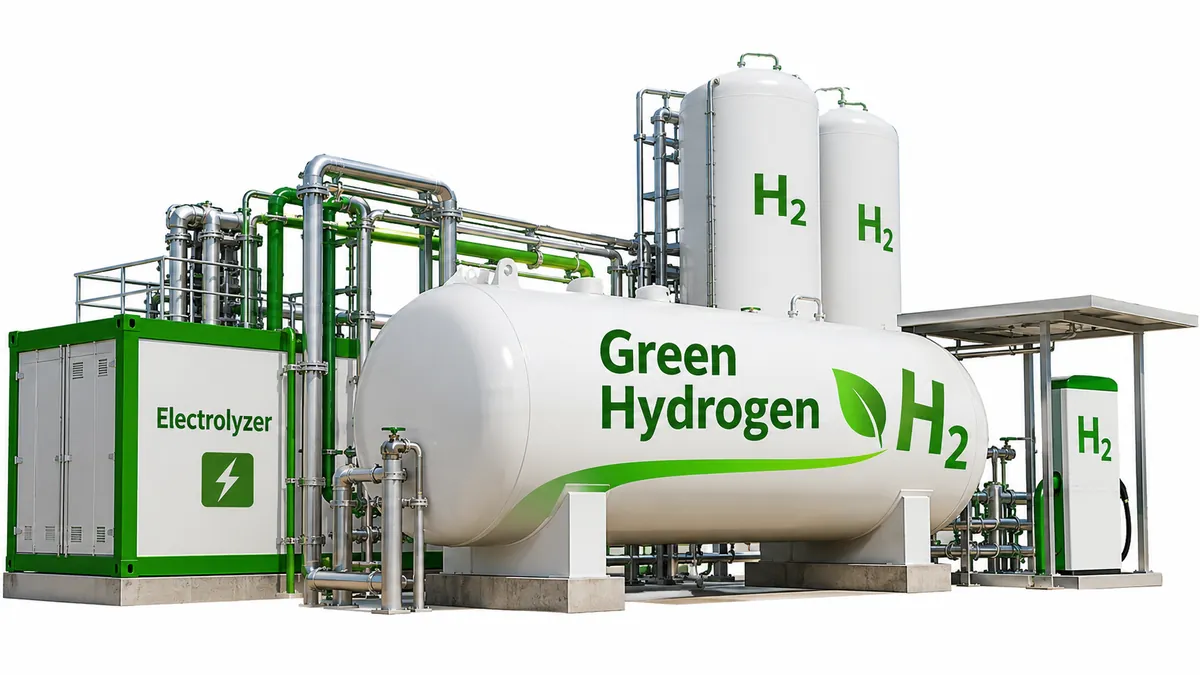
Green Hydrogen Plant at a Glance
| Typical capacity | ~1–100 MW electrolyser |
|---|---|
| Land | ~2–20 acres (plus renewable plant) |
| Power load | About 50–55 kWh per kg of hydrogen |
| Water | About 9–15 litres per kg of hydrogen plus treatment losses |
| Manpower | ~20–100 |
| Indicative investment | ~₹40–60 crore per MW of electrolyser, plus renewable capacity (indicative) |
Investment basis: costs are falling; excludes land.
Figures are indicative ranges. Your project report works them out for your capacity and location.
Market Demand for Green Hydrogen in India
Demand for green hydrogen in India comes mainly from industries that already use hydrogen and now face decarbonisation targets. Mission incentives add to the push. Export potential is medium, mostly through green ammonia. Projects are concentrated in Gujarat (Kutch), Rajasthan, Tamil Nadu, Odisha and Andhra Pradesh, where solar and wind power are strong.
- Refineries and fertiliser plants replacing existing hydrogen supply
- Steel makers using hydrogen in direct reduced iron (DRI)
- City gas and mobility pilots
- Glass and chemical producers
Green Hydrogen Products You Can Offer
You can sell compressed green hydrogen, convert it into green ammonia downstream, or run an electrolyser-based captive unit. Captive hydrogen suits a single industrial user. Compressed supply suits several smaller buyers, while green ammonia opens the medium export route.
- Green hydrogen (compressed), green ammonia (downstream), electrolyser-based captive hydrogen
Green Hydrogen Plant Process
The green hydrogen plant process starts with treating water, then splits it into hydrogen and oxygen in an electrolyser. The gas is purified, dried, compressed and sent to storage or a pipeline. Alkaline and PEM electrolysers are the two technology options, and the choice affects cost, flexibility and how well the plant follows variable renewable power.
Quality control centres on hydrogen purity. Your product must also meet the Green Hydrogen Standard for India, which sets an emissions threshold per kg of hydrogen. Storage and banking of renewable power should be planned alongside the electrolyser.
- Water treatment
- Electrolysis (alkaline or PEM)
- Gas purification and drying
- Compression
- Storage or pipeline supply
Raw Materials and Machinery
Your two inputs are renewable power and demineralised water. Power is the larger cost, so sourcing from solar and wind-rich states matters most. The key machines are electrolyser stacks, rectifiers and transformers, purifiers, compressors and storage. Our team helps compare suppliers and specifications for your capacity.
- Electrolyser stacks
- Rectifiers and transformers
- Water treatment
- Purifiers
- Compressors
- Storage
Licences and Approvals for a Green Hydrogen Plant
Green hydrogen plant licence and approvals follow a clear order. Register the business first, then obtain consent to establish from the State Pollution Control Board before construction. Electrolysis plants are generally Green or White category. Hydrogen storage and compression need PESO approval, and renewable power needs open-access and banking approvals. Consent to operate follows once the plant is built.
| Pollution category | Electrolysis plants are generally Green or White; hydrogen storage needs PESO approval |
|---|---|
| HSN code | 2804 10 (hydrogen) |
| GST | 18% on hydrogen; electrolysers follow their own entry |
| BIS / quality control order | No QCO |
| Other licences | PESO approval for hydrogen storage and compression; open-access and banking approvals for renewable power |
Choosing the Right Green Hydrogen Plant Size
Plant size runs from about 1 MW to 100 MW of electrolyser capacity, so the decision shapes everything else. A small unit suits a pilot or a single captive user, and land needs stay near the low end. A larger plant needs more acres, more manpower and firm offtake contracts. Indicatively, investment is about ₹40–60 crore per MW, plus renewable capacity, so many promoters start modestly and expand once supply contracts are secure.
Securing Renewable Power for Your Green Hydrogen Plant
Power drives the economics because the plant needs about 50–55 kWh per kg of hydrogen. Renewable output varies, so round-the-clock supply usually needs banking, storage or a hybrid of solar and wind. Open-access approvals decide whether you can draw power from a distant project. Locating in a solar or wind-rich state reduces dependence on long transmission.
Government Schemes and Project Finance
The National Green Hydrogen Mission offers SIGHT incentives for electrolysers and hydrogen production, and inter-state transmission charges are waived as notified. A well-prepared green hydrogen plant project report supports applications to lenders and programmes such as MSME schemes and NABARD-linked projects, subject to each lender's requirements.
What Decides Success in a Green Hydrogen Plant
Successful operators secure cheap, round-the-clock renewable power and sign offtake contracts before building. The main risk is cost against grey hydrogen, so plan for it early.
- Firm offtake with refineries, fertiliser or steel buyers
- Power banking to handle renewable variability
- Oxygen sales as a saleable by-product
- Careful technology choice between alkaline and PEM
How NPCS Helps You Set Up a Green Hydrogen Plant
Our team works through the decisions that matter most: capacity, electrolyser technology, machinery selection, vendor choice and plant layout. We also guide approvals, finance planning and installation support. Your project report is tailored to your location, power arrangement and market, so the numbers reflect your plan.
NPCS's published client list records 3 assignments on green hydrogen projects between 2023 and 2026 for clients in 3 states, including techno-economic feasibility studies.
What Your Green Hydrogen Plant Project Report Covers
- Project introduction and BIS specifications
- Manufacturing process with flow sheet
- Market survey (demand, imports/exports, existing units)
- Personnel
- Plant and machinery with suppliers
- Land and building with layout
- Raw materials with sources and rates
- Financials (project cost, working capital, cost of production, profitability, break-even, 5–10 year cash flow, projected balance sheet, IRR/NPV/payback)
Green Hydrogen Plant: Frequently Asked Questions
How much does a green hydrogen plant cost in India?
Investment is indicatively about ₹40–60 crore per MW of electrolyser, plus renewable capacity. Costs are falling and exclude land. Your final figure depends on capacity, technology and power source, which a project report works out for your location.
Which licences and pollution category apply to a green hydrogen plant?
Electrolysis plants are generally Green or White category. Hydrogen storage and compression need PESO approval, and renewable power needs open-access and banking approvals. Consent to establish comes before construction.
How much land and power does a green hydrogen plant need?
Land is typically about 2–20 acres, plus the renewable plant. Power use is about 50–55 kWh per kg of hydrogen. Water need is about 9–15 litres per kg, plus treatment losses, depending on capacity.
How do I start a green hydrogen plant business?
Begin with a feasibility study covering capacity, electrolyser type, power source and buyers. Then secure offtake interest, register the business, obtain approvals and finalise machinery. Starting with a project report keeps these steps in order.
How can NPCS help with my green hydrogen project?
NPCS prepares feasibility studies and bankable project reports, and guides machinery selection, vendor choice, approvals and layout. Share your planned capacity and location, and our team will outline the project in line with your requirements.