
 ITC (Agri Business Division)
 Thermax (Chemical Division)
 SRF
 DCM Shriram Industries
 Deepak Nitrite
 Gujarat Ambuja Exports
Bakeries, ice cream makers, cosmetic firms and plastic processors all buy glycerol monostearate, which makes it a steady chemical project for MSME and industrial investors. A glycerol monostearate plant consultant helps you decide the grade, capacity and technology before money is committed. Our team at NPCS works through esterification of glycerine with stearic acid, food approvals and plant economics, so your plan is ready for lenders and for the factory floor.
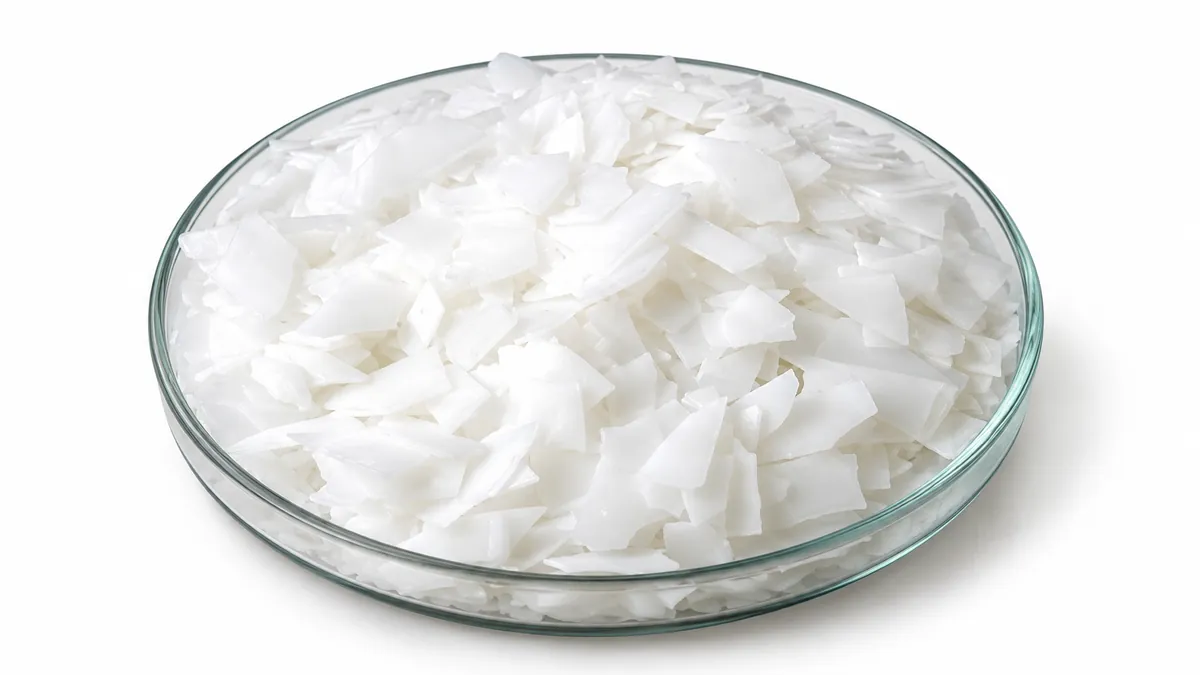
Glycerol Monostearate Plant at a Glance
| Typical capacity | ~1,000–10,000 TPA |
|---|---|
| Land | ~1–3 acres |
| Power load | ~200 kW–1 MW |
| Water | Low |
| Manpower | ~15–50 |
| Indicative investment | ~₹3–25 crore |
Investment basis: excludes land.
Figures are indicative ranges. Your project report works them out for your capacity and location.
Market Demand for Glycerol Monostearate in India
Demand for glycerol monostearate follows packaged bakery growth, since GMS works as an emulsifier that keeps crumb soft and ice cream smooth. Production and consumption are concentrated around Gujarat and Maharashtra, where oleochemical supply is close at hand. Export potential is medium, and demand shows low seasonality, so output can be planned evenly through the year.
- Bakeries and ice cream makers using food emulsifiers
- Cosmetic and cream manufacturers
- Plastic companies needing anti-static GMS
- Pharma buyers with specific grade needs
Glycerol Monostearate Grades You Can Make
GMS 40% suits buyers who want a lower-cost emulsifier and can be made in a simpler batch plant. The distilled 90% grade serves premium food and cosmetic buyers. Anti-static GMS is the route for plastics customers.
- GMS 40% and 90% (distilled), food emulsifiers, anti-static GMS for plastics
Glycerol Monostearate Plant Process
The process starts with esterification of glycerine and stearic acid in a reactor under vacuum, followed by neutralisation of the catalyst. For 90% GMS, molecular distillation, which separates monoglycerides under high vacuum, is added before the product is flaked or spray chilled and packed. Quality is checked at the reactor and again before packing. Typical tests cover monoglyceride content, acid value and free glycerine. For food grades, FSSAI food additive standards also apply. The choice between a 40% batch plant and a distillation line shapes both cost and buyer mix.
- Esterification
- Neutralisation
- (molecular distillation for 90% GMS)
- Flaking or spray chilling
- Packing
Raw Materials and Machinery for a Glycerol Monostearate Plant
Glycerine, stearic acid and a catalyst are the main inputs, sourced from oleochemical producers in Gujarat and Maharashtra, with imports as a backup. The esterification reactor and vacuum system are the core of the plant. A molecular still is optional and only needed for 90% GMS, so decide this early.
- Esterification reactor
- Vacuum system
- Molecular still (optional)
- Flaker or spray-chilling tower
Licences and Approvals for a Glycerol Monostearate Plant
Oleochemical esterification is generally Orange under pollution norms, so plan consent to establish from the State Pollution Control Board before construction and consent to operate before production. Food-grade output needs an FSSAI licence as a food additive. A factory licence is also required, and no QCO applies.
- Business registration and site approval first
- Consent to establish before construction
- FSSAI licence and factory licence
- Consent to operate before commercial production
| Pollution category | Oleochemical esterification is generally Orange |
|---|---|
| HSN code | 3404 or 2915 (by grade) |
| GST | Classification-dependent; applied in the project financials |
| BIS / quality control order | No QCO |
| FSSAI | FSSAI licence (food additive) |
| Other licences | Factory licence |
Choosing the Right Glycerol Monostearate Technology
A 40% GMS batch plant needs less capital and is easier to run, so it suits first-time investors serving bakery and plastics buyers. Adding molecular distillation for 90% GMS raises investment but opens food, cosmetic and pharma customers who pay for purity. Many promoters start with batch capacity and add a still once demand is proven. Your project report should compare both routes on cost and margin.
Choosing the Right Glycerol Monostearate Plant Size
Plants range from about 1,000 to 10,000 TPA, with indicative investment of roughly ₹3–25 crore excluding land. A smaller unit keeps stearic acid stocks and working capital manageable. A larger one spreads fixed costs and supports distillation, but needs secured buyers. Power load, land and manpower rise with scale, so size the plant to confirmed demand.
Government Schemes and Project Finance
Glycerol monostearate projects may qualify for state incentives, which vary by state and should be checked locally. NPCS reports are used for bank loans and government programmes such as PMEGP, MSME schemes, Mudra and NABARD-linked projects, subject to each lender's requirements. A bankable report gives lenders clear costs, margins and repayment figures.
What Decides Success in a Glycerol Monostearate Plant
Operators who do well hold monoglyceride purity steady and secure food approvals early. The main risk is stearic acid price, which moves your margin directly. Waste is minimal, so there is little by-product income to cushion it.
- Consistent monoglyceride content in every batch
- FSSAI approval before food sales
- Supply contracts for stearic acid
- Buyer commitments before choosing capacity
How NPCS Helps You Set Up a Glycerol Monostearate Plant
Our team supports the decisions that matter most here: grade and capacity, batch versus distillation technology, machinery selection and vendor choice. We also guide plant layout, approvals and the financial model lenders review. Support continues through installation and commissioning, and every idea you share stays strictly confidential.
NPCS's published client list records 3 assignments on glycerol monostearate projects between 2013 and 2023 for clients in 1 state and 2 countries, including techno-economic feasibility studies and market research reports.
What Your Glycerol Monostearate Plant Project Report Covers
- Project introduction and BIS specifications
- Manufacturing process with flow sheet
- Market survey (demand, imports/exports, existing units)
- Personnel
- Plant and machinery with suppliers
- Land and building with layout
- Raw materials with sources and rates
- Financials (project cost, working capital, cost of production, profitability, break-even, 5–10 year cash flow, projected balance sheet, IRR/NPV/payback)
Glycerol Monostearate Plant: Frequently Asked Questions
How much does it cost to set up a glycerol monostearate plant?
Indicative investment is about ₹3–25 crore, excluding land, depending on capacity and whether you add molecular distillation. Your project report calculates the exact figure for your capacity, location and chosen grades.
Which licences are needed for a glycerol monostearate plant?
You need a factory licence and, for food grades, an FSSAI licence as a food additive. Oleochemical esterification is generally Orange, so State Pollution Control Board consents to establish and operate apply. No QCO is required.
How much land and power does a glycerol monostearate plant need?
A plant typically needs about 1–3 acres and a power load of roughly 200 kW–1 MW, depending on capacity. Water requirement is low. These are indicative figures, so confirm them against your chosen technology.
How do I start a glycerol monostearate plant business?
Begin by choosing your grade and target buyers, then fix capacity and technology. Next, prepare a project report, secure site and approvals, arrange finance and order machinery. Stearic acid supply should be confirmed before you commit.
How can NPCS help with my glycerol monostearate project?
NPCS prepares project reports and feasibility studies, and supports machinery selection, vendor choice, layout and approvals. Share your planned capacity and location, and our team will outline costs and next steps.