
 Aditya Birla Management Corporation
 UPL
 DCM Shriram Industries
 Tata Steel
 JSW Steel
 ITC (Agri Business Division)
 Godrej & Boyce
 Grasim Industries (Century Rayon)
Food manufacturers, spice blenders, QSR chains and exporters all buy garlic in dehydrated, peeled or paste form, and that steady demand is why entrepreneurs set up processing units. A garlic processing plant consultant helps you decide the product mix, size the plant and line up approvals before you spend on machinery. NPCS has worked with entrepreneurs on such projects since 1994, and our team prepares reports that your bank and your engineers can both work from.
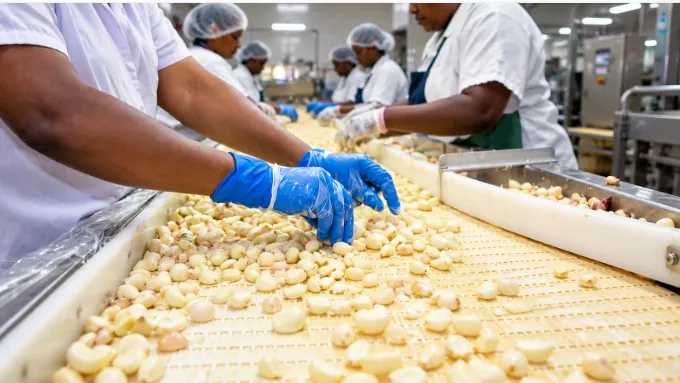
Garlic Processing Plant at a Glance
| Typical capacity | ~2–30 TPD fresh garlic |
|---|---|
| Land | ~0.5–3 acres |
| Power load | ~100–500 kW |
| Water | Low–moderate |
| Manpower | ~15–60 |
| Indicative investment | ~₹1–12 crore |
Investment basis: excludes land.
Figures are indicative ranges. Your project report works them out for your capacity and location.
Market Demand for Garlic Processing Plants in India
Demand for processed garlic comes mainly from convenience ingredients and exports. Export potential is medium, so most units start by supplying domestic buyers and add overseas customers later. Supply is concentrated in Mandsaur and Neemuch in Madhya Pradesh, with Rajasthan and Gujarat close behind, and locating near these belts helps with raw material.
- Food processors using flakes and powder in seasonings
- Spice blenders buying granules and powder
- QSR and food service buyers needing paste and peeled cloves
- Exporters sourcing dehydrated garlic
Garlic Products You Can Make
Dehydrated flakes, granules and powder suit food processors, spice blenders and exporters. Peeled cloves and paste suit food service and QSR buyers who want ready-to-use input. Black garlic is a niche addition once your main lines are running.
- Dehydrated garlic flakes, granules and powder
- Peeled garlic cloves
- Garlic paste
- Black garlic
Garlic Processing Plant Process
The garlic processing plant process starts by breaking bulbs and peeling the cloves with air, then slicing and drying them on a belt. Dried slices are milled and sieved into flakes, granules or powder, then sorted and packed. Paste follows a separate route of grinding, blending and pasteurising.
Quality is controlled at drying and sorting. Buyers check moisture, colour, pungency and microbial limits, alongside FSSAI rules and their own specifications. Air peelers and the choice between belt and tray dryers affect both yield and running cost.
- Bulb breaking
- Peeling (air)
- Slicing
- Belt drying
- Milling and sieving
- Sorting
- Packing; paste: grinding, blending, pasteurising
Raw Materials and Machinery for a Garlic Plant
Fresh garlic is the main input, along with packaging. It is sourced mostly from Madhya Pradesh (Mandsaur, Neemuch), Rajasthan, Gujarat and Uttar Pradesh. The machines that matter most are the air peeler, belt dryer, mill and colour sorter, because they decide yield, drying cost and the colour buyers inspect.
- Bulb breaker
- Air peeler
- Slicer
- Belt dryer
- Mill
- Sifter
- Colour sorter
- Paste line
- Packing
Garlic Processing Plant Licence and Approvals
Garlic processing plant licence and approvals follow a clear order. Register the unit first, then obtain consent to establish from the State Pollution Control Board before construction. Apply for the FSSAI licence before production starts, and take consent to operate once the plant is built. Food processing is Green below 10 KLD wastewater without a boiler, and Orange with a boiler or 10 KLD or more.
- No BIS QCO applies
- APEDA RCMC is needed for exports
- Legal Metrology applies to packed goods
| Pollution category | Food processing: Green below 10 KLD wastewater without boiler (CPCB S.No. 56.2); Orange with boiler or 10 KLD+ wastewater (56.1) |
|---|---|
| HSN code | 0712 90 (dried garlic); 0703 (fresh) |
| GST | 5% on dried garlic; paste follows its own entry |
| BIS / quality control order | No QCO |
| FSSAI | FSSAI licence |
| Other licences | APEDA RCMC; Legal Metrology |
Choosing the Right Garlic Drying Technology
Belt dryers and tray dryers are the two drying routes, and the choice shapes your running cost. Belt dryers suit continuous, higher-volume lines and give more uniform colour. Tray dryers usually cost less to install and can suit smaller batches, but they need more handling. Air peelers are worth considering for either route. Your project report compares both routes for your capacity.
Managing Garlic Seasonality and Working Capital
Garlic is harvested from March to May, so most of your raw material is bought in a short window. That ties up working capital in stock, and your plan must cover storage and the cash needed at harvest. Buying well at harvest lowers cost for the whole year. Your financial projections should show how much stock you can carry and when cash returns.
Government Schemes and Project Finance for Garlic Processing
PMFME, the Agriculture Infrastructure Fund and Operation Greens, where notified, can support a garlic processing unit. Eligibility depends on your scale and location. NPCS reports are used for bank loans and government programmes such as PMEGP, MSME schemes, Mudra and NABARD-linked projects, subject to each lender's requirements.
What Decides Success in a Garlic Processing Plant
Good operators buy at harvest, control drying cost and protect colour quality. The main risk is garlic price volatility, which can squeeze margins between purchase and sale.
- Buy raw garlic in bulk at harvest
- Keep drying energy cost under watch
- Hold colour and pungency to buyer specs
- Sell skins as compost to add small income
How NPCS Helps You Set Up a Garlic Processing Plant
Our team supports the decisions that shape a garlic plant: capacity, drying technology, machinery and vendor selection, plant layout and approvals. We also help with production process guidance and installation and commissioning assistance. The result is a project report tailored to your capacity, budget and location, which you can take to lenders.
NPCS's published client list records 223 assignments across food and agro processing projects between 2009 and 2026, for clients in 28 states and 26 countries.
What Your Garlic Processing Plant Project Report Covers
- Project introduction and BIS specifications
- Manufacturing process with flow sheet
- Market survey (demand, imports/exports, existing units)
- Personnel
- Plant and machinery with suppliers
- Land and building with layout
- Raw materials with sources and rates
- Financials (project cost, working capital, cost of production, profitability, break-even, 5–10 year cash flow, projected balance sheet, IRR/NPV/payback)
Garlic Processing Plant: Frequently Asked Questions
How much does a garlic processing plant setup cost in India?
An indicative investment is about ₹1–12 crore, excluding land, depending on capacity and product mix. A dehydration plant with a paste line costs more than a peeling unit. Your project report works out the figure for your plan.
Which licences are needed for a garlic processing plant?
You need an FSSAI licence, and APEDA RCMC if you export. Legal Metrology applies to packed goods. For pollution, food processing is Green below 10 KLD wastewater without a boiler, and Orange with a boiler or 10 KLD or more.
How much land and power does a garlic processing plant need?
A plant typically needs about 0.5–3 acres and a power load of about 100–500 kW, depending on capacity. Water need is low to moderate. Drying is the main power consumer, so your technology choice affects the load.
How to start a garlic processing plant business?
Start by fixing your products and capacity, then prepare a project report. Next, register the unit, secure consent to establish and an FSSAI licence, order machinery, and arrange garlic purchases ahead of the March to May harvest.
How does NPCS help with a garlic processing plant project report?
NPCS prepares a detailed project report covering process, machinery, raw materials, financials and approvals, tailored to your capacity and location. Our team also guides machinery selection and vendor choice, and helps you present the plan to lenders.