
 ITC (Agri Business Division)
 Thermax (Chemical Division)
 SRF
 DCM Shriram Industries
 Deepak Nitrite
 Gujarat Ambuja Exports
Food and beverage makers, pharma coaters and exporters buy permitted colours in steady volumes, and that demand is what draws entrepreneurs to this line. A food colour manufacturing consultant helps you decide whether to synthesise colours or only blend them, since the two routes differ sharply in cost and regulation. NPCS has advised chemical projects since 1994, and our team supports you from plant planning to machinery and approvals.
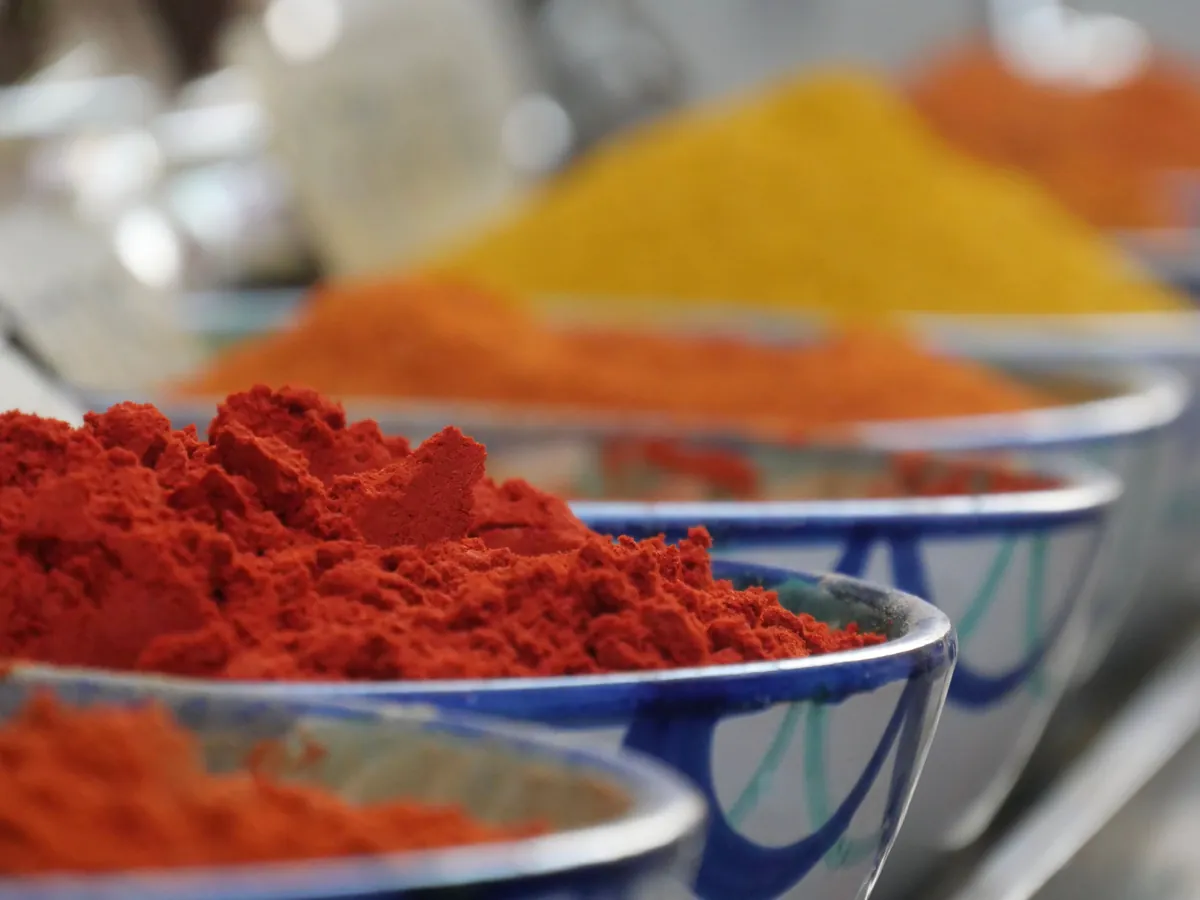
Food Colour Manufacturing at a Glance
| Typical capacity | ~100–2,000 TPA |
|---|---|
| Land | ~0.5–3 acres |
| Power load | ~100–800 kW |
| Water | Moderate |
| Manpower | ~10–60 |
| Indicative investment | ~₹1 crore (blending) to ₹30 crore (synthesis) |
Investment basis: excludes land.
Figures are indicative ranges. Your project report works them out for your capacity and location.
Market Demand for Food Colour Manufacturing in India
Processed food growth is the main driver of demand for food colours in India. Buyers use them to give products a consistent look, so quality and purity matter more than price alone. Production is concentrated in Gujarat and Maharashtra, close to dye intermediate suppliers. Seasonality is low, and export potential is high.
- Confectionery and bakery makers
- Beverage and dairy brands
- Pharma companies for tablet coatings
- Exporters supplying overseas food processors
Food Colour Products You Can Make
Your range can include synthetic colours, lakes, blended colours and natural colours. A blending-only unit suits a first-time entrepreneur who wants lower capital outlay. A synthesis plant suits a promoter with chemical experience and the budget for effluent handling.
- Synthetic colours (tartrazine, sunset yellow, carmoisine and other FSSAI-permitted colours), lakes, blended colours, natural colours
Food Colour Manufacturing Process
The food colour manufacturing process starts with synthesis for synthetic colours, or extraction for natural ones. The crude colour is then purified, dried and blended to a fixed strength. Standardisation is where you add carriers such as salt or dextrose so every batch matches the buyer's specification.
Quality control runs through the whole flow. Labs test dye content, subsidiary dyes and heavy metals against FSSAI and JECFA specifications before any lot is packed. A blending-only unit skips synthesis, but it still needs the same testing discipline.
- Synthesis (for synthetic colours) or extraction
- Purification
- Drying
- Blending and standardisation
- Packing
Raw Materials and Machinery for Food Colour Units
Dye intermediates, natural colour extracts, carriers and packaging are the main inputs. Intermediates are typically sourced from Gujarat, while natural extracts are available domestically. Reactors matter only for synthesis, whereas the spray dryer and ribbon blender decide product consistency in every unit.
- Reactors (synthesis)
- Filter press
- Spray dryer
- Ribbon blender
- Packing
Licences and Approvals for a Food Colour Unit
Food colour manufacturing licence and approvals follow a clear order. Register the unit first, then obtain pollution board consent before construction. Synthesis is Red category, while blending only is generally Green, so your route shapes the timeline. An FSSAI licence for food additives is needed, and synthesis also requires hazardous waste authorisation.
| Pollution category | Synthetic colour manufacture is Red; blending only is generally Green |
|---|---|
| HSN code | 3204 or 3203 (synthetic or natural colouring matter) |
| GST | 18% generally |
| BIS / quality control order | BIS standards for food colours are referenced by FSSAI |
| FSSAI | FSSAI licence (food additive) |
| Other licences | Hazardous waste authorisation (synthesis) |
Choosing the Right Food Colour Technology
A synthesis plant gives you control over cost and quality, but it needs much higher capital and a Red category pollution approval. A blending-only unit has much lower capex and a lighter regulatory load. It depends on bought-in colour, so margins are thinner. Many promoters start with blending and add synthesis once volumes justify it.
Export Opportunity for Food Colours
Export potential for food colours is high, and overseas processors buy to strict purity specifications. FSSAI and JECFA specifications are your starting reference for dye content and heavy metals. However, some foreign markets are shifting towards natural colours, so a mixed range of synthetic and natural products protects your order book.
Government Schemes and Project Finance for Food Colour Units
State incentives are the main scheme support listed for this sector, and they vary by state. A bankable project report helps lenders assess your capacity, costs and repayment. NPCS reports are used for bank loans and programmes such as PMEGP, MSME schemes, Mudra and NABARD-linked projects, subject to each lender's requirements.
What Decides Success in Food Colour Manufacturing
Good operators keep purity high, stay compliant with FSSAI rules and build export customers early. The main risks are the shift to natural colours abroad and effluent from synthesis.
- Test every batch for dye content and heavy metals
- Plan effluent treatment before choosing synthesis
- Keep a natural colour line ready
- Build export buyers alongside domestic accounts
How NPCS Helps You Set Up a Food Colour Unit
NPCS ties its services to the decisions you face: capacity, synthesis or blending, machinery and approvals. Our team supports machinery selection, vendor selection, plant layout and production process guidance. We also prepare a detailed or bankable project report, so your finance discussions rest on workings fitted to your location.
NPCS's published client list records 164 assignments across chemicals and petrochemicals projects between 2009 and 2026, for clients in 20 states and 23 countries.
What Your Food Colour Manufacturing Project Report Covers
- Project introduction and BIS specifications
- Manufacturing process with flow sheet
- Market survey (demand, imports/exports, existing units)
- Personnel
- Plant and machinery with suppliers
- Land and building with layout
- Raw materials with sources and rates
- Financials (project cost, working capital, cost of production, profitability, break-even, 5–10 year cash flow, projected balance sheet, IRR/NPV/payback)
Food Colour Manufacturing: Frequently Asked Questions
What is the food colour manufacturing setup cost in India?
Indicative investment runs from about ₹1 crore for a blending unit to ₹30 crore for a synthesis plant, excluding land. Your final figure depends on capacity, technology and location, which a project report works out.
Which licences are needed to start a food colour unit?
You need an FSSAI licence for food additives and pollution board consent. Synthesis is Red category and needs hazardous waste authorisation, while blending only is generally Green. Confirm the category for your exact process.
How much land and power does a food colour plant need?
Plants typically need about 0.5 to 3 acres and a power load of roughly 100 to 800 kW, depending on capacity. Water need is moderate. Synthesis units sit at the higher end.
How to start food colour manufacturing?
Start by choosing between synthesis and blending, then fix capacity and location. Next, prepare a project report, secure pollution consent and the FSSAI licence, and order machinery. Many beginners choose blending first because capex is much lower.
How can NPCS help with my food colour project?
NPCS prepares project reports, guides technology and machinery selection, and supports vendor selection and plant layout. Share your planned capacity and location, and our team will outline costs and approvals for your unit.