
 ITC (Agri Business Division)
 Aditya Birla Management Corporation
 UPL
 Gujarat Ambuja Exports
 Tata Steel
 JSW Steel
 Godrej & Boyce
 Grasim Industries (Century Rayon)
Fish and shrimp farms in India sell to local fish markets, processors and exporters, and the demand keeps rising with fish consumption and shrimp exports. As a fish farming and aquaculture consultant, NPCS helps entrepreneurs and investors decide between ponds, biofloc tanks and recirculating aquaculture systems (RAS). Our team also plans hatchery and feed needs, prepares the project report and guides you through registrations, so your farm is sized and financed on realistic numbers.
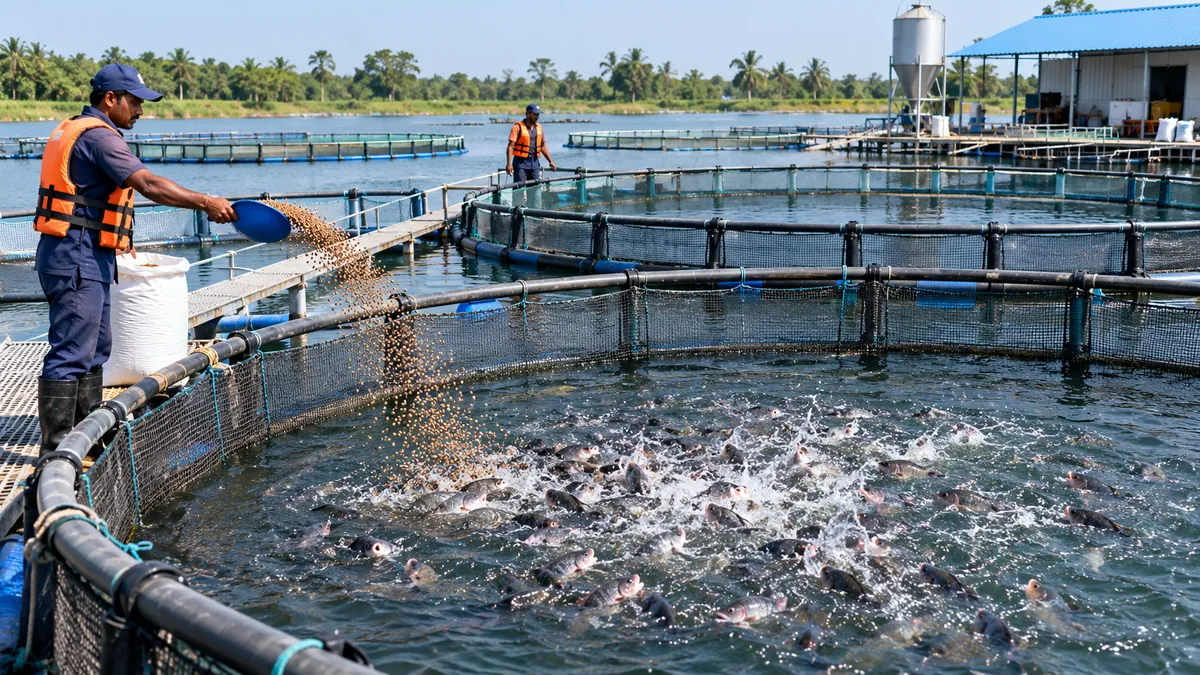
Fish Farming and Aquaculture at a Glance
| Typical capacity | ~1–20 hectares water area or ~10–100 biofloc tanks |
|---|---|
| Land | ~1–25 acres |
| Power load | ~10–200 kW |
| Water | Very high |
| Manpower | ~5–40 |
| Indicative investment | ~₹10 lakh–₹5 crore |
Investment basis: excludes land.
Figures are indicative ranges. Your project report works them out for your capacity and location.
Market Demand for Fish Farming and Aquaculture in India
Demand comes from rising fish consumption at home and from shrimp exports, which carry high export potential. Farming is concentrated in Andhra Pradesh, West Bengal, Odisha, Gujarat, Kerala and Assam, where hatcheries and water resources are close at hand. Crop cycles of 3–6 months mean you can plan sales and cash flow around repeated harvests.
- Fish markets and traders buying fresh and chilled fish
- Processors and exporters sourcing shrimp
- Restaurants needing steady supply
Fish Farming and Aquaculture Products You Can Raise
Carps suit pond culture for domestic markets, while vannamei shrimp suit processors and exporters. Biofloc tanks and RAS fit buyers who want tighter control over water and output. Cage culture and ornamental fish are options once your basic operation is stable.
- Pond culture (carps), shrimp farming (vannamei), biofloc tanks, RAS, cage culture, ornamental fish
Fish Farming and Aquaculture Process
The fish farming and aquaculture process runs from building the pond or tank to harvest and sale, and water quality decides the result at almost every stage. After water preparation and stocking, daily work centres on feeding and checking dissolved oxygen (DO), ammonia and pH. Regular growth monitoring tells you when to adjust feed or harvest.
Quality control also covers disease screening. For export shrimp, buyers apply antibiotic residue limits, so treatment records matter. Harvested stock is either sold fresh or chilled.
- Pond or tank construction
- Water preparation
- Stocking
- Feeding and water-quality management
- Growth monitoring
- Harvesting
- Sale or chilling
Raw Materials and Machinery for Fish Farming
Your main inputs are seed (fry, fingerlings or post-larvae), fish feed, probiotics and a large, reliable water supply. Hatcheries in Andhra Pradesh, West Bengal and Odisha supply seed, and feed mills operate nationwide. Aerators, pumps and a standby generator matter most, since oxygen failure can wipe out a crop.
- Aerators
- Pumps
- Water-quality kits
- Biofloc tanks or RAS filters
- Generator
- Harvesting nets
Licences and Approvals for Fish Farming and Aquaculture
Fish farming and aquaculture licence and approvals depend on where the farm sits. Inland fish farms usually need no industrial consent, but coastal shrimp farms are regulated by the Coastal Aquaculture Authority. Plan the registrations before you build.
- State fisheries department registration
- Coastal Aquaculture Authority registration for coastal farms
- FSSAI registration for processing or sale
- MPEDA registration for exports
| Pollution category | Inland fish farms usually need no industrial consent; coastal shrimp farms are regulated by the Coastal Aquaculture Authority |
|---|---|
| HSN code | 0301–0303 (fish), 0306 (crustaceans) |
| GST | Fresh and chilled fish: Nil |
| BIS / quality control order | No QCO |
| FSSAI | FSSAI registration for processing or sale |
| Other licences | Coastal Aquaculture Authority registration (coastal farms); state fisheries department registration; MPEDA for exports |
Choosing the Right Fish Farming Technology
Earthen ponds, biofloc tanks and RAS differ mainly in capital cost and control. Ponds cost least and suit carp farming where land and water are plentiful. RAS needs higher capex but gives more control over water, which helps where space is tight or output must be steady. Biofloc sits between the two. Your budget, land and target buyer should drive the choice.
Managing Seasonality and Working Capital in Fish Farming
Crop cycles of 3–6 months mean money goes out on seed, feed and power long before harvest income arrives. Feed cost is a common pressure point. Budget working capital to cover a full cycle, plus a reserve for aeration and disease treatment. Staggering stocking across ponds or tanks can smooth cash flow through the year.
Government Schemes and Project Finance for Fish Farming
Pradhan Mantri Matsya Sampada Yojana (PMMSY) subsidies, the Fisheries and Aquaculture Infrastructure Development Fund and the Kisan Credit Card for fish farmers are the main routes. NPCS reports are used for bank loans and government programmes, subject to each lender's requirements. A clear project report supports your application, though approvals rest with the lender.
What Decides Success in Fish Farming and Aquaculture
Good operators get seed quality, water management and disease control right. The main risks are disease outbreaks and feed cost, so plan for both. Pond sludge can also be sold as manure.
- Buy seed from reliable hatcheries
- Test water daily
- Keep backup power for aerators
- Budget for feed price swings
How NPCS Helps You Set Up a Fish Farming and Aquaculture Project
NPCS helps with the decisions that shape your farm: capacity, pond versus biofloc versus RAS, machinery selection and vendor choice. Our team supports plant layout, approvals and finance planning, and can assist with installation and commissioning. Your fish farming and aquaculture project report is tailored to your location, budget and target market.
NPCS's published client list records 11 assignments on fish farming and aquaculture projects between 2015 and 2023 for clients in 6 states and 3 countries, including detailed project reports, techno-economic feasibility studies and project identification studies.
What Your Fish Farming and Aquaculture Project Report Covers
- Project introduction and BIS specifications
- Manufacturing process with flow sheet
- Market survey (demand, imports/exports, existing units)
- Personnel
- Plant and machinery with suppliers
- Land and building with layout
- Raw materials with sources and rates
- Financials (project cost, working capital, cost of production, profitability, break-even, 5–10 year cash flow, projected balance sheet, IRR/NPV/payback)
Fish Farming and Aquaculture: Frequently Asked Questions
What is the fish farming and aquaculture setup cost in India?
Indicative investment ranges from ~₹10 lakh to ₹5 crore, excluding land. The final figure depends on whether you choose ponds, biofloc tanks or RAS, and on your scale. A project report works out costs for your capacity and location.
Which licences are needed to start a fish farm?
Inland fish farms usually need no industrial consent, but you should register with the state fisheries department. Coastal shrimp farms need Coastal Aquaculture Authority registration. FSSAI registration applies for processing or sale, and MPEDA for exports.
How much land and power does a fish farm need?
Typically, land runs from about 1–25 acres and power load from about 10–200 kW, depending on scale and technology. Water requirement is very high, so a dependable source matters as much as the land itself.
How do I start a fish farming and aquaculture business?
Start by choosing the species and technology, then fix capacity, location and budget. Prepare a project report, complete registrations and arrange finance. Then build the ponds or tanks, prepare the water and stock seed from a reliable hatchery.
How does NPCS help with a fish farming project?
NPCS prepares detailed project reports and feasibility studies, and guides technology choice, machinery, vendors, layout and approvals. Our team also helps with installation and commissioning. Share your planned capacity and location to get started.