
 Grasim Industries (Century Rayon)
 Tata Steel
 JSW Steel
 ITC (Agri Business Division)
 Godrej & Boyce
 Aditya Birla Management Corporation
 Thermax (Chemical Division)
 UPL
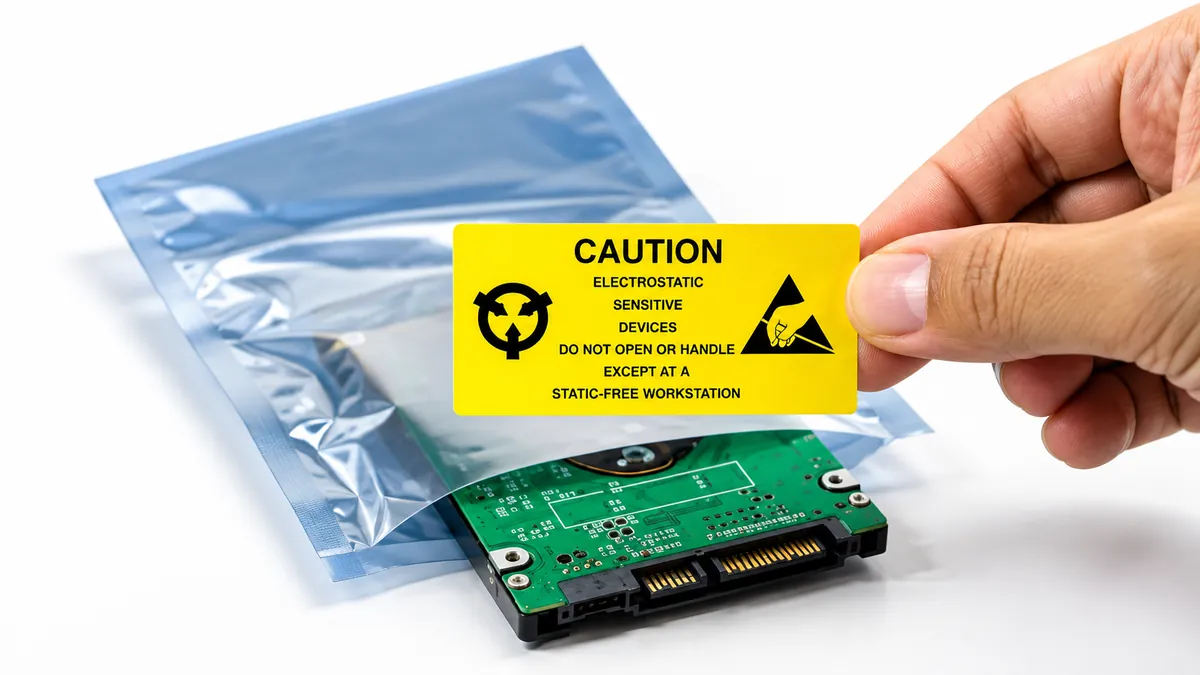
Electronics assemblers and auto component suppliers need packaging that protects parts from static and can be used again and again. An esd and returnable packaging consultant helps you turn that need into a working plant making ESD trays, bins, bags and reusable dunnage. Most buyers are EMS firms, electronics makers and component suppliers. NPCS supports you with project planning, technology choice, machinery selection and approvals, so your investment decisions rest on a clear report.
ESD and Returnable Packaging at a Glance
| Typical capacity | ~1–20 lakh pieces per year |
|---|---|
| Land | ~0.5–2 acres |
| Power load | ~100–500 kW |
| Water | Low |
| Manpower | ~15–60 |
| Indicative investment | ~₹1–10 crore |
Investment basis: excludes land.
Figures are indicative ranges. Your project report works them out for your capacity and location.
Market Demand for ESD and Returnable Packaging in India
Demand for ESD and returnable packaging follows electronics manufacturing growth. Every circuit board and sensitive component needs static-safe handling, and auto plants prefer reusable dunnage over single-use cartons. Units are concentrated near Noida, Chennai, Bengaluru and Pune, where buyers are close. In practice, you sell mainly to a few approved customers, so proximity matters.
- EMS and electronics makers needing static-safe trays and bags
- Auto component suppliers using returnable boxes and dunnage
- Pharma buyers needing clean, reusable packaging
ESD and Returnable Packaging Products You Can Make
The range runs from moulded ESD trays and bins to shielding bags, conductive foam and returnable PP corrugated boxes. Electronics buyers usually ask for trays, bags and foam. Auto suppliers lean towards vacuum-formed dunnage and PP corrugated boxes.
- ESD trays and bins, shielding bags, conductive foam, returnable PP corrugated boxes, vacuum-formed dunnage
ESD and Returnable Packaging Process
The ESD and returnable packaging process starts with polymer sheet, either extruded in-house or bought in, and moves to forming or fabrication. Vacuum forming suits larger trays and dunnage at moderate volumes. Injection moulding is an alternative for high-volume items, while PP corrugated boxes are cut and welded.
Quality control matters most after forming. Each batch is checked for surface resistivity against ANSI/ESD S541 and for dimensions, because customers reject trays that fit poorly or fail the static test. Assembly and packing follow once parts pass.
- Sheet extrusion or purchase
- Vacuum forming or fabrication
- Surface resistance testing
- Assembly
- Packing
Raw Materials and Machinery for ESD Packaging
Your main inputs are conductive and anti-static polymers such as PS, PET and PP, along with PP corrugated sheet and foam. Polymers are sourced both domestically and through imports. Vacuum forming machines, CNC trimmers and resistivity meters are the core equipment, while a sheet extruder is optional if you prefer to buy sheet.
- Sheet extruder (optional)
- Vacuum forming machines
- CNC trimmers
- Welding for PP boxes
- Resistivity meters
ESD and Returnable Packaging Licence and Approvals
Plastic processing in this line generally falls in the Green category under CPCB S.No. 132. Start with business registration, then take consent to establish from the State Pollution Control Board before construction. After that, get consent to operate and complete EPR registration for plastic packaging. No QCO applies, and FSSAI is not relevant.
| Pollution category | Plastic processing: Green (CPCB S.No. 132) |
|---|---|
| HSN code | 3923 (plastic packaging) |
| GST | 18% |
| BIS / quality control order | No QCO |
| Other licences | EPR registration for plastic packaging |
Choosing the Right ESD Packaging Technology
Vacuum forming and injection moulding suit different buyers. Vacuum forming has lower tooling cost and copes well with customised, low-volume orders, which is common in this trade. Injection moulding makes sense when a customer commits to steady, high volumes of one design. PP corrugated fabrication is a third route, suited to returnable boxes for auto lines. Most new units start with vacuum forming and add other routes later.
Choosing the Right ESD Packaging Plant Size
Indicative capacity runs from about 1–20 lakh pieces per year, with investment of roughly ₹1–10 crore excluding land. A smaller unit works if you serve a few local EMS customers with custom trays. A larger plant needs more power, land and manpower, plus OEM approvals to keep it busy. Your project report sizes the plant to your order pipeline and location.
Government Schemes and Project Finance for ESD Packaging
Demand here is supported by electronics PLI and auto clusters, rather than a scheme aimed at the packaging unit itself. For finance, lenders look for a bankable report. NPCS reports are used for bank loans and programmes such as PMEGP, MSME schemes, Mudra and NABARD-linked projects, subject to each lender's requirements.
What Decides Success in an ESD Packaging Unit
Units that do well build strong design capability and win OEM approvals early. The main risk is customised low-volume orders, which strain tooling and margins. Trim from forming is the only by-product to manage.
- Invest in in-house design and tooling skills
- Secure OEM approvals before scaling capacity
- Price small custom runs to cover tooling cost
How NPCS Helps You Set Up an ESD Packaging Unit
NPCS ties its services to the decisions you face: capacity, forming technology, machinery and vendors, plant layout and approvals. Our team also supports production process guidance, installation and commissioning. The result is a detailed, bankable project report built around your budget, raw material access and target customers.
NPCS's published client list records 66 assignments across packaging projects between 2009 and 2026, for clients in 18 states and 6 countries.
What Your ESD and Returnable Packaging Project Report Covers
- Project introduction and BIS specifications
- Manufacturing process with flow sheet
- Market survey (demand, imports/exports, existing units)
- Personnel
- Plant and machinery with suppliers
- Land and building with layout
- Raw materials with sources and rates
- Financials (project cost, working capital, cost of production, profitability, break-even, 5–10 year cash flow, projected balance sheet, IRR/NPV/payback)
ESD and Returnable Packaging: Frequently Asked Questions
What is the setup cost for an ESD and returnable packaging plant?
Indicative investment is about ₹1–10 crore, excluding land, depending on capacity and technology. Vacuum forming lines cost less than injection moulding setups. Share your planned capacity and our team will prepare a project cost for your location.
Which licences are needed for ESD packaging manufacturing?
You need business registration, consent to establish and consent to operate from the State Pollution Control Board, and EPR registration for plastic packaging. The unit generally falls in the Green category. No QCO applies to this product.
How much land and power does an ESD packaging unit need?
Typically about 0.5–2 acres of land and a power load of roughly 100–500 kW, depending on capacity. Water need is low. Your project report fixes exact figures for your machinery and plant layout.
How to start an ESD and returnable packaging business?
Begin by identifying target customers among EMS and auto suppliers, then choose your technology and capacity. Next, prepare a project report, register the unit, take pollution consents and install machinery. OEM approvals follow before regular orders.
How does NPCS help with an ESD and returnable packaging project report?
NPCS prepares a detailed project report covering process, machinery, raw materials, approvals and financials, tailored to your capacity and location. Our team also guides machinery selection, vendor choice and commissioning support for your plant.