
 Aditya Birla Management Corporation
 UPL
 DCM Shriram Industries
 Tata Steel
 JSW Steel
 ITC (Agri Business Division)
 Godrej & Boyce
 Grasim Industries (Century Rayon)
A date processing plant cleans, grades, pitts and packs dates, and can also turn them into paste, syrup and snacks. Entrepreneurs in Gujarat, Mumbai and Delhi-NCR set these units up to supply retail chains, bakeries and health-food brands. Demand rises with the shift to natural sweeteners. As a date processing plant consultant, NPCS helps you fix capacity, technology and location, then prepares the costing and approvals plan your lender will want to see.
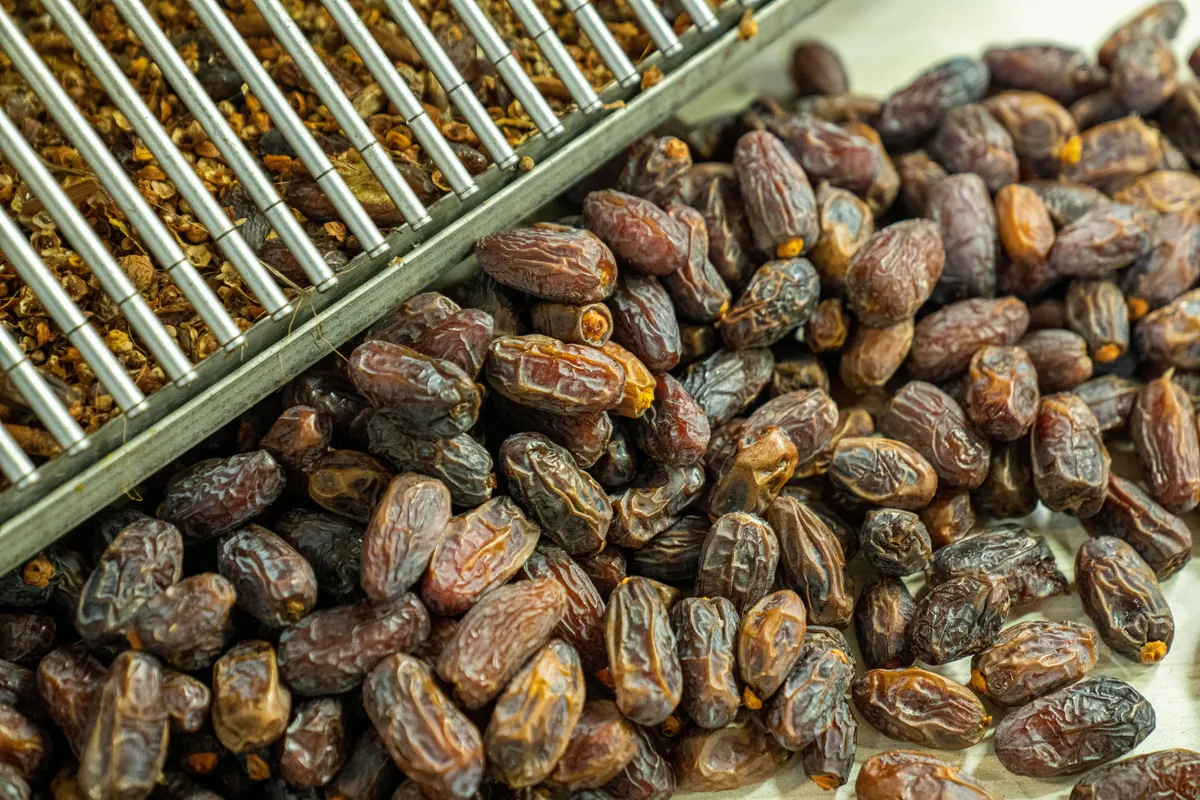
Date Processing Plant at a Glance
| Typical capacity | ~1–20 TPD |
|---|---|
| Land | ~0.5–2 acres |
| Power load | ~50–300 kW |
| Water | Moderate |
| Manpower | ~15–60 |
| Indicative investment | ~₹50 lakh–₹10 crore |
Investment basis: excludes land.
Figures are indicative ranges. Your project report works them out for your capacity and location.
Market Demand for Date Processing Plants in India
Processed dates sell best where buyers want clean, pitted, consistently graded fruit. Demand is driven by natural sweeteners, Ramadan and festive buying, and the winter peak. Kutch in Gujarat is the main growing area, while Mumbai and Delhi-NCR are the key consumption and distribution hubs. Export potential is low, so your plan should rest on domestic buyers.
- Retail and modern trade chains
- Bakeries and confectionery makers
- Health-food brands buying paste and syrup
Products You Can Make From Dates
Packed whole and pitted dates suit retail shelves, while paste and syrup serve bakeries and food brands. Bars and energy bites target health-food buyers. Many new units begin with packing and add value-added lines once buyers are secured.
- Packed whole and pitted dates, date paste, date syrup, date bars and energy bites
Date Processing Plant Process
The date processing plant process starts with fumigation and cleaning, then moves through grading, pitting, hydration or drying and packing. Paste needs a milling step, while syrup needs extraction, filtration and concentration. Quality is controlled at several points. Moisture, sugar content, infestation and microbial limits are checked against FSSAI standards. Incoming fruit is the first checkpoint, because infested or over-dry dates are hard to correct later. Packing-only units skip the paste and syrup stages, which keeps machinery and effluent load lower.
- Fumigation and cleaning
- Grading
- Pitting
- Hydration or drying
- Packing; paste: milling; syrup: extraction, filtration, concentration
Raw Materials and Machinery for a Date Processing Plant
Your main input is fresh and dried dates, sourced from Kutch in Gujarat and Rajasthan, or imported from the UAE, Saudi Arabia and Iraq. Packaging is the other major cost. The machines that matter most are the washer, dryer, grading table and pitting machine, plus a paste mill or syrup evaporation set if you add those lines.
- Washer
- Dryer
- Grading table
- Pitting machine
- Paste mill
- Extraction and evaporation (syrup)
- Packing
Licences and Approvals for a Date Processing Plant
Date processing plant licence and approvals follow a clear order. Register the unit first, then obtain consent to establish from the State Pollution Control Board before construction, and an FSSAI licence before production. Food processing is generally Green below 10 KLD wastewater without a boiler, and Orange with a boiler or 10 KLD or more.
- Plant quarantine clearance if you import dates
- Legal Metrology registration for packed goods
- Consent to operate after commissioning
| Pollution category | Food processing: Green below 10 KLD wastewater without boiler (CPCB S.No. 56.2); Orange with boiler or 10 KLD+ wastewater (56.1) |
|---|---|
| HSN code | 0804 10 (dates); 2007 (paste) |
| GST | Classification-dependent by product; applied in the project financials |
| BIS / quality control order | No QCO |
| FSSAI | FSSAI licence |
| Other licences | Plant quarantine for imported dates; Legal Metrology |
Choosing the Right Date Processing Technology
A packing-only unit suits you if you want lower investment and faster start-up, selling graded and pitted dates to retailers. A paste and syrup line adds extraction, filtration and concentration, which raises machinery cost and effluent load. However, it opens bakery and food-brand buyers and uses lower-grade fruit. Many operators start with packing and add processing lines later.
Managing Seasonality and Working Capital
Ramadan and winter peaks mean you must buy and stock dates well before demand rises. That ties up cash in raw material, so working capital deserves as much attention as machinery. Imported fruit adds price swings to the cycle. Your project report should model stock holding, credit to modern trade buyers and the lean months.
Government Schemes and Project Finance for a Date Processing Plant
PMFME and the Mission for Integrated Development of Horticulture are the schemes relevant to this project. Eligibility depends on unit size and the scheme's current rules. NPCS reports are used for bank loans and government programmes, subject to each lender's requirements. A well-built date processing plant project report helps you present costs, margins and repayment clearly.
What Decides Success in a Date Processing Plant
Operators who do well secure reliable sourcing and keep packing hygienic. The main risk is import price swings, which can squeeze margins quickly.
- Build supplier relationships in Kutch and abroad
- Maintain hygienic packing and infestation control
- Sell date seeds as feed or coffee substitute
How NPCS Helps You Set Up a Date Processing Plant
NPCS supports the decisions that shape your plant: capacity, packing-only or paste and syrup lines, and machinery specifications. Our team also assists with vendor selection, plant layout, and installation and commissioning. We then map the approvals you need and prepare financials for your lender. If you're wondering how to start a date processing plant business, we begin with your location and budget.
NPCS's published client list records 223 assignments across food and agro processing projects between 2009 and 2026, for clients in 28 states and 26 countries.
What Your Date Processing Plant Project Report Covers
- Project introduction and BIS specifications
- Manufacturing process with flow sheet
- Market survey (demand, imports/exports, existing units)
- Personnel
- Plant and machinery with suppliers
- Land and building with layout
- Raw materials with sources and rates
- Financials (project cost, working capital, cost of production, profitability, break-even, 5–10 year cash flow, projected balance sheet, IRR/NPV/payback)
Date Processing Plant: Frequently Asked Questions
How much does a date processing plant cost in India?
Date processing plant setup cost in India is typically an indicative ~₹50 lakh–₹10 crore, excluding land. The figure depends on capacity and whether you add paste or syrup lines. Your project report works out the cost for your scale.
Which licences and pollution category apply to a date processing plant?
You need an FSSAI licence and Legal Metrology registration, plus plant quarantine clearance for imported dates. The pollution category is Green below 10 KLD wastewater without a boiler, and Orange with a boiler or 10 KLD or more.
How much land and power does a date processing plant need?
A plant typically needs about 0.5–2 acres and a power load of about 50–300 kW, depending on capacity. Water need is moderate. Paste and syrup lines raise both power and effluent requirements.
How do I start a date processing plant business?
Start by choosing between a packing-only unit and a paste and syrup line, then fix capacity and location. Next, secure dates from Kutch or imports, obtain approvals and order machinery. A project report ties these steps together.
How can NPCS help with my date processing plant?
NPCS prepares your project report, advises on technology, machinery and vendors, and outlines approvals and finance. Share your planned capacity and location, and our team will respond within 24 hours.