
 Aditya Birla Management Corporation
 UPL
 DCM Shriram Industries
 Tata Steel
 JSW Steel
 ITC (Agri Business Division)
 Godrej & Boyce
 Grasim Industries (Century Rayon)
Chocolate makers, bakeries and beverage companies buy cocoa liquor, butter and powder in bulk, and entrepreneurs set up plants to supply them. A cocoa powder and butter plant consultant helps you size the unit, choose roasting and pressing technology, and prepare the approvals. Many investors choose this project because of rising chocolate demand and the push for import substitution. NPCS prepares the project report and supports your planning decisions from capacity to commissioning.
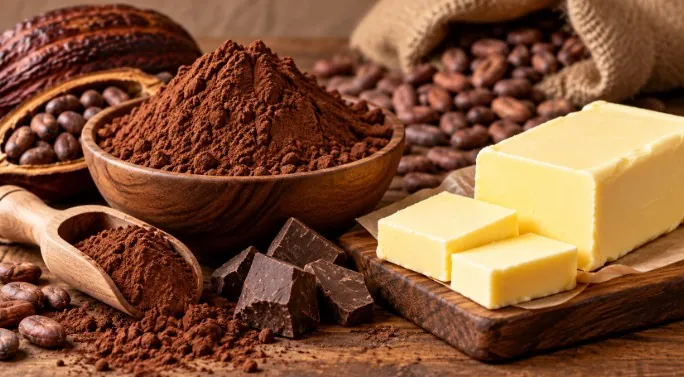
Cocoa Powder and Butter Plant at a Glance
| Typical capacity | ~1,000–10,000 TPA beans |
|---|---|
| Land | ~2–5 acres |
| Power load | ~500 kW–2 MW |
| Water | Low |
| Manpower | ~30–100 |
| Indicative investment | ~₹20–100 crore |
Investment basis: excludes land.
Figures are indicative ranges. Your project report works them out for your capacity and location.
Market Demand for Cocoa Powder and Butter in India
Demand for cocoa products in India follows chocolate demand growth and import substitution. Buyers include chocolate makers, bakeries, beverage companies and exporters. Bean growing and early processing are concentrated in Kerala, Karnataka and Andhra Pradesh, so units near these states can source more easily. Export potential is medium, which suits plants that sell mainly to domestic buyers first.
- Chocolate and confectionery makers
- Bakeries using powder and butter
- Beverage and malted drink brands
- Ice cream manufacturers
Cocoa Products You Can Make
A plant can produce cocoa liquor, natural and alkalised powder, deodorised butter and cocoa cake. Chocolate makers usually want liquor and butter, while bakeries and beverage brands lean towards powder. Start with the products your first buyers ask for.
- Cocoa liquor (mass), natural and alkalised cocoa powder, cocoa butter (deodorised), cocoa cake
Cocoa Powder and Butter Plant Process
The process turns cleaned, roasted beans into nibs, grinds them to liquor, and presses out the butter. The remaining cake is broken and pulverised into powder. Alkalisation is optional and is used when you want a darker, milder alkalised powder.
Technology choice matters here. Batch roasters suit smaller runs, while continuous roasters suit steady high output, and hydraulic presses are sized to your volume. Quality is checked at each stage for fat content, pH, fineness, colour and microbial limits, in line with FSSAI standards for cocoa products.
- Bean cleaning
- Roasting
- Winnowing
- (alkalisation)
- Nib grinding to liquor
- Hydraulic pressing
- Butter filtering and deodorising
- Cake breaking and pulverising
- Packing
Raw Materials and Machinery for Cocoa Processing
Your main input is fermented and dried cocoa beans, plus alkalising agents if you make alkalised powder. Beans come from Kerala, Karnataka, Andhra Pradesh and Tamil Nadu, with imports from Ghana, Ivory Coast and Indonesia filling gaps. The roaster, liquor mill, hydraulic press and butter deodoriser decide output and quality most.
- Cleaner
- Roaster
- Winnower
- Alkaliser
- Liquor mill
- Hydraulic press
- Butter filter and deodoriser
- Cake breaker
- Pulveriser
- Packing
Cocoa Powder and Butter Plant Licence and Approvals
Register the unit first, then obtain consent to establish from the State Pollution Control Board before construction. Food processing is Green below 10 KLD wastewater without a boiler, and Orange with a boiler or 10 KLD and above. You'll also need an FSSAI Central licence before sale, followed by consent to operate. No QCO applies.
- Registration with the Directorate of Cashewnut and Cocoa Development is helpful
- Import licences apply if you bring in beans
| Pollution category | Food processing: Green below 10 KLD wastewater without boiler (CPCB S.No. 56.2); Orange with boiler or 10 KLD+ wastewater (56.1) |
|---|---|
| HSN code | 1803 (cocoa paste), 1804 (cocoa butter), 1805 (cocoa powder) |
| GST | 5% under GST 2.0 for cocoa products |
| BIS / quality control order | No QCO |
| FSSAI | FSSAI Central licence |
| Other licences | Directorate of Cashewnut and Cocoa Development registration helpful; import licences for beans |
Securing Cocoa Bean Supply
Bean supply is seasonal, so sourcing decides whether your plant runs steadily. Domestic beans from Kerala, Karnataka, Andhra Pradesh and Tamil Nadu cost less to move, but volumes may not cover a large unit. Many plants add imports from Ghana, Ivory Coast and Indonesia. Plan covered storage and set quality checks on fermentation and drying at purchase, because poor beans cannot be fixed later.
Making Money from Cocoa Shells
Cocoa shells are removed during winnowing and can earn extra revenue. They are sold as fuel, which can feed your own boiler, or as mulch for gardens and plantations. Treat this as a small supporting income. Your project report can show how much shell volume your capacity generates and how that affects costs.
Government Schemes and Project Finance for Cocoa Processing
Relevant support includes the Mission for Integrated Development of Horticulture for cocoa and PMKSY. Eligibility depends on your project and location. Reports from NPCS are used for bank loans and government programmes such as PMEGP, MSME schemes, Mudra and NABARD-linked projects, subject to each lender's requirements. A clear, bankable report makes your application easier to assess.
What Decides Success in a Cocoa Powder and Butter Plant
Good operators get bean sourcing and quality right, and they master alkalisation know-how. The main risk is global cocoa price spikes, which can squeeze margins.
- Secure bean sources before you finalise capacity
- Test alkalisation trials before committing to powder grades
- Sell shells to recover value
- Plan working capital for price swings
How NPCS Helps You Set Up a Cocoa Powder and Butter Plant
NPCS ties its services to your real decisions: capacity, roaster and press selection, vendor choice and plant layout. Our team prepares the detailed project report and techno-economic feasibility, guides production process choices, and supports installation and commissioning. We also help you line up approvals and finance documents.
NPCS's published client list records 223 assignments across food and agro processing projects between 2009 and 2026, for clients in 28 states and 26 countries.
What Your Cocoa Powder and Butter Plant Project Report Covers
- Project introduction and BIS specifications
- Manufacturing process with flow sheet
- Market survey (demand, imports/exports, existing units)
- Personnel
- Plant and machinery with suppliers
- Land and building with layout
- Raw materials with sources and rates
- Financials (project cost, working capital, cost of production, profitability, break-even, 5–10 year cash flow, projected balance sheet, IRR/NPV/payback)
Cocoa Powder and Butter Plant: Frequently Asked Questions
How much does a cocoa powder and butter plant cost in India?
An indicative investment is ~₹20–100 crore, excluding land. The figure depends on capacity, roaster type and press size. Your project report works out the cost for your capacity and location.
Which licences are needed for a cocoa processing unit?
You need an FSSAI Central licence and State Pollution Control Board consents. Food processing is Green below 10 KLD wastewater without a boiler, and Orange otherwise. Registration with the Directorate of Cashewnut and Cocoa Development is helpful, and imported beans need import licences.
How much land and power does a cocoa plant need?
Typically about 2–5 acres of land and a power load of roughly 500 kW–2 MW, depending on capacity. Water requirement is low. Your final figures depend on the technology and output you choose.
How do I start a cocoa powder and butter plant business?
Fix your capacity and product mix, secure bean sources, then prepare a project report. Register the unit, obtain consent to establish, order machinery and apply for the FSSAI licence. NPCS can guide you through these steps.
How can NPCS help with my cocoa processing project?
NPCS prepares the detailed project report, advises on technology and machinery, and supports vendor selection and layout. Reports are tailored to your capacity, budget and location, and used for bank loan and scheme applications.