
 Aditya Birla Management Corporation
 UPL
 DCM Shriram Industries
 Tata Steel
 JSW Steel
 ITC (Agri Business Division)
 Godrej & Boyce
 Grasim Industries (Century Rayon)
Corn flakes, extruded puffs, muesli and oats all reach shoppers through retail, private-label and institutional channels, and each can anchor a breakfast cereal plant. A breakfast cereal plant consultant helps you pick the product, the line and the capacity before money is committed. Demand rests on urban breakfast habits and a shift towards millets and oats. NPCS prepares the project report, supports machinery selection and guides you through approvals, so your plan rests on figures that fit your location and budget.
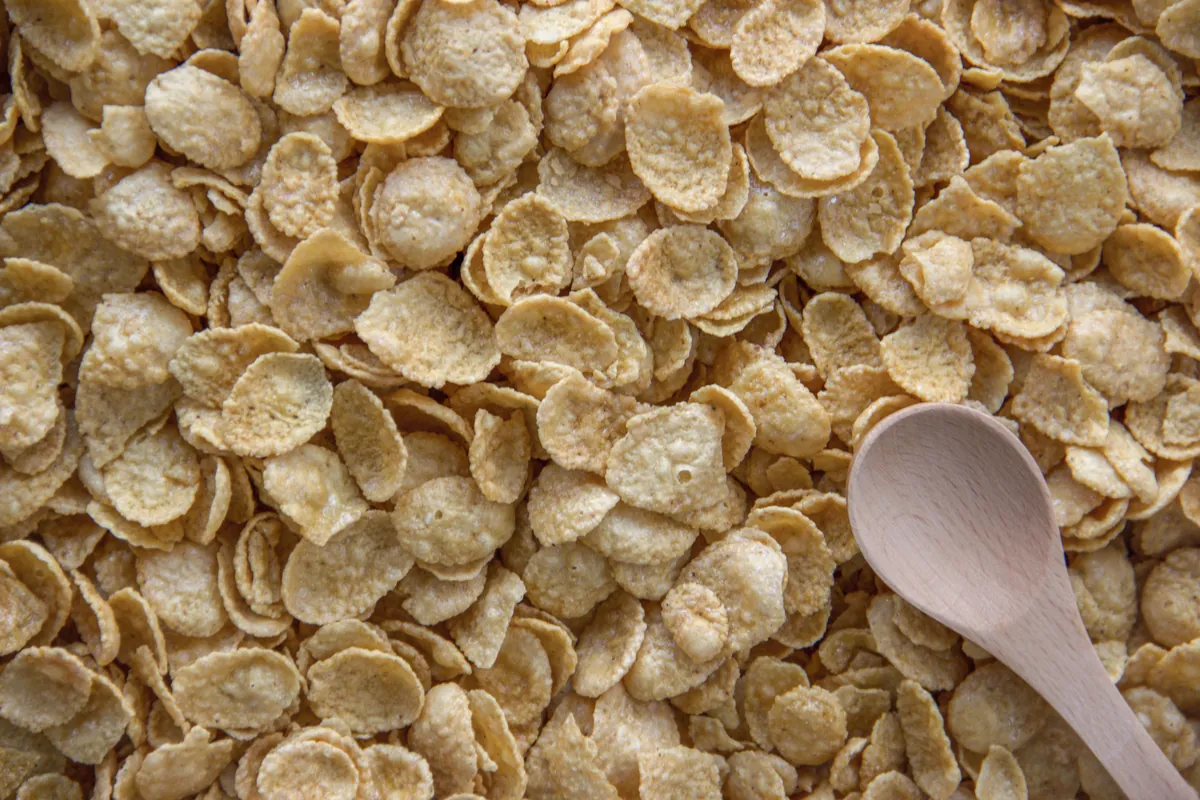
Breakfast Cereal Plant at a Glance
| Typical capacity | ~1–20 TPD |
|---|---|
| Land | ~1–4 acres |
| Power load | ~300 kW–1.5 MW |
| Water | Low |
| Manpower | ~25–100 |
| Indicative investment | ~₹5–60 crore |
Investment basis: excludes land.
Figures are indicative ranges. Your project report works them out for your capacity and location.
Market Demand for Breakfast Cereals in India
Breakfast cereals sell mainly to urban households, and demand is shaped by changing morning habits, health positioning around millets and oats, and growing private-label ranges. Production clusters are found in Maharashtra, Gujarat, Karnataka and Haryana. Export potential is low to medium, so most new units plan around the domestic market. Seasonality is low, which helps steady production planning.
- Retail and modern trade chains
- Private-label brands seeking contract makers
- E-commerce sellers of health foods
- Institutions and catering buyers
Breakfast Cereal Products You Can Make
Your choice of product decides the line you buy. Corn flakes and multigrain flakes suit a flaking setup, while puffs and loops come from extrusion. Muesli and granola, and rolled or instant oats, work well for health-focused and private-label buyers who want simpler formats.
- Corn flakes, extruded puffs and loops, muesli and granola, rolled and instant oats, multigrain flakes
Breakfast Cereal Plant Process
The breakfast cereal plant process starts with mixing and cooking, then splits into two routes. Flaked products pass through tempering, flaking rolls and a toaster, while extruded products are shaped and then dried. Both routes move on to coating or flavouring, cooling, blending of inclusions and packing.
Quality is checked at several points. Typical tests cover moisture, bulk density, crunch and bowl life, fortification levels and microbial limits, all against FSSAI standards. Bowl life matters because buyers notice cereal that turns soggy in milk.
- Mixing and cooking
- (flaking: tempering, flaking rolls, toasting) or (extrusion and drying)
- Coating or flavouring
- Cooling
- Blending inclusions
- Packing
Raw Materials and Machinery for a Cereal Plant
Maize grits, oats, wheat, millets, sugar, malt, fortificants, dried fruit and nuts make up the main inputs. Maize usually comes from Karnataka, Andhra Pradesh and Bihar, oats are imported or sourced from Punjab, and millets from Karnataka and Rajasthan. The costliest machines are the twin-screw extruder, flaking mills, toaster and dryer, so budget them carefully.
- Cookers
- Flaking mills
- Toaster
- Twin-screw extruder
- Dryer
- Coating drum
- Mixer
- Form-fill-seal machines
Breakfast Cereal Plant Licence and Approvals
Breakfast cereal plant licence and approvals follow a clear order. Register the unit first, then obtain consent to establish from the State Pollution Control Board before construction. Food processing is Green below 10 KLD wastewater without a boiler, and Orange with a boiler or 10 KLD or more. Then apply for the FSSAI licence, Legal Metrology registration and factory licence, and finally consent to operate.
| Pollution category | Food processing: Green below 10 KLD wastewater without boiler (CPCB S.No. 56.2); Orange with boiler or 10 KLD+ wastewater (56.1) |
|---|---|
| HSN code | 1904 (prepared foods by swelling or roasting cereals); 1104 (rolled oats) |
| GST | 5% under GST 2.0 for most cereal flakes and preparations; product-wise entries are applied in the project financials |
| BIS / quality control order | No QCO |
| FSSAI | FSSAI licence |
| Other licences | Legal Metrology; factory licence |
Choosing the Right Cereal Technology
Batch cookers with flaking mills suit corn flakes and multigrain flakes, and they let a smaller unit start with a focused product. Twin-screw extrusion lines make puffs, loops and shaped cereals, and they offer wider product flexibility. However, extrusion usually needs more capital and power. Pick the route by asking which product your first buyers want, then check whether you can add the second route later.
Choosing the Right Plant Size
Plants typically range from about 1 to 20 TPD, with indicative investment of about ₹5–60 crore excluding land. A small unit can serve a private-label contract or a regional brand. Larger plants need more land, power and manpower, and they only pay off with steady offtake from modern trade. Your project report should test several capacities against realistic sales before you commit.
Government Schemes and Project Finance
Food processing units may look at PMFME, the PLI scheme for food processing in eligible categories, and state incentives. Eligibility depends on your size, product and location. NPCS reports are used for bank loans and government programmes such as PMEGP, MSME schemes, Mudra and NABARD-linked projects, subject to each lender's requirements.
What Decides Success in a Breakfast Cereal Plant
Good operators get product formulation, brand or private-label contracts and packaging right. The main risks are competition from big brands and pressure to reduce sugar.
- Test formulations for crunch and bowl life
- Secure private-label contracts early
- Invest in packaging that protects shelf life
- Plan lower-sugar recipes from the start
- Sell fines as feed
How NPCS Helps You Set Up a Breakfast Cereal Plant
NPCS supports the decisions that shape your plant: capacity, flaking versus extrusion, machinery and vendor selection, and plant layout. Our team also guides production process planning, approvals, and installation and commissioning assistance. The breakfast cereal plant project report is tailored to your budget, raw material availability and market area, and it can support your finance discussions.
NPCS's published client list records 4 assignments on breakfast cereal projects between 2013 and 2017 for clients in 3 states and 1 country, including techno-economic feasibility studies.
What Your Breakfast Cereal Plant Project Report Covers
- Project introduction and BIS specifications
- Manufacturing process with flow sheet
- Market survey (demand, imports/exports, existing units)
- Personnel
- Plant and machinery with suppliers
- Land and building with layout
- Raw materials with sources and rates
- Financials (project cost, working capital, cost of production, profitability, break-even, 5–10 year cash flow, projected balance sheet, IRR/NPV/payback)
Breakfast Cereal Plant: Frequently Asked Questions
How much does a breakfast cereal plant setup cost in India?
Indicative investment is about ₹5–60 crore, excluding land, depending on capacity and technology. Extrusion lines and larger capacities cost more. A project report works out the figures for your location, product mix and chosen machinery.
Which licences are needed for a breakfast cereal plant?
You need an FSSAI licence, Legal Metrology registration and a factory licence. Pollution category is Green below 10 KLD wastewater without a boiler, and Orange with a boiler or 10 KLD or more. Consent to establish comes before construction.
How much land and power does a breakfast cereal plant need?
Typically about 1–4 acres of land and a power load of about 300 kW–1.5 MW, depending on capacity. Water need is low. Extrusion and drying lines raise the power requirement, so confirm your connection early.
How to start a breakfast cereal plant business?
Start by choosing your product and buyer, such as retail or private label. Then fix capacity and technology, prepare the project report, obtain approvals, arrange finance and order machinery. Formulation trials before launch help avoid costly changes.
How does NPCS help with a breakfast cereal plant?
NPCS prepares the detailed project report and supports machinery selection, vendor selection, layout and approvals guidance. Our team tailors the plan to your capacity, budget and market, and can assist with installation and commissioning.