
 Aditya Birla Management Corporation
 UPL
 DCM Shriram Industries
 Tata Steel
 JSW Steel
 ITC (Agri Business Division)
 Godrej & Boyce
 Grasim Industries (Century Rayon)
A commercial brewery makes lager, wheat beer and craft-style beers from malt and hops, then bottles or cans them under a state excise licence. Entrepreneurs and investors choose it for rising demand among young drinkers and a steady move towards premium products. A beer brewery consultant helps you test viability, pick the brewhouse size and line up approvals. NPCS prepares the project report your bank and state authorities will ask for.
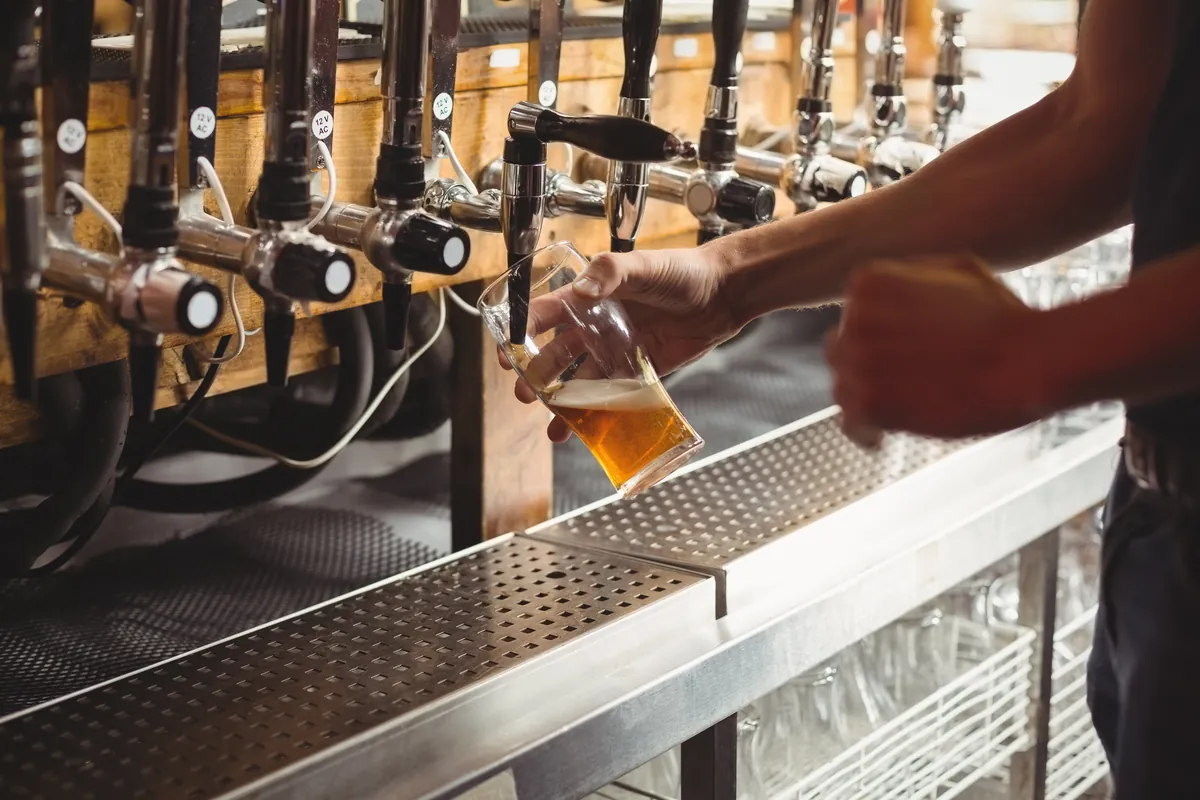
Beer Brewery at a Glance
| Typical capacity | ~1–20 lakh HL per year |
|---|---|
| Land | ~10–40 acres |
| Power load | ~2–8 MW |
| Water | Very high |
| Manpower | ~100–400 |
| Indicative investment | ~₹100–600 crore |
Investment basis: excludes land.
Figures are indicative ranges. Your project report works them out for your capacity and location.
Market Demand for Beer Breweries in India
Beer demand in India rests on a young population, premiumisation and gradual liberalisation of state policy. Your buyers are mainly state beverage corporations and licensed wholesalers, along with bars and restaurants. Retail happens only through state-licensed outlets, so access to these channels matters as much as the beer itself. Export potential is low, and sales usually peak in summer.
- State beverage corporations and licensed wholesalers
- Bars and restaurants
- State-licensed retail outlets
- Clusters in Karnataka, Maharashtra, Telangana, Rajasthan, Uttar Pradesh and Haryana
Beer Brewery Products You Can Make
Most new breweries start with mild and strong lager, since these suit mass-market state channels. Wheat beer and craft-style beers fit bars and restaurants that want a distinct brand. Packaging choice, bottled or canned, should follow what your distributors and outlets prefer.
- Mild and strong lager, wheat beer, craft-style beers, canned and bottled beer
Beer Brewery Process from Malt to Pack
The beer brewery process turns milled malt into wort, ferments it with yeast and packs the finished beer. Hot-side steps such as mashing, lautering and boiling with hops set the flavour and bitterness. Cold-side steps, fermentation, maturation and filtration, decide clarity and stability.
Quality is checked for alcohol content, bitterness, CO2, clarity and microbial stability, and FSSAI standards for alcoholic beverages apply. Technology choices include brewhouses from 50 HL, cylindro-conical fermenters and canning lines.
- Malt milling
- Mashing
- Lautering
- Wort boiling with hops
- Whirlpool and cooling
- Fermentation
- Maturation
- Filtration
- Bottling or canning
- Pasteurisation
Raw Materials and Machinery for a Beer Brewery
Malted barley is the main input, with rice or maize adjuncts, hops, yeast and water. Barley is typically sourced from Rajasthan, Haryana, Punjab and Uttar Pradesh, while hops are imported. The machines that matter most are the mash tun, lauter tun, wort kettle, fermenters and the packaging lines.
- Malt mill
- Mash tun
- Lauter tun
- Wort kettle
- Whirlpool
- Fermenters
- Bright beer tanks
- Filters
- Bottling and canning lines
- Tunnel pasteuriser
Beer Brewery Licence and Approvals
The state excise brewery licence is the main approval, so start there. Breweries are Red category with Environmental Clearance applying, so plan pollution approvals before construction. Product and plant approvals then follow.
- State excise brewery licence from the state
- Label and brand registration with excise
- FSSAI licence under alcoholic beverage standards
- Boiler approval (IBR) and water allocation
| Pollution category | Breweries are Red; Environmental Clearance applies |
|---|---|
| HSN code | 2203 (beer made from malt) |
| GST | Alcoholic liquor for human consumption is outside GST; state excise duty and VAT apply |
| BIS / quality control order | No QCO |
| FSSAI | FSSAI licence (alcoholic beverages standards) |
| Other licences | State excise brewery licence (the main approval, granted by the state); label and brand registration with excise; boiler (IBR); water allocation |
Choosing the Right Beer Brewery Size
Brewery size is the biggest cost decision. Indicative capacity runs from about 1–20 lakh HL per year, with investment from about ₹100–600 crore excluding land. A smaller plant needs fewer acres and less power, but a large one spreads fixed costs over more volume. Match size to the volume your state channels can realistically absorb.
Making Money from Brewery By-Products
A brewery produces saleable by-products, and planning for them improves returns. Spent grain is sold as cattle feed, which suits plants near dairy areas. Spent yeast has its own buyers, and CO2 can be recovered and reused in the plant. Your project report should include these revenues and the handling space they need.
Government Schemes and Project Finance for a Beer Brewery
Support for breweries comes mainly through state industrial policies, and some states give investment incentives. Check the policy of your chosen state early. Reports from NPCS are used for bank loans and government programmes, subject to each lender's requirements, so a bankable report strengthens your finance application.
What Decides Success in a Beer Brewery
Successful brewers secure the excise licence early and build strong state relationships. They also invest in distribution through state channels and in a recognisable brand. The main risks are listed below.
- Licence timelines
- State pricing controls
- Heavy duties
How NPCS Helps You Set Up a Beer Brewery
NPCS supports the decisions that shape a brewery: capacity, brewhouse technology, machinery selection and vendor choice. Our team also assists with plant layout, installation and commissioning, and prepares the financial projections lenders expect. You get a beer brewery project report tailored to your state, budget and planned volume.
NPCS's published client list records 24 assignments on beer brewery projects between 2010 and 2026 for clients in 11 states and 1 country, including detailed project reports, bankable project reports and techno-economic feasibility studies.
What Your Beer Brewery Project Report Covers
- Project introduction and BIS specifications
- Manufacturing process with flow sheet
- Market survey (demand, imports/exports, existing units)
- Personnel
- Plant and machinery with suppliers
- Land and building with layout
- Raw materials with sources and rates
- Financials (project cost, working capital, cost of production, profitability, break-even, 5–10 year cash flow, projected balance sheet, IRR/NPV/payback)
Beer Brewery: Frequently Asked Questions
How much does beer brewery setup cost in India?
An indicative investment is about ₹100–600 crore, excluding land, depending on capacity and packaging lines. Your actual cost depends on brewhouse size, location and technology. A project report works out the figures for your planned capacity.
Which licences are needed for a beer brewery?
The state excise brewery licence is the main approval. You also need label and brand registration with excise, an FSSAI licence, boiler approval (IBR) and water allocation. Breweries are Red category, and Environmental Clearance applies.
How much land and power does a brewery need?
Typically about 10–40 acres of land and a power load of about 2–8 MW, depending on capacity. Water requirement is very high, so confirm water allocation before finalising the site.
How to start a beer brewery business?
Begin with a feasibility study and a state-wise check of excise policy. Then fix capacity and technology, apply for the excise licence and environmental approvals, and arrange finance. Machinery ordering and construction follow once approvals are in place.
How does NPCS help with a beer brewery project?
NPCS prepares detailed project reports, bankable reports and feasibility studies, and guides machinery and vendor selection, plant layout and commissioning. Share your capacity and state, and our team will outline the project cost and approvals.