
 Tata Steel
 JSW Steel
 ITC (Agri Business Division)
 Godrej & Boyce
 Aditya Birla Management Corporation
 Grasim Industries (Century Rayon)
 Thermax (Chemical Division)
 UPL
Eco-friendly personal care brands, hotels and exporters are buying bamboo-handle toothbrushes in growing numbers, and that is where new manufacturing units find their first customers. A bamboo toothbrush manufacturing consultant helps you choose capacity, technology and location before you commit money. Our team at NPCS has worked on bamboo toothbrush projects and prepares reports that cover the process, machinery, approvals and finances. You get a clear picture of what the unit needs and what it can earn.
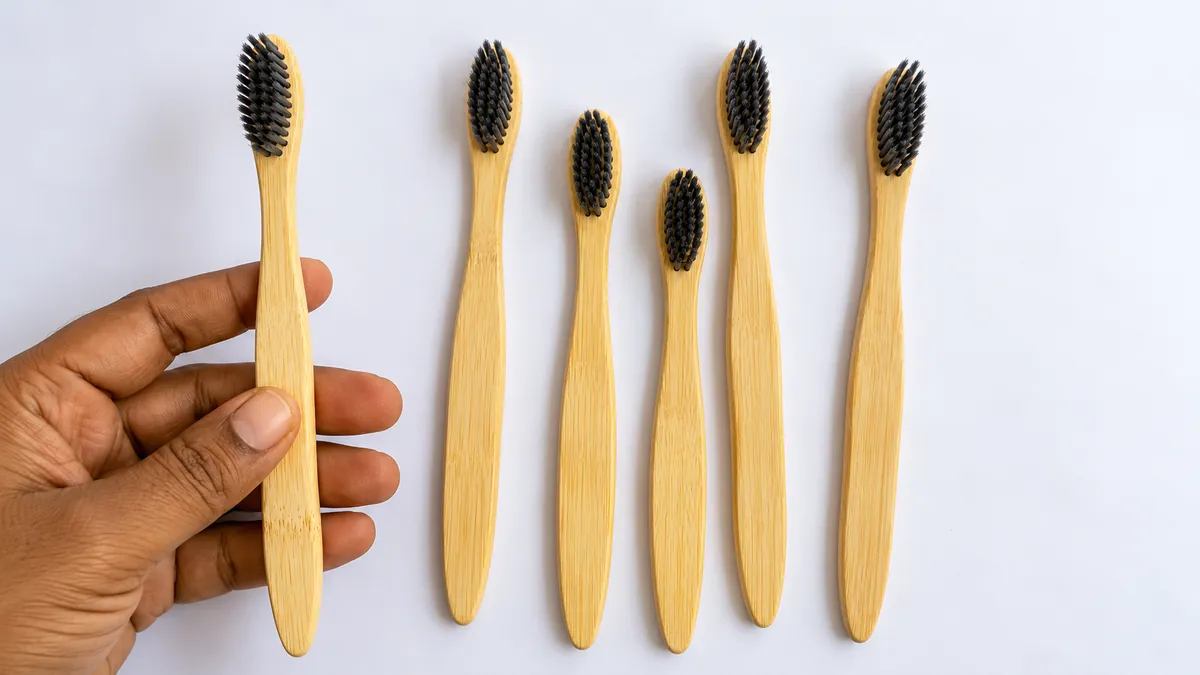
Bamboo Toothbrush Manufacturing at a Glance
| Typical capacity | ~10,000–1 lakh brushes per day |
|---|---|
| Land | ~0.5–2 acres |
| Power load | ~50–200 kW |
| Water | Low |
| Manpower | ~15–60 |
| Indicative investment | ~₹50 lakh–₹5 crore |
Investment basis: excludes land.
Figures are indicative ranges. Your project report works them out for your capacity and location.
Market Demand for Bamboo Toothbrushes in India
Demand for bamboo toothbrushes rises mainly because buyers want less plastic in personal care. Retail brands, hotel chains and online sellers all stock them, and private-label orders give a new unit steady volume. Export potential is high, so many units plan overseas buyers from day one. Bamboo is grown close to the main manufacturing clusters in Assam, Tripura, Kerala and Karnataka.
- Eco-focused personal care brands
- Hotels buying amenity kits
- E-commerce sellers and private labels
- Exporters supplying overseas retailers
Bamboo Toothbrush Products You Can Make
Most new units begin with adult brushes and add kids' sizes once tufting runs smoothly. Charcoal-infused and plant-based bristle variants suit eco brands that want a clear story. Private-label packs work well for hotels and e-commerce buyers who bring their own branding.
- Adult and kids' bamboo toothbrushes, charcoal-infused bristles, plant-based bristles, private-label packs
Bamboo Toothbrush Manufacturing Process
The bamboo toothbrush manufacturing process turns raw culms into finished brushes through cutting, shaping, treatment, branding and tufting. Tufting means fixing bristle bundles into the handle head using anchor wire. Handle shaping can be manual or done on CNC machines, and the choice affects consistency and labour needs. Automatic tufting machines raise output and keep bristle placement uniform.
Quality control matters most after drying and at tufting. Teams check handle moisture, mould resistance and tuft retention, and the product should meet IS 6265 for toothbrushes.
- Bamboo cutting
- Shaping and sanding
- Treatment and drying
- Laser branding
- Tufting
- Trimming and end-rounding
- Packing
Raw Materials and Machinery for a Bamboo Toothbrush Unit
Your main inputs are Moso or local bamboo, nylon or castor-oil-based bristles, anchor wire and kraft packaging. Bamboo is usually sourced from the North East and Kerala. The machines that matter most are the cutting and shaping line, the dryer and the tufting machine, since these decide handle quality and daily output.
- Cutting and shaping machines
- Dryer
- Laser marker
- Tufting machine
- Trimming machine
- Packing
Licences and Approvals for a Bamboo Toothbrush Unit
Start with Udyam registration, then apply to the State Pollution Control Board, since units like this are generally Green category. Bamboo toothbrush manufacturing licence and approvals also include Legal Metrology compliance for packed goods. No QCO applies, and FSSAI is not needed. Plan these before ordering machinery so construction isn't delayed.
| Pollution category | Generally Green |
|---|---|
| HSN code | 9603 21 (toothbrushes) |
| GST | 5% under GST 2.0 (toothbrushes) |
| BIS / quality control order | No QCO |
| Other licences | Udyam; Legal Metrology |
Export Opportunity for Bamboo Toothbrushes
Export potential for bamboo toothbrushes is high, and many Indian units are set up with overseas retail and private-label buyers in mind. Exporters expect consistent handle finish, mould-free storage and reliable tuft retention. Laser branding and kraft packaging help you match the eco look these buyers want. Confirm your target market's requirements early, because they shape packaging and testing.
Quality Standards for Bamboo Toothbrushes
Quality standards for bamboo toothbrushes centre on IS 6265, along with handle moisture and mould resistance checks. Although no QCO applies, buyers and exporters still ask for test records. Build testing for tuft retention into daily production, and keep batch records so you can answer buyer queries quickly.
Government Schemes and Project Finance for Bamboo Toothbrush Units
The National Bamboo Mission and PMEGP are the schemes relevant to this project. A bankable project report helps you present costs, margins and repayment clearly to lenders. Our reports are used for bank loans and government programmes such as PMEGP, MSME schemes, Mudra and NABARD-linked projects, subject to each lender's requirements.
What Decides Success in a Bamboo Toothbrush Unit
Units that do well control handle quality and secure export buyers early. Chinese competition is the main risk, so price carefully and differentiate on finish and branding.
- Control mould through proper drying and storage
- Line up export or private-label buyers
- Sell bamboo offcuts rather than discarding them
- Keep tufting quality consistent
How NPCS Helps You Set Up a Bamboo Toothbrush Unit
We help you fix capacity, choose between manual and CNC shaping, and shortlist machinery and vendors. Our team also supports plant layout, production process guidance, installation and commissioning. Your project report brings these decisions together with finances, so you can approach lenders and plan approvals with confidence.
NPCS's published client list records 4 assignments on bamboo toothbrush projects between 2018 and 2021 for clients in 3 states, including detailed project reports, bankable project reports and techno-economic feasibility studies.
What Your Bamboo Toothbrush Manufacturing Project Report Covers
- Project introduction and BIS specifications
- Manufacturing process with flow sheet
- Market survey (demand, imports/exports, existing units)
- Personnel
- Plant and machinery with suppliers
- Land and building with layout
- Raw materials with sources and rates
- Financials (project cost, working capital, cost of production, profitability, break-even, 5–10 year cash flow, projected balance sheet, IRR/NPV/payback)
Bamboo Toothbrush Manufacturing: Frequently Asked Questions
How much investment is needed to start bamboo toothbrush manufacturing?
An indicative range is ₹50 lakh–₹5 crore, excluding land. The figure depends on capacity, shaping technology and tufting automation. Your project report works out the cost for your planned output and location.
Which licences and pollution category apply to a bamboo toothbrush unit?
You need Udyam registration and Legal Metrology compliance. The unit is generally Green under pollution norms, so State Pollution Control Board consent is usually straightforward. No QCO applies and FSSAI is not required.
How much land and power does a bamboo toothbrush plant need?
Typically about 0.5–2 acres of land and a power load of about 50–200 kW, depending on capacity. Water need is low. Your layout and machinery choice settle the final figures.
How to start bamboo toothbrush manufacturing?
Begin with a project report to fix capacity, technology and cost. Then register on Udyam, secure bamboo supply, obtain pollution board consent, order machinery and line up buyers. Funding options like PMEGP can be explored alongside.
How can NPCS help with a bamboo toothbrush project?
We prepare detailed and bankable project reports, feasibility studies and market research. Our team also guides machinery selection, vendor choice and plant layout. Share your capacity and location, and we'll outline the next steps.