
 Tata Steel
 JSW Steel
 ITC (Agri Business Division)
 Godrej & Boyce
 Aditya Birla Management Corporation
 Grasim Industries (Century Rayon)
 Thermax (Chemical Division)
 UPL
Car accessory retailers, modern trade chains, e-commerce sellers and hotels buy air fresheners in steady volumes, which is why entrepreneurs keep entering this segment. An air freshener manufacturing consultant helps you choose between paper, gel, aerosol and diffuser formats before you commit capital. NPCS has worked with entrepreneurs since 1994, and our team prepares the plan, machinery list and approval roadmap for your capacity and location.
Air Freshener Manufacturing at a Glance
| Typical capacity | ~5,000–1 lakh units per day |
|---|---|
| Land | ~2,000 sq ft–1 acre |
| Power load | ~20–150 kW |
| Water | Low |
| Manpower | ~8–40 |
| Indicative investment | ~₹20 lakh–₹5 crore |
Investment basis: excludes land.
Figures are indicative ranges. Your project report works them out for your capacity and location.
Market Demand for Air Fresheners in India
Demand for air fresheners rises with car ownership and the growing habit of home fragrance. Products reach buyers in cars, homes, offices and hotels, so one unit can serve both retail and institutional customers. Demand is not strongly seasonal, which helps production planning.
Manufacturing is concentrated around Delhi-NCR, Mumbai, Gujarat and Kolkata, where fragrance suppliers, packaging vendors and large retail buyers are close by.
- Car accessory retailers
- Modern trade chains
- E-commerce sellers
- Hotels and offices
Air Freshener Products You Can Make
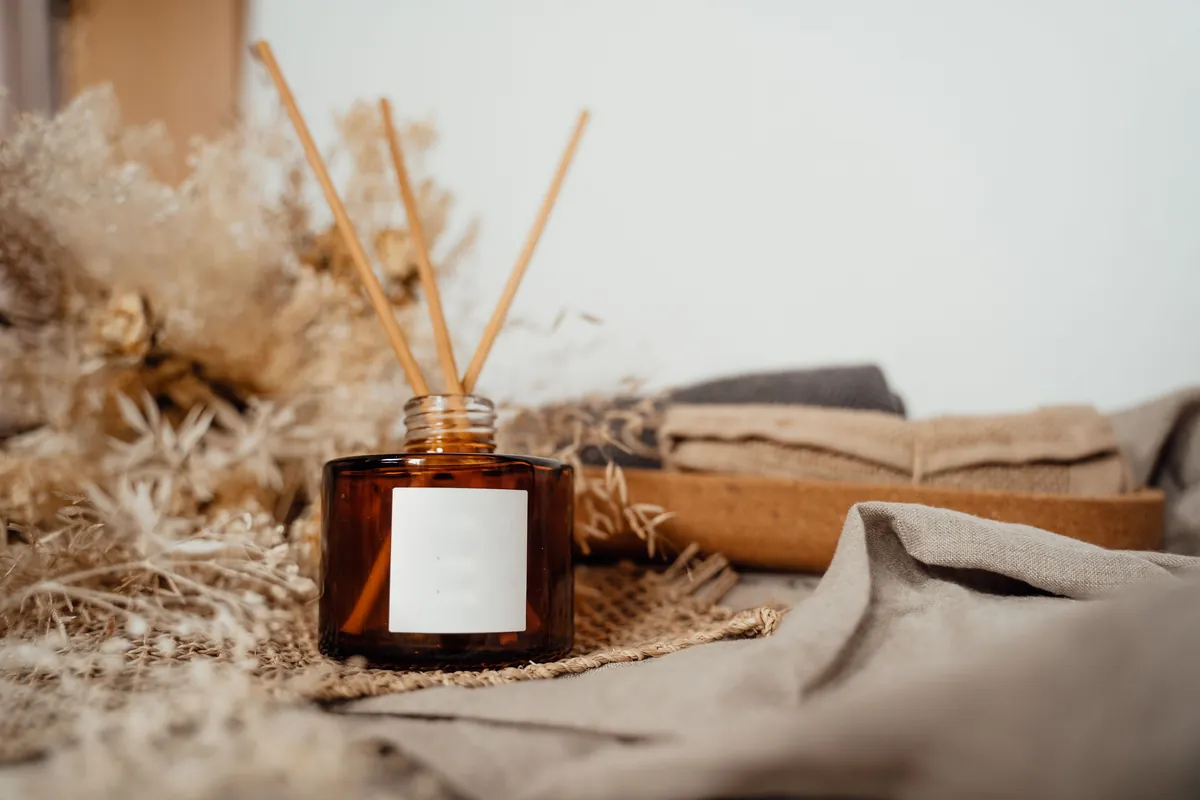
Paper hanging car fresheners suit a first-time entrepreneur with a smaller budget. Gel cans, aerosol room sprays, liquid diffusers and reed diffusers serve homes and hotels, and can be added once your brand has retail placement.
- Paper hanging car fresheners, gel cans, aerosol room sprays, liquid diffusers and reed diffusers
Air Freshener Manufacturing Process
The air freshener manufacturing process differs sharply by format. Paper fresheners are printed, die-cut, impregnated with fragrance oil and sealed in film. Gels are mixed and filled, while aerosols are filled and gassed before packing.
Quality is controlled at a few clear points. Fragrance life is checked on finished samples, aerosol cans go through leak tests, and VOC limits are verified for sprays. Consistent oil dosing during impregnation matters most for paper products, because it decides how long the scent lasts in a car.
- Printing and die-cutting of paper
- Fragrance impregnation
- Sealing in film; gels: mixing and filling; aerosols: filling and gassing
- Packing
Raw Materials and Machinery for Air Fresheners
Fragrance oils are the key input and usually come from fragrance houses. Absorbent paper board, gel bases, aerosol cans, propellant and packaging are mostly sourced locally. Paper lines need a printer, die-cutter, impregnation tanks and sealing machines, while aerosols need a filler and gasser, which raise the cost considerably.
- Printer
- Die-cutter
- Impregnation tanks
- Sealing machines
- Gel filling
- Aerosol filler and gasser
Licences and Approvals for Air Freshener Manufacturing
Start with your business registration and factory licence, then obtain State Pollution Control Board consent before building. Blending and filling is generally Green or White, but aerosol gassing adds safety conditions. Storing propellant needs a PESO licence, and Legal Metrology registration applies to packed goods. No QCO applies to this product.
| Pollution category | Blending and filling is generally Green or White; aerosol gassing adds safety conditions |
|---|---|
| HSN code | 3307 41/49 (room deodorisers) |
| GST | 18% |
| BIS / quality control order | No QCO |
| Other licences | PESO for aerosol propellant storage; Legal Metrology; factory licence |
Choosing the Right Air Freshener Technology
Paper fresheners need low capex and suit new entrants who want to start quickly with modest machinery. Aerosol lines cost more and bring PESO and safety conditions, but they open the room spray segment for homes and hotels. Many units begin with paper and add gel or aerosol lines after building retail relationships.
Planning Your Air Freshener Product Mix
Begin with paper hanging car fresheners, since they match car accessory retailers and need the simplest setup. Add gel cans next, as they share fragrance sourcing and need only mixing and filling equipment. Aerosol sprays, liquid diffusers and reed diffusers can follow once demand from modern trade, e-commerce and hotels is proven.
Government Schemes and Project Finance
PMEGP is the scheme named for this project, and a small paper freshener unit may fit within it. Banks usually ask for a detailed project report showing cost, working capital and profitability. NPCS reports are used for bank loans and programmes such as PMEGP, subject to each lender's requirements.
What Decides Success in an Air Freshener Unit
Units that do well get fragrance quality and retail placement right. Price competition is the main risk to plan for, so your costing must hold up against low-priced rivals. Waste is minimal, so by-products add little income.
- Choose fragrances that last and appeal to buyers
- Secure shelf space with retailers early
- Keep costs low enough to face price competition
How NPCS Helps You Set Up an Air Freshener Unit
Our team supports the decisions that shape your investment: the format to start with, the capacity, and the technology. We help with machinery selection, vendor selection and plant layout, then guide you through installation and commissioning. We also map the approvals, including PESO if you add aerosols, so your timeline is realistic.
NPCS's published client list records 27 assignments across consumer and personal care products projects between 2012 and 2024, for clients in 10 states and 8 countries.
What Your Air Freshener Manufacturing Project Report Covers
- Project introduction and BIS specifications
- Manufacturing process with flow sheet
- Market survey (demand, imports/exports, existing units)
- Personnel
- Plant and machinery with suppliers
- Land and building with layout
- Raw materials with sources and rates
- Financials (project cost, working capital, cost of production, profitability, break-even, 5–10 year cash flow, projected balance sheet, IRR/NPV/payback)
Air Freshener Manufacturing: Frequently Asked Questions
What is the air freshener manufacturing setup cost in India?
An indicative investment is ₹20 lakh to ₹5 crore, excluding land. A paper freshener unit sits at the lower end, while aerosol lines cost more. Your project report works out the exact figure for your capacity and location.
Which licences are needed for air freshener manufacturing?
You need a factory licence, Legal Metrology registration and State Pollution Control Board consent. Blending and filling is generally Green or White. If you make aerosols, PESO approval is needed for propellant storage.
How much land and power does an air freshener unit need?
Land typically ranges from about 2,000 sq ft to 1 acre, and power load from about 20 to 150 kW, depending on capacity and format. Water use is low.
How to start air freshener manufacturing?
Choose your format first, usually paper for a low-cost start. Then prepare a project report, finalise machinery, register the unit and obtain consents, and line up fragrance suppliers and retail buyers before production begins.
How can NPCS help with an air freshener project?
NPCS prepares the project report, advises on technology and machinery, supports vendor selection and layout, and maps approvals. Share your planned capacity and location, and our team will outline the project cost and approvals.