

 New
Bestseller
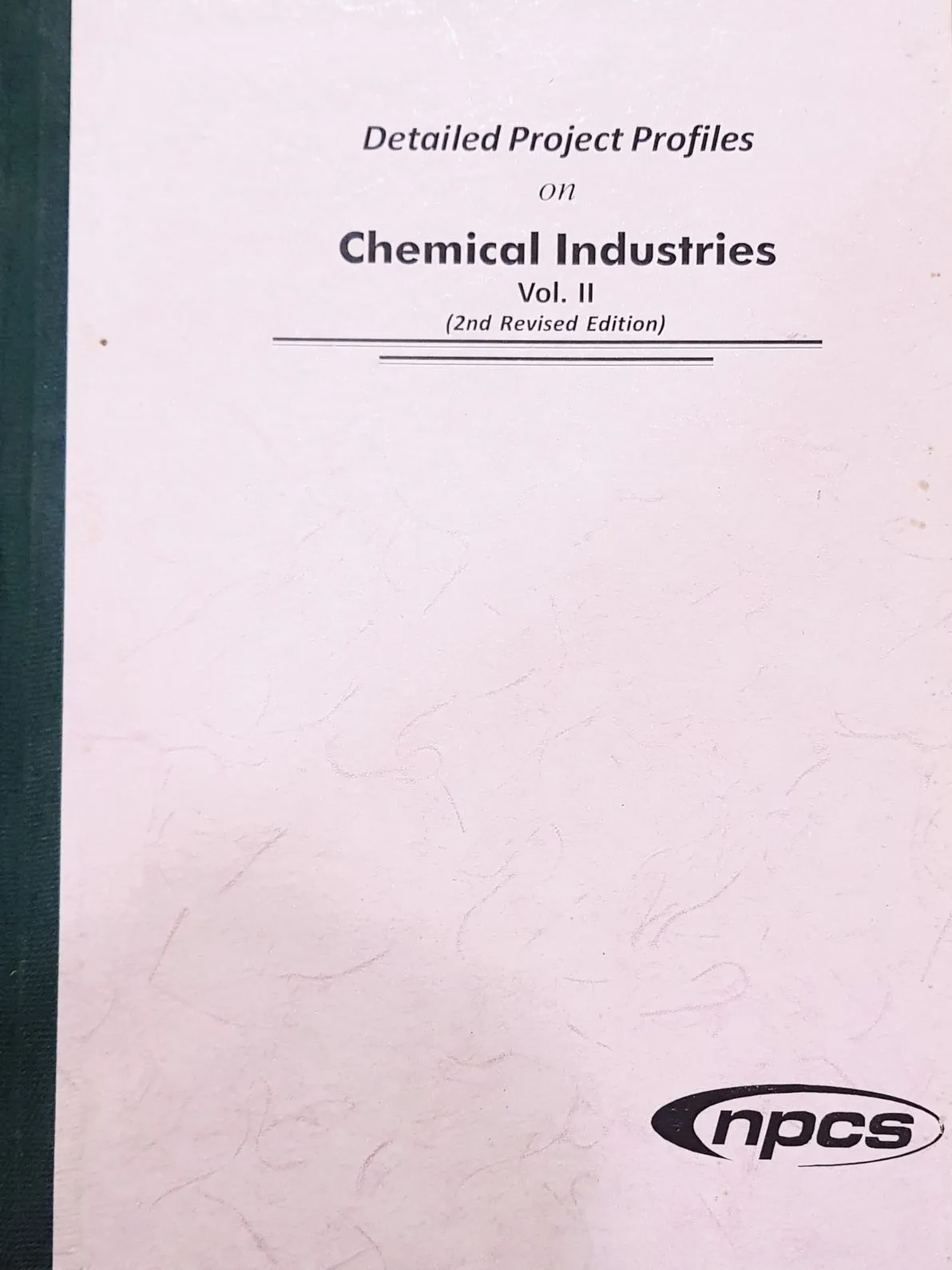
Detailed Project Profiles On Chemical Industries (Vol II) (2nd Revised Edition)
Detailed Project Profiles on Chemical Industries (Vol II) · 2nd revised edition
This book gives project profiles for chemical products such as acrylic acid, dicalcium phosphate, potassium iodate, sodium silicate and zinc sulphate. It helps entrepreneurs evaluate small and medium chemical manufacturing projects.
₹1,695 US$44.95
Plus GST as applicable
- Hardcover
- 158 pages
- In stock, ships in 5 working days
- ISBN
- 9789381039144
- Pages
- 158
- Author
- NPCS Board
- Publisher
- NIIR PROJECT CONSULTANCY SERVICES
- Edition
- 2nd revised edition
- Language
- English
- Product code
- NI3
Who this book is for
- Entrepreneurs planning a chemical unit
- Existing chemical manufacturers diversifying
- Project consultants
- Investors in chemicals
What's inside
- An introductory chapter on the chemical industry
- 12 product project profiles
- Acetylene gas, acrylic acid and its derivatives
- Ciprofloxacin HCl and L-ascorbic acid
- Dicalcium phosphate, single super phosphate and precipitated calcium carbonate
- Manganese oxide, potassium iodate and sodium silicate
- Zinc sulphate in different grades
Table of contents
Show or hide the full contents
1. Chemical Industry
2. Acetylene Gas
3. Acrylic Acid and Its Derivatives
4. Ciprofloxacin HCL
5. Dicalcium Phosphate
6. Glycerol Monostearate
7. L-Ascorbic Acid (Plain)
8. Manganese Oxide
9. Potassium Iodate
10. Precipitated Calcium Carbonate
11. Single Super Phosphate
12. Sodium Silicate
13. Zinc Sulfate (33%, 21% & 12%)
Need a detailed project report?
This book explains the technology. For a bank loan or an investment decision, NPCS also prepares project reports with plant cost, machinery and five-year financials.
About this book
Read the full description
***********Limited Edition- available in Photostat Version Only************
Chemical industry, complex of processes, operations, and organizations engaged in the manufacture of chemicals and their derivatives. The chemical industry may be described simply as the industry that uses chemistry and manufactures chemicals. A chemical substance is a form of matter that has constant chemical composition and characteristic properties. It cannot be separated into components by physical separation methods, i.e. without breaking chemical bonds. It can be solid, liquid, gas, or plasma. The scope of the chemical industry is in part shaped by custom rather than by logic. An average chemical product is passed from factory to factory several times before it emerges from the chemical industry into the market.
The chemical sector has witnessed growth of 13-14% in the last 5 years A number of initiatives have been proposed in the 12th 5-year plan (2012-2017) to boost the growth of Indian Chemical industry like Target to increase the share of manufacturing in GDP to at least 25% by 2025 (from current 16%). Investments in manufacturing in the chemical sector are absolutely essential to ensure growth of the Indian chemical industry, FDI inflow picked up in FY11 reaching USD 2,345 Mn and USD 4,041 Mn in FY12. Indian Chemical industry also managed to lead industrial IIP in FY13. As per CSO sources, Chemicals IIP for FY13 stood at 3.1% while the overall IIP was 0.8%. The Indian chemicals industry, which earned revenues in the range of $ 155-160 billion in 2013, is likely to grow at a rate of 11-12 percent in the next two to three years. The market is likely to grow at a Compound Annual Growth Rate (CAGR) of 13-14 percent. “Product customization and understanding of unique customer needs has been one of the key success levers for the Indian chemical industry. The chemical industry can be broadly classified into two segments – organic and inorganic chemicals. Organic chemicals cover over half of all known chemical compounds, and include petrochemicals, drugs, cosmetics, agrochemicals, etc. Inorganic chemicals comprise alkalis, dyes and dyestuffs.
The content of the book includes information about chemical industry. The major contents of this book are project profiles of projects like acetylene gas, acrylic acid and its derivatives, ciprofloxacin HCl, dicalcium phosphate, glycerol monostearate, L-ascorbic acid (plain), manganese oxide, potassium iodate, precipitated calcium carbonate, single superphosphate, sodium silicate and zinc sulfate (33%, 21% & 12%) .
Project profile contains information like introduction, properties, uses and applications, raw material used, manufacturing process, flow diagram, plant economics, land and building, plant and machinery, fixed capital, working capital requirement/month, total working capital/month, cost of project, total capital investment, turn over/annum, profit sales ratio, rate of return, breakeven point (B.E.P)
This book is very useful for new entrepreneurs, technical institutions, existing units and technocrats.
Questions about this book
Is this a printed book or a PDF?
This is a hardcover edition, shipped within 5 working days of payment. The free sample PDF on this page shows the contents and introduction.
Which edition is this?
This is the 2nd revised edition of the Detailed Project Profiles on Chemical Industries (Vol II).
Can I order from outside India?
Yes. Buyers outside India pay the US$ price shown. WhatsApp or email us for the delivery time to your country.
Can colleges, libraries or companies order in bulk?
Yes. Write to npcs.india@gmail.com or WhatsApp us with the titles and quantities for a quote.
How do I pay?
Add the book to the cart and pay online, or WhatsApp us to order and pay by bank transfer.
Related books
New New
MENA Soda Ash Market Report
₹3,49,280 US$3,700 Bestseller
 New
 Bestseller
Modern Technology of Industrial Chemicals
₹1,100 US$29.73 New