
 New
Bestseller
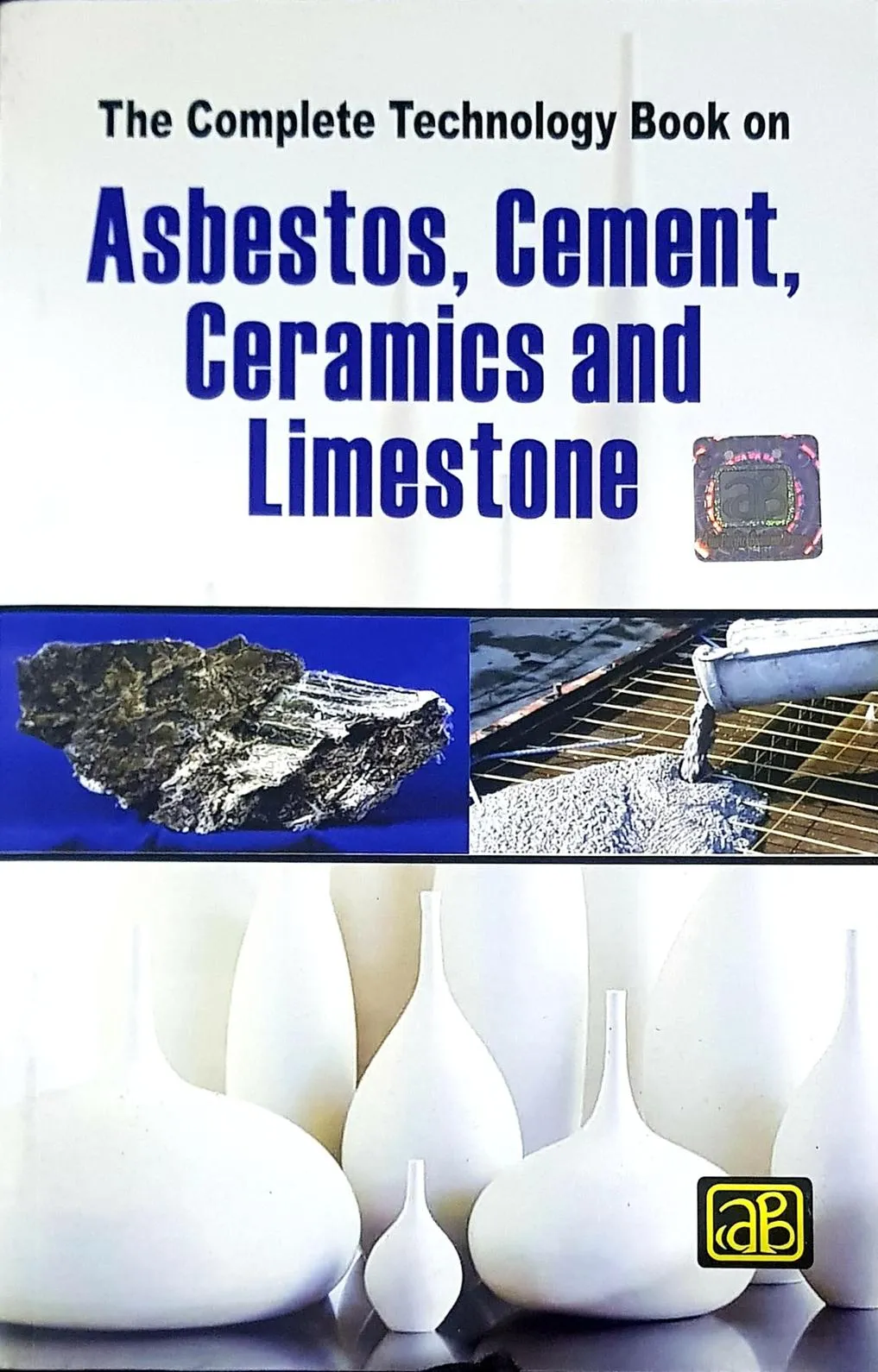
The Complete Technology Book on Asbestos, Cement, Ceramics and Limestone
Asbestos, Cement, Ceramics and Limestone Handbook
This book covers asbestos, cement, ceramics and limestone, including their properties, analysis and manufactured products. It helps technologists and entrepreneurs in building materials understand processes and safety aspects.
₹1,875 US$50.67
Plus GST as applicable
- Paperback
- 592 pages
- In stock, ships in 5 working days
- ISBN
- 9788178331669
- Pages
- 592
- Author
- Dr. H. Panda
- Publisher
- Asia Pacific Business Press Inc.
- Language
- English
- Product code
- NI297
Who this book is for
- Building materials manufacturers
- Entrepreneurs planning a cement or ceramics unit
- Quality control and laboratory staff
- Occupational health and safety professionals
What's inside
- Asbestos: commercial uses, properties, composition and methods of analysis
- Monitoring and identification of airborne asbestos
- Alternatives to asbestos in industrial applications
- Asbestos-cement products and methods of manufacture
- Non-occupational asbestos emissions and exposures
Table of contents
Show or hide the full contents
Chapter I
Asbestos
Commercial Uses
Properties and Composition
Method of Analysis
Chrysotile
Procedure
Crocidolite and Amosite
Procedure
Chapter II
Monitoring and Identification of Air-borne Asbestos
Synposis
Introduction
Membrane Filter Method
I. Outline Technique
II. Definitions of Fibre which are evaluated
III. Membrane Filter
IV. Sampling
V. Transportation of Filters
VI. Mounting of the Filters
VII. Microscopical Evolution
VIII. Accuracy of the Membrane Filter Method
IX. Recent Developments in Fibre Evalution
Determination of Very Low Asbestos Concentrations
Direct - Reading Dust Monitoring Equipment
Miscellanous Instruments
I. Introduction
II. The Thermal Precipitation
III. The Konimeter
IV. Owens Jet Counter
V. The Impinger
Identification of Air-borne Asbestos Fibres
I. Itroduction
II. Optical Techniques
III. Electron Microscopical Techniques
IV. Physical and Chemical Analysis
Summary
Chapter III
Alternatives to Asbestos in Industrial Applications
I. Thermal Properties
II. Mechanical Properties
III. Other Properties
IV. Price and Availability
V. Applications
Industrial Applications of Asbestos Products
I. Asbestos Textiles
1. Fire and Heat Protection Clothes
2. Fire Blankets, Curtains and Aprons
3. Electrical Insulators
4. Filters
5. Ropes, Yarns, Tapes etc
6. Other Applications
II. Thermal Insulations and High Temperature Applications
1. Dry Asbestos Packings
2. Asebstos Jointings
3. Gaskets
4. Lining and Insulating Blocks
5. Ceramic and Mineral Fibres
6 Vermculite and Perlite
7 Solid Ceramics
8 Further information
III. Asbestos millboard
1. Substitutes
IV. Industrial applications of asbestos-cement
1. Substitutes
VI. Friction materials
1. Substitutes for asbestos in friction materials
V. Dry-rubbing bearings
1 Substitutes for asbestos-reinforced thermosets
in bearing applications
2 Conclusion
3 Acknowledgments
VI Electrical insulation
1 Substitutes for asbestos products in
electrical insulation
2 Substitute electrical insulants at high temperatures
VII Asbestos composites (not including frictional,
bearing, and electrical applications)
1 Alternatives to asbestos composites
VIII Miscellaneous applications
1 Substitutes
Health hazards of substitute materials
Conclusions
Chapter IV
Asbestos-Cement Products
Methods of Manufacture
Methods of Analysis
Procedure
Procedure
Chapter V
Non-Occupational Asbestos Emissions and Exposures
Asbestos emissions from natural sources
Asbestos emissions from human-created sources
Redistribution and fate of asbestos in the environment
(i) Redistribution by air
(ii) Redistribution by water
(iii) Ultimate fate of asbestos fibres
Exposure to airborne asbestos
(i) Exposure from ambient air
(ii) Exposure from air near asbestos industrial facilities
1 Asbestos mining, milling, and product manufacture
2 Transportation of materials containing asbestos
3 Estimated atmospheric concentration and exposures
(iii) Exposure from asbestos manufactured products
1 Automotive friction materials
2 Spray asbestos
(iv) Exposures from disposal of asbestos products and wastes
(v) Exposures of asbestos workers’ families
Exposure to asbestos in drinking water
(i) Asbestos content of drinking water supplies
(ii) Elevated asbestos levels
(iii) Estimated asbestos consumption from water
Exposure to asbestos in foods and drugs
Appendix, calculation of atmospheric asbestos
concentrations in the vicinity of major U.S. Asbestos
industrial facilities
Chapter VI
Cements, Mortars and Concrete
Hydraulic Cements
Cement Specifications
Methods of Analysis
Determination of Compound Composition
Determination of major components
Rapid Procedures for Major Components
Chapter VII
Raw Materials, Additives and Fuels for Cement
1. Raw Materials for Making Cement
2. Constituents of Raw Mix and their proportioning
2.1 Limestone
2.2 Silica and Alumina
2.3 Iron Oxide
3. Proportioning Constituents
3.1 Correcting Materials
4. Composition of Clinker
5. Quality Control
5.1 Commonly Found Proportions
6. Blended Cements
7. Fuels
8. Fuel in Shaft Kilns
9. Fuels for Rotary Kilns
10. Coals as Fuel
10.1 Preparation of Coal for Firing
10.2 Preparation of Oil for Firing
11. Costs of Fuels
12. Coals
12.1 Typical Compositions of Coal and Coke are
12.2 Typical Composition of Coal Ash is
12.3 Volatiles
13. Calorific Value of Fuels
14. Oils
15. Gas as Fuel
16. Specific Fuel Consumption Obtainable using Different Fuels
17. Requirements of Raw Materials and Fuel
Chapter VIII
Processes of Manufacturing of Cement
1. Process of Making Cement
2. Predominance of Wet Process
3. Marginal grade Limestone and Froth Flotation
3. Dry and Semi Dry Processes
3.1 Semi Dry Process
5. Dry Grinding and Blending
6. Semi Wet Process
7. Preheaters
7.1 Lepol Grate Preheater
7.2 Suspension Preheater
8. Clinker Coolers
8.1 Rotary and Planetary Coolers
8.2 Grate Coolers
9. Increase in Size of the Cement Plant – Large Kilns
10. Calciners
11. Technical Collaborations
12. Various Processes, Machinery and Size of Cement Plant
Chapter IX
Cements based on Natural and Artificial Pozzolanas
1 Fly Ash based Cements
1.1 Composition and properties of fly ashes
1.2 Lime-activated fly ash binder
1.3 Portland-fly ash cement and fly ash concrete
1.4 High-volume fly ash concrete
1.5 Alkali-activated fly binder
2. Cements made with fluidized bed ashes
3. Binders containing natural pozzolanas and related products
4. Microsilica-modified Portland cement
5. Rice Husk ash based cement
Chapter X
Fast-Setting Cements
1. Control of Portland Cement setting by
the use of chemical admixtures
2. Fast-setting gypsum-free portland cement
3. Fast-setting cements containing the phases
C11A7.CAF2 or C12A7
4. Fast-setting cements containing the phase tetracalcium
trialuminate sulfate.
5. Fast-setting blends of portland cement and calcium aluminate
cement
6. Fast-setting magnesium phosphate cement
7 Fast-setting glass cement
8 Miscellaneous fast-setting cements
Chapter XI
Special Portland Cements
1. Constituents and Composition of Portland Cements
1.1 Tricalcium silicate (3CaO.SiO2, abbreviation C3S)
1.2 Dicalcium silicate (2CaO.SiO2. abbreviating C2S)
1.3 Tricalcium Aluminate (3CaO.Al2O3, abbreviation C3A)
1.4 The ferrite phase [calcium alumiate ferrite,
2CaO(Al2O3, Fe2O3)[ abbreviation C2(A,F)]
1.5 Calcium sulfate
1.6 Free Calcium oxide (free lime, Cao)
1.7 Free Mangness oxide (periclase, MgO)
1.8 Alkali sufates
1.9 Composition of Portland clinker and Portland cement
2. The Hydration of Portland Cement
3. High-C3S Portland Cement
4. Portland Cement with Elevated C2S content
5. High-C3A Portland Cement
6. C3A Portland Cement
7. Low-Iron (White) Portland Cement
8. High-Iron Portland Cement
9. High-Mgo Portland Cement
10. Low-Alkali Portland Cement
11. Mineralized Portland Cement
12. High Specific Surface Area Portland Cement
13. Low Specific Surface Area Portland Cement
13. Limestone-Modified Portland Cement
15. Portland Cement Modified with Chemical Agents
16. Gypsum-Free Portland Cements
16.1 Low-porosity cement
17. Special Approaches in Portland Cement Manucacture
18. Special Approaches in Cement Processing
Chapter XII
Packing of Cement
1. Packing Cement for Despatches
2. Packing Machines
2.1 Rotary Packing Machines
3. Paper and HDPE/Jute Bags
Chapter XIII
Storages of Cement
1. Storages
2. Daily requirements of Various Materials
3. Conventions in Storing various materials
4. Factors Governing Storages
5. Storages of Semi Finished and Finished products
6.1 Quarry
6.2 Crusher
6.3 Stack Reclaimer
6.4 Raw Mill and Blending
Kiln feed
6.5 Preheater – Calciner – Kiln and cooler
6.6 Cement
7. Storage After Expansion
8. Storage of Coal
10. Space for storages
Chapter XIV
Ceramics
Clay Products, Whitewares, and Porcelains
Enamels and Glazes
Glass and Glass Ceramics
Refractories
Newer Ceramics
Methods of Analysis
Determination of the Chemical Composition
Sampling
Anaysis
Emission Spectrometry
X-Ray Diffraction
Chapter XV
Lime and Limestone
Properties
Uses
Methods of Analysis
Sampling and Handling Precautions
Composition Analysis
Basicity Tests
Physical Tests
Chapter XVI
Glass and Glass Ceramics
Constitution of Glasses
Method of Analysis
Composition Analysis
Chemical Methods for Individual Constiluents
Redox State Determinations
Chelomelry
Flame Spectroscopy
Emission Spectroscopy
Spectrophotometry
X-Ray Diffraction
Microscopy
Electron Microprobe Analysis
Need a detailed project report?
This book explains the technology. For a bank loan or an investment decision, NPCS also prepares project reports with plant cost, machinery and five-year financials.
About this book
Read the full description
Asbestos is the generic term for a group of naturally occurring fibrous minerals with high tensile strength, flexibility, and resistance to thermal, chemical and electrical conditions. Asbestos fibers are of high-tensile strength, flexible, heat and chemical resistance, and good frictional properties. Cement is the most essential raw material in any kind of construction activity. Ceramics also known as fire clay is an inorganic, non-metallic solid article, which is produced by the art or technique of heat and subsequent cooling. Limestone is a sedimentary rock, mainly composed of calcium carbonate (CaCO3). It is the principal source of crushed stone for construction, transportation, agriculture, and industrial uses.
Emerging applications in commercial sectors such as asbestos, cement and ceramic are poised to fuel demand in the coming years. Growing demand for limestone in the production of cement as well as in several other chemicals that are used in the production of high-value every-day products offers significant opportunities for growth. Global Limestone consumption is projected to reach 5.7 billion tons and expected to grow at an average annual rate of 4–5% in coming years. Presently, cement production is 330 million tonnes and expected to double to reach almost 550 million tonnes in future.
The major contents of the book are asbestos, monitoring and identification of air-borne asbestos, asbestos in industrial applications, asbestos – cement products, non – occupational asbestos emissions and exposures, cements, mortars and concrete, raw materials, additives and fuels for cement, processes of manufacturing of cement, cement based on natural and artificial pozzolanas, fast-setting cements, special portland cements, packing of cement, storages of cement, ceramics, lime & limestone, glass & glass ceramics etc. It describes the manufacturing processes and photographs of plant & machinery with supplier’s contact details.
It will be a standard reference book for professionals, entrepreneurs, those studying and researching in this important area and others interested in the field of these industries.
Questions about this book
Is this a printed book or a PDF?
This is a paperback edition, shipped within 5 working days of payment. The free sample PDF on this page shows the contents and introduction.
Can I order from outside India?
Yes. Buyers outside India pay the US$ price shown. WhatsApp or email us for the delivery time to your country.
Can colleges, libraries or companies order in bulk?
Yes. Write to npcs.india@gmail.com or WhatsApp us with the titles and quantities for a quote.
How do I pay?
Add the book to the cart and pay online, or WhatsApp us to order and pay by bank transfer.
Related books
New New
India Glass Wool Ceiling Tiles Market Report
₹1,47,500 US$2,000 New
Gypsum and Gypsum Based Products Handbook
₹2,275 US$60.95 New
Formulary Book on Petroleum, Lubricants, Polishes and More
₹2,275 US$60.95