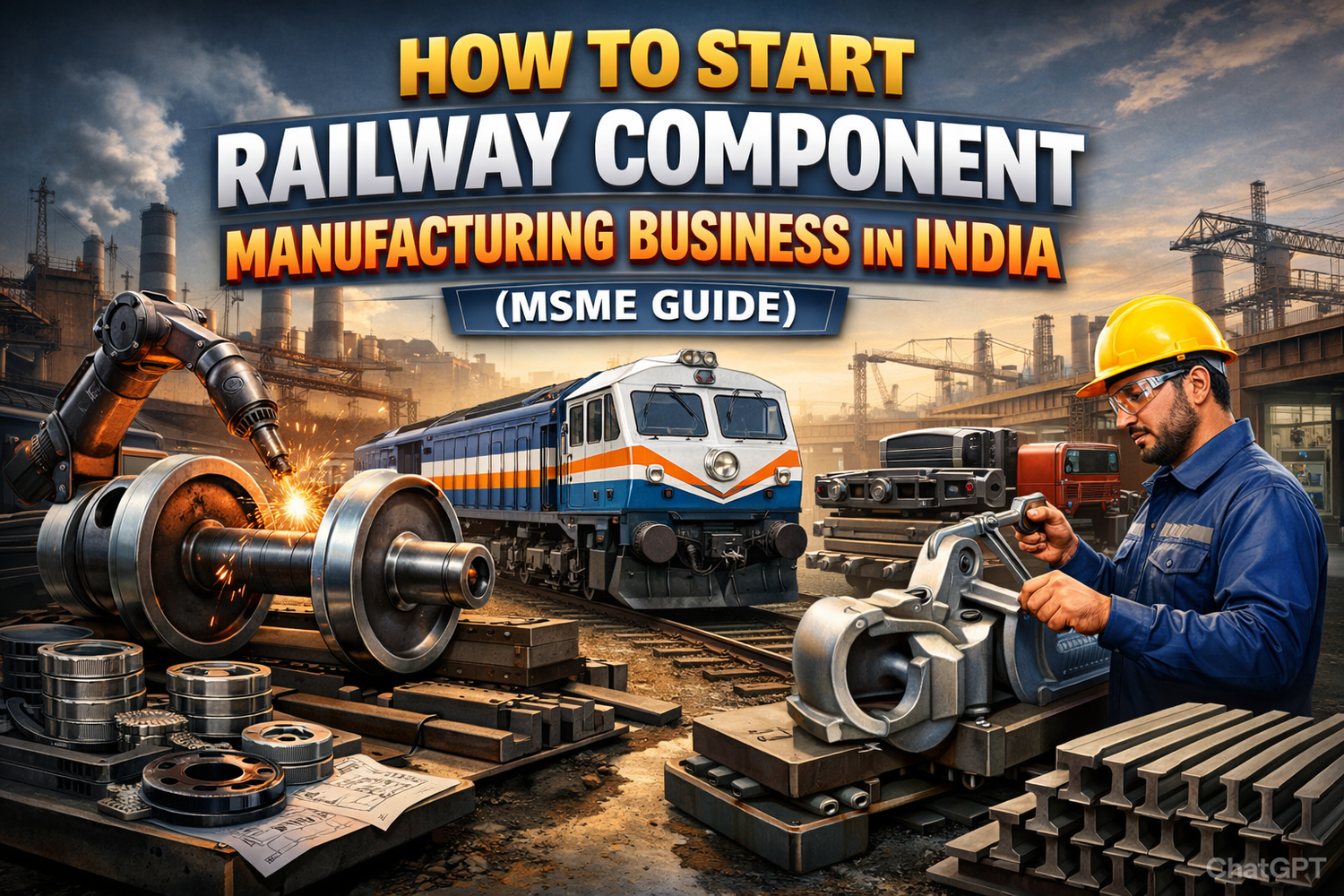

Railway Components Manufacturing, Indian Railways, is one of the largest railway systems in the world, transporting millions of passengers and large amounts of freight on a daily basis. Behind every locomotive, freight wagon and passenger coach is found an intricate ecosystem of precision-engineered components.
While full train manufacturing requires very high capital investment, the manufacturing of component parts of rolling stock offers a practical and scalable way in which MSMEs and new industrial entrepreneurs can get started.
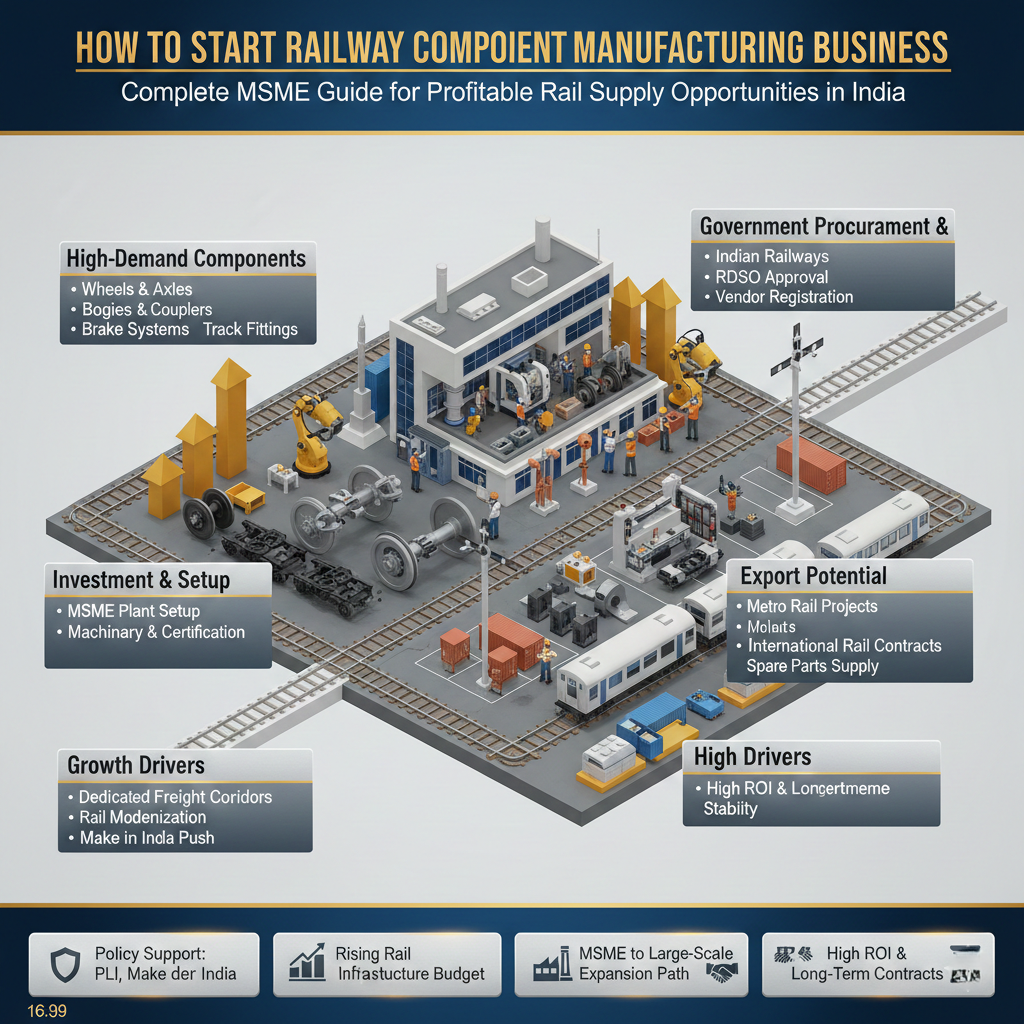
With the fastest electrification, expansion of the freight corridors, modernization of coaches, and increased safety standards, the demand for railway components in India is structural and long-term. For 2026 and years to come, this sector is one of the most stable infrastructure-linked manufacturing opportunities.
Read More: Investment Opportunities In Infrastructure Projects
Why Railway Component Manufacturing Is a Strategic Business Opportunity
Railway demand is unlike consumer driven industries. It is largely determined by:
- Government infrastructure budgets
- Long-term asset life cycles
- Institutional procurement systems
- Mandatory maintenance and overhaul schedules
The replacement and refurbishment and upgrade process of railway system components needs to occur at scheduled intervals throughout their operational lifespan which extends over multiple decades. This process establishes a consistent operational requirement that occurs on a recurring basis.
Important strategic advantages include:
- Government backed procurement visibility
- MSME vendor development programs
- Import substitution opportunities
- strong institutional buyers.
- Easier access to financing for the project
Technical standards and approvals are controlled and monitored by RDSO to ensure quality compliance and structured vendor onboarding.
Understanding the Rolling Stock Demand Ecosystem in the Railways
The rolling stock in India is composed of:
- Electric locomotives
- Diesel locomotives
- Freight wagons
- Passenger coaches
- Maintenance and Inspection Vehicles
Freight growth is still driving revenue growth of Indian Railways. Projects such as expansion of the freight corridors led by Dedicated Freight Corridor Corporation of India Limited have increased the demand for wagons and their operational intensity to a great extent.
At the same time:
- Electrification programs raise the demand for traction equipment
- Passenger coach modernization for interior upgrade
- Safety initiatives to improve braking and suspension systems
This interconnected ecosystem guarantees constant demand of mechanical, structural, electrical, and safety components.
Read More: India Glass Fibres and Glass Woven Fabrics Market
High Potential Railway Component Manufacture Segments
1. Freight Wagon Components
Freight transport is the backbone of the railway’s revenue. Heavy loading conditions lead to wear and tear, which increases the number of replacement cycles.
Some of the high-demand products are:
- Philippine suppliers include the following products
- Brake beams
- Couplers and draft gears
- Side frames and wear plates
This segment is ideal for fabrication, casting and forging based MSMEs. Standardized designs minimize product development risk. After vendors receive approval, institutions can automatically reorder products which results in secure income for their organization.
Investment Range: ₹2–5 crore
Typical Gross Margins: 18–25%
2. Passenger Coach Interior & Safety Components
Passenger safety and comfort improvements are always priorities. Even if new coach production were cut off, refurbishment cycles support demand.
Key products include:
- Seat and berth assemblies
- Modular interior panels
- Fire retardant flooring systems
- Automatic door systems
- Locking mechanisms and safety mechanisms
Interior component manufacturing offers manufacturing capabilities which enable designers to create products using various materials and lightweight composite materials and durable finishing materials.
Investment Range: ₹3–6 crore
Typical Gross Margins: 20–30%
3. Brake Systems and Pneumatic Equipment
Railway safety investments, there is also a significant increase in the demand for advanced braking systems.
Some of the opportunities that are available in abundance are:
- Air brake cylinders
- Pneumatic control valves
- Reservoir tanks
- Brake control assemblies
This segment requires better technical capability and testing infrastructure, but the approved suppliers typically have better pricing power because of the low competition.
Investment Range: ₹5–12 crore
Typical Gross Margins: 25–35%
Read More: Ethanol as Biofuel – Manufacturing Plant, Detailed Project Report, Profile, Business Plan, Industry Trends, Market Research, Survey, Manufacturing Process, Machinery, Raw Materials, Feasibility Study, Investment Opportunities, Cost and Revenue
4. Electrical and Traction Apparatus
That India nearly completely electrified its country has led to consistent demand for electrical assemblies and traction components.
Products in demand include:
- Junction boxes
- Cable harness assemblies
- LED lighting systems
- Power distribution panels
- Battery housings
Electrical components have an attractive capital demand and good export prospects, particularly in the developing railway markets of Africa, South Asia, and the Middle East.(Railway Components Manufacturing)
Investment Range: ₹4–8 crore
Typical Gross Margins: 22–30%
5. Suspension and Bogie Elements
Suspension systems absorb constant mechanical stress, as such they are high-frequency replacement items.
Common products:
- Coil springs
- Dampers
- Rubber-Metal bonded components
- Axle box housings
Entrepreneurs who possess forging and rubber processing and precision machining competencies can establish medium-sized businesses that will receive consistent customer demand.
Investment Range: ₹4–7 crore
Typical Gross Margins: 20–28%
Step-by-Step Process of Becoming a Railway Components Supplier in India
The railway supply chain needs specific requirements to be established before businesses can start operating within it.
Step 1: Selection of Product and Feasibility Study
Conduct techno-economic feasibility study covering:
- Market demand
- Competitive landscape
- Capital expenditure
- Break-even timeline
Step 2: Infrastructure Setup
Establish:
- Various compliant manufacturing facilities
- Quality Control Laboratories
- Testing infrastructure
- Attractive technical workforce
Step 3: Compliance and Certification
Obtain:
- MSME registration
- ISO certification
- Quality management systems
- Product-specific approvals
Step 4: Vendor Registration
Vendor registration needs execution through the Indian Railways procurement system which requires vendors to submit their prototype products while conducting field tests and performance evaluations before they receive system approval.
Step 5: Tender Participation
The system approves suppliers for participation in tenders which railway production units and zonal railways and public sector undertakings will issue.
Approval timelines vary but once laid, supplier relationships are usually long term and repeat based.(Railway Components Manufacturing)
Read More: Railway Infrastructure Boom: Manufacturing Business Opportunities for New Entrepreneurs
Financial Prospects and Profitability
Some of the benefits of railway component manufacturing include:
- Institutional creditworthiness
- Structured payment systems
- Multi-year supply contracts
While initial approval may take a while, the margins are much better once the repeat orders start.
A well-planned MSME unit can normally have:
- Break-even in 3–5 years
- Stable order pipeline with vendor’s approval
- Gradual capacity expansion (reinvestment)
Banks and financial institutions look at railway linked projects positively because of predictable procurement and infrastructure alignment.
Export Potential
Indian railway components are increasingly being exported to:
- Africa
- South Asia
- Middle East
India has cost competitiveness, engineering capability and compliance standards that offer additional export opportunities. MSMEs can make international business after gaining credibility at home.
Risks and Mitigation
Although stable, there are certain risks involved in the sector:
- Lengthy approval processes
- High quality compliance requirements
- Tender based pricing competition
Mitigation strategies are:
- Focusing on specialization in niche
- Investing in quality systems
- Building good technical documentation
- Maintaining cost efficiency
Read More: Top Most Profitable Business Ideas for the Next 10 Years
Why 2026 Is the Right Time to Enter
Infrastructure expansions, freight corridor development, electrification programs and modernization initiatives in India provide visibility of sustained demand. Unlike volatile consumer industries, the manufacturing of railway components is also in line with national infrastructure growth.
Additionally:
- Import substitution policies encourage domestic production
- MSME is actively supported
- Capital markets prefer infrastructure-linked businesses
The need for structural requirements together with institutional procurement procedures and ongoing maintenance activities creates a stable manufacturing opportunity for rolling stock components.
Conclusion
Railway rolling stock component manufacturing serves as an industrial enterprise, which proves to be an investment that will benefit India’s infrastructure development throughout multiple years. Entrepreneurs who are focused on specialization, compliance, quality excellence and operational discipline are able to build scalable enterprises that are national developmental aligned.(Railway Components Manufacturing)
For MSMEs who are looking for stability, institutional buyers, and structural demand, this is one of the best sectors of manufacturing in India to focus on in 2026 and beyond.
Frequently Asked Questions
Is railway components manufacturing profitable in India?
Yes. Institutional demand, compulsory maintenance cycles and the expansion of infrastructures have fixed profitability for the suppliers of those who comply.
How much money do you need to invest?
Small to mid-scale units can start with 2-5 crores, depending upon the complexity of the product.
Can a new MSME become a supplier for Railways?
Yes. After meeting the technical standards and completing the vendor registration, the MSMEs can become the approved suppliers.
Is demand seasonal?
No. Demand is infrastructural based and long-term as opposed to seasonally.
Are exports possible?
Yes. Indian manufacturers sell components to several developing railway markets.