
 Thermax (Chemical Division)
 Tata Steel
 JSW Steel
 ITC (Agri Business Division)
 Godrej & Boyce
 Aditya Birla Management Corporation
 Grasim Industries (Century Rayon)
Door makers, furniture manufacturers and interior contractors are turning to WPC because it resists termites and moisture, which solid wood doesn't. A wood plastic composite plant consultant helps you decide the product range, extruder type and capacity before you commit capital. NPCS has advised entrepreneurs on industrial projects since 1994. Our team prepares the project report, guides machinery selection and maps the approvals your unit needs.
Wood Plastic Composite Plant at a Glance
| Typical capacity | ~1,000–10,000 TPA |
|---|---|
| Land | ~1–4 acres |
| Power load | ~400 kW–2 MW |
| Water | Low |
| Manpower | ~20–80 |
| Indicative investment | ~₹3–30 crore |
Investment basis: excludes land.
Figures are indicative ranges. Your project report works them out for your capacity and location.
Market Demand for Wood Plastic Composite Products in India
Demand for WPC comes mainly from buyers who want a termite-proof, moisture-proof substitute for timber. Modular kitchens and furniture have widened this demand further. Seasonality is low, so orders tend to stay steady through the year.
- Door and furniture makers buying boards and shutters
- Interior contractors using panels and cladding
- Dealers who stock boards and profiles
- Gujarat, Maharashtra, Delhi-NCR, Rajasthan and Kerala as main clusters
Wood Plastic Composite Products You Can Make
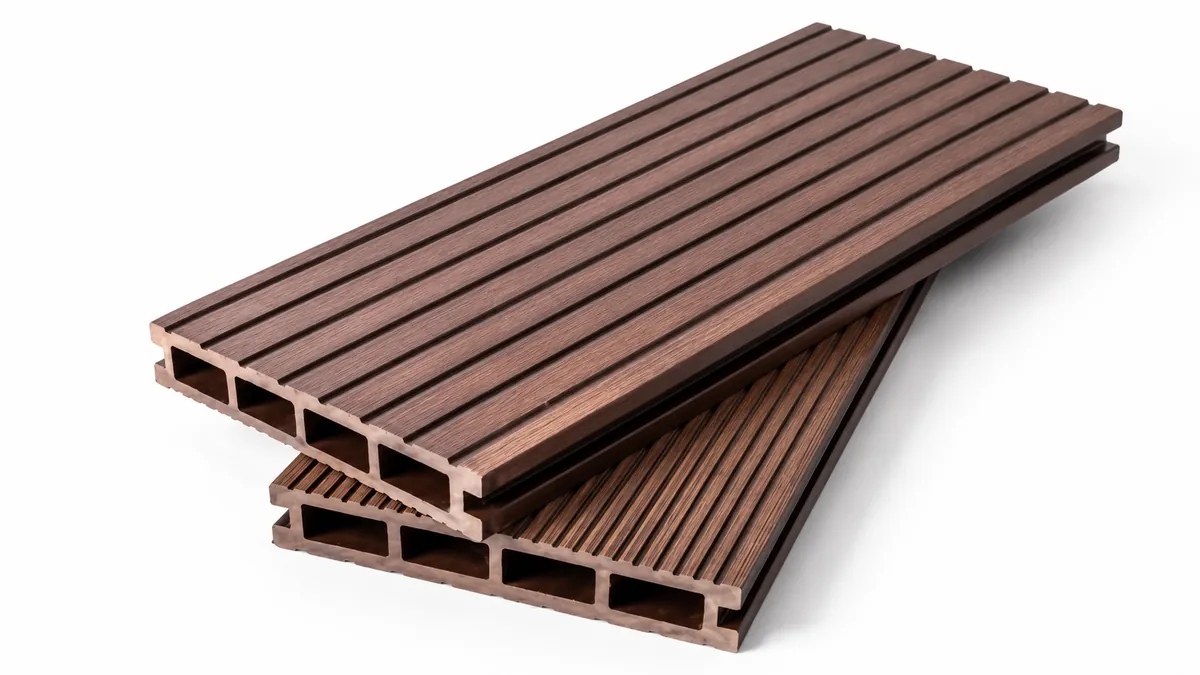
Most new units start with foam boards, since door and furniture makers buy them in volume. Door frames and shutters suit manufacturers who want a finished product. Decking and cladding profiles need different extrusion settings, so plan them as a later addition.
- WPC foam boards, door frames and shutters, decking and cladding profiles, furniture panels
Wood Plastic Composite Plant Process
The wood plastic composite plant process starts with drying the wood flour or rice husk powder, because moisture causes voids in the extrudate. The filler is then blended with resin and additives, either by compounding or dry blending. Extrusion follows, and Celuka foam is the usual route for boards.
Technology depends on the product. Conical twin-screw extruders suit PVC foam boards, while parallel twin-screw machines suit PE decking. Quality checks cover density, screw holding, water absorption and flexural strength, and door shutters are tested against IS 15380-type standards.
- Drying fillers
- Compounding or dry blending
- Extrusion (Celuka foam for boards)
- Calibration and cooling
- Cutting
- Embossing or lamination
- Packing
Raw Materials and Machinery for a WPC Plant
Resin is sourced domestically, while wood flour or husk is usually bought locally, which keeps freight low. Resin is your largest cost, so supplier terms matter. Among machines, the twin-screw extruder and the die and calibrator decide board quality, and the high-speed mixer decides how evenly the filler is blended.
- High-speed mixer
- Twin-screw extruder
- Die and calibrator
- Haul-off
- Cutter
- Laminating machine
Wood Plastic Composite Plant Licence and Approvals
Plastic processing from virgin resin falls in the Green category under CPCB S.No. 132. You still need the State Pollution Control Board's consent to establish before building, and consent to operate before production. Product standards are set by buyers, since the PVC resin QCO was withdrawn in November 2025.
- Unit registration and factory licence
- Consent to establish, then consent to operate
- EPR registration for packaging, as applicable
| Pollution category | Plastic processing from virgin resin: Green (CPCB S.No. 132) |
|---|---|
| HSN code | 3916 or 3925 (plastic profiles, builders' ware) |
| GST | 18% |
| BIS / quality control order | PVC resin QCO withdrawn Nov 2025; buyers specify product standards |
| Other licences | Factory licence; EPR registration for packaging as applicable |
Choosing the Right WPC Plant Size
Capacity in this project runs from about 1,000 to 10,000 TPA, and investment from about ₹3–30 crore excluding land. A smaller unit with one extrusion line lets you test dealer response before expanding. Larger plants spread fixed costs better but need a wider dealer network and more working capital. Your project report should compare both against your market area.
Securing Raw Material for Your WPC Plant
Resin price swings affect margins more than any other input, so agree supply terms with domestic producers early. Wood flour or rice husk powder is available locally, but moisture and particle size vary between suppliers. Test samples before fixing a vendor, and keep drying capacity in your plan. Trim and rejects can be reground and reused, which reduces waste.
Government Schemes and Project Finance for a WPC Plant
State incentives are the main support listed for this project, and they vary by state. A bankable project report helps when you approach a lender or apply for incentives. NPCS reports are used for bank loans and programmes such as PMEGP, MSME schemes, Mudra and NABARD-linked projects, subject to each lender's requirements.
What Decides Success in a WPC Plant
Good operators control board density and finish, build a dealer network and manage resin cost. Price competition and quality variation are the main risks to plan for.
- Consistent density and surface finish
- Reliable dealers across your region
- Regrind of trim and rejects to cut waste
How NPCS Helps You Set Up a WPC Plant
Our team helps you settle capacity, extruder type and product mix before you order machinery. We support machinery selection, vendor selection, plant layout, production process guidance and installation and commissioning assistance. The project report then sets out costs, financials and approvals so your lender and partners can review the plan.
NPCS's published client list records 10 assignments on wood plastic composite projects between 2013 and 2026 for clients in 6 states, including detailed project reports, bankable project reports and techno-economic feasibility studies.
What Your Wood Plastic Composite Plant Project Report Covers
- Project introduction and BIS specifications
- Manufacturing process with flow sheet
- Market survey (demand, imports/exports, existing units)
- Personnel
- Plant and machinery with suppliers
- Land and building with layout
- Raw materials with sources and rates
- Financials (project cost, working capital, cost of production, profitability, break-even, 5–10 year cash flow, projected balance sheet, IRR/NPV/payback)
Wood Plastic Composite Plant: Frequently Asked Questions
How much does it cost to set up a wood plastic composite plant in India?
Indicative investment is about ₹3–30 crore, depending on capacity, and this excludes land. Capacity ranges from about 1,000 to 10,000 TPA. Your project report works out the exact cost for your product mix, location and machinery.
Which licences and pollution category apply to a WPC plant?
Plastic processing from virgin resin is Green under CPCB S.No. 132. You need a factory licence, consent to establish and consent to operate from the State Pollution Control Board, and EPR registration for packaging where applicable.
How much land and power does a WPC plant need?
A typical plant needs about 1–4 acres and a power load of about 400 kW–2 MW, depending on capacity. Water need is low. These are indicative figures, and your layout and number of lines will decide the final requirement.
How do I start a wood plastic composite plant business?
Start by choosing your products, such as foam boards or door shutters, and a target capacity. Then confirm raw material sources, prepare a project report, obtain approvals, select machinery and build a dealer network before commissioning.
How can NPCS help with my WPC project?
NPCS prepares the project report and feasibility study, and guides technology, machinery and vendor selection and plant layout. Our team also supports installation and commissioning. Share your capacity and location to get started.