
 Godrej & Boyce
 Bajaj Steel Industries
 Shyam Steel Industries
 Tata Steel
 JSW Steel
 ITC (Agri Business Division)
 Aditya Birla Management Corporation
 Grasim Industries (Century Rayon)
A welding wire plant draws low-carbon wire rod into fine wire, copper-coats it and winds it onto spools or drums for fabricators. Entrepreneurs choose it because fabrication, PEB, automotive and shipbuilding buyers all consume it steadily. A welding wire plant consultant helps you decide the product range, technology and capacity before you commit capital. NPCS supports you with the plan, machinery selection and approvals.
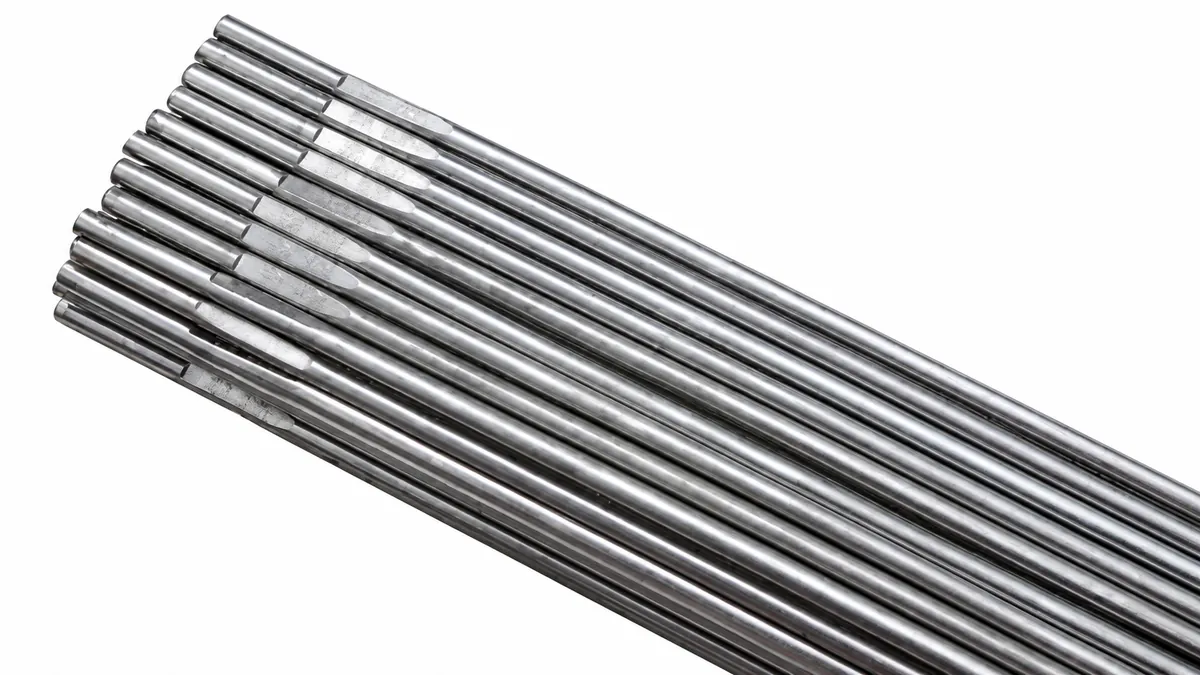
Welding Wire Plant at a Glance
| Typical capacity | ~3,000–30,000 TPA |
|---|---|
| Land | ~1–4 acres |
| Power load | ~500 kW–2 MW |
| Water | Moderate |
| Manpower | ~25–80 |
| Indicative investment | ~₹5–40 crore |
Investment basis: excludes land.
Figures are indicative ranges. Your project report works them out for your capacity and location.
Market Demand for Welding Wire in India
Demand for welding wire follows fabrication growth, and robotic welding is pushing buyers toward consistent, well-wound MIG wire. Production is concentrated in Gujarat, Maharashtra, Tamil Nadu, Punjab and Delhi-NCR, close to fabricators and steel supply. Export potential is medium, and seasonality is low, so output can run evenly through the year.
Your buyers will typically fall into these groups:
- Fabricators and structural shops
- PEB and structural firms
- Automotive suppliers
- Distributors who serve small workshops
Welding Wire Products You Can Make
Most new units start with MIG wire ER70S-6, which sells widely to fabricators and PEB firms. SAW wire in EL8 and EM12K grades suits heavy engineering and pipelines. Flux-cored and stainless MIG wire are advanced additions, better taken up once your drawing and coating lines are stable.
- MIG wire ER70S-6 (spools, drums), SAW wire EL8 and EM12K, flux-cored wire (advanced), stainless MIG wire
Welding Wire Plant Process and Quality Control
The welding wire plant process turns wire rod into spooled wire through drawing, copper coating and precise winding. Wire is descaled first, drawn down in stages, and annealed only if the rod needs it. Copper coating can be chemical or electrolytic, and your choice affects adhesion and effluent handling.
Quality is controlled at several points: chemical composition, diameter tolerance, cast and helix, copper adhesion and weld tests. Buyers usually expect conformity to AWS A5.18, A5.17 or IS 15352 type standards. Drum packs suit robotic welding lines, so consider them early.
- Mechanical descaling
- Rough drawing
- Annealing (if needed)
- Fine drawing
- Copper coating
- Precision layer winding on spools or drums
- Testing and packing
Raw Materials and Machinery for a Welding Wire Plant
Your main input is low-carbon wire rod (SAE 1008, with ER70S-6 chemistry), sourced from producers such as JSW and Tata Steel. Copper sulphate, drawing lubricants and spools complete the list. Among machines, the drawing machines, copper-coating line and layer winders matter most, because they decide wire finish and feedability.
- Descaler
- Rough and fine drawing machines
- Copper-coating line
- Layer winders
- Testing equipment
Welding Wire Plant Licence and Approvals
Begin with business registration, then obtain the State Pollution Control Board consent to establish before construction. Copper-coating is a surface treatment, so the category is generally Orange or Red, and the State PCB fixes it. Add a factory licence and hazardous waste authorisation for coating sludge, then consent to operate. Marine supply needs classification society approvals, and NPCS checks the current BIS requirement during planning.
| Pollution category | Wire drawing with copper coating (surface treatment): generally Orange or Red; the State PCB fixes the category |
|---|---|
| HSN code | 7229 or 8311 (welding wire) |
| GST | 18% |
| BIS / quality control order | QCO coverage changes often; NPCS verifies the current BIS requirement for your product during project planning |
| Other licences | Hazardous waste authorisation (coating sludge); factory licence; approvals from classification societies for marine use |
Choosing the Right Welding Wire Plant Size
Plant size is a major decision, since capacity runs from about 3,000 to 30,000 TPA and investment from about ₹5–40 crore, excluding land. A smaller unit with fewer drawing lines suits a first-time promoter selling to local fabricators and distributors. A larger plant needs more land, power and a wider distributor network. Matching capacity to your realistic sales reach prevents idle machinery.
Welding Wire Quality Standards and Certification
Buyers judge welding wire on feedability, copper adhesion and conformity to AWS A5.18, A5.17 or IS 15352 type standards. Heavy engineering and shipbuilding customers may also ask for classification society approvals. Plan test equipment and approval trials before commercial launch, so your first dispatches are accepted without rework.
Government Schemes and Project Finance for a Welding Wire Plant
Your state may offer incentives for engineering units, so check its industrial policy early. NPCS reports are used for bank loans and government programmes such as PMEGP, MSME schemes, Mudra and NABARD-linked projects, subject to each lender's requirements. A well-built project report shows costs, working capital and returns in the format lenders review.
What Decides Success in a Welding Wire Plant
Good operators get feedability, copper adhesion and distributor reach right. The main risks are wire rod price swings and imports, so plan stock and pricing carefully. Scale and coating sludge are your waste streams, and the sludge needs authorised disposal.
- Consistent cast and helix on every spool
- Strong copper adhesion
- A distributor network in your cluster
- Buffer for wire rod price changes
How NPCS Helps You Set Up a Welding Wire Plant
NPCS ties its services to the decisions you face: capacity, drawing and coating technology, machinery and vendor selection, plant layout and approvals. Our team prepares the detailed project report and bankable report, and assists with installation and commissioning. The report is tailored to your budget, raw material access and market area.
NPCS's published client list records 17 assignments across engineering and industrial equipment projects between 2012 and 2025, for clients in 11 states.
What Your Welding Wire Plant Project Report Covers
- Project introduction and BIS specifications
- Manufacturing process with flow sheet
- Market survey (demand, imports/exports, existing units)
- Personnel
- Plant and machinery with suppliers
- Land and building with layout
- Raw materials with sources and rates
- Financials (project cost, working capital, cost of production, profitability, break-even, 5–10 year cash flow, projected balance sheet, IRR/NPV/payback)
Welding Wire Plant: Frequently Asked Questions
How much investment is needed to start a welding wire plant?
An indicative range is about ₹5–40 crore, excluding land, depending on capacity and technology. Smaller lines cost less, while larger plants need more drawing and coating capacity. Your project report works out the exact cost for your location.
Which licences and pollution category apply to a welding wire plant?
Copper coating is a surface treatment, so the State PCB generally places the unit in the Orange or Red category. You'll also need a factory licence and hazardous waste authorisation for coating sludge. Marine supply needs classification society approvals.
How much land and power does a welding wire plant need?
Typically about 1–4 acres of land and a power load of roughly 500 kW to 2 MW, depending on capacity. Water need is moderate. Your layout and machinery list will fix the final requirement.
How to start a welding wire plant business?
Start by choosing your product, usually MIG wire ER70S-6, and your capacity. Then secure wire rod sources, select machinery, obtain PCB consent and licences, and line up distributors. A detailed project report ties these steps together.
How does NPCS help with a welding wire plant project report?
NPCS prepares a detailed report covering process, machinery, raw materials, market and financials, tailored to your capacity and location. Our team also supports machinery selection, vendor selection and approvals. Share your plan and we'll outline the next steps.