
 Godrej & Boyce
 SRF
 Shyam Steel
 Tata Steel
 JSW Steel
 ITC (Agri Business Division)
 Aditya Birla Management Corporation
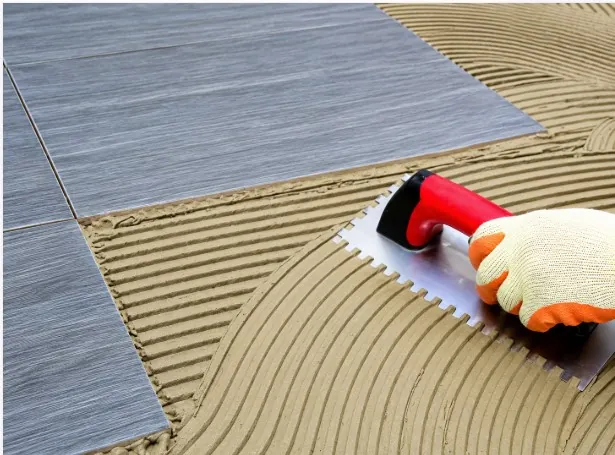
Tile dealers, contractors and builders now buy bagged adhesives and mortars in place of site-mixed cement and sand, and that shift is why entrepreneurs set up dry-mix plants. A tile adhesive and dry-mix plant consultant helps you decide the product range, plant size and machinery before you commit money. NPCS has worked with entrepreneurs on building material projects since 1994. Our team prepares the project report, advises on technology and guides you through approvals.
Tile Adhesive and Dry-Mix Plant at a Glance
| Typical capacity | ~10–200 TPD |
|---|---|
| Land | ~1–3 acres |
| Power load | ~100–500 kW |
| Water | Low, dry process |
| Manpower | ~10–40 |
| Indicative investment | ~₹1–5 crore (batch plant) to ₹10–25 crore (automatic tower) |
Investment basis: drying, mixing, packing; excludes land.
Figures are indicative ranges. Your project report works them out for your capacity and location.
Market Demand for Tile Adhesive and Dry-Mix Products in India
Demand rises as builders move from cement-sand mortar to adhesives, mainly because large-format tiles need stronger bonding and faster work. AAC block adoption adds demand for jointing mortar. Production is concentrated in Gujarat, Maharashtra, Karnataka, Tamil Nadu and Delhi-NCR. Sales dip in the monsoon, so plan your cash cycle around the construction season. Export potential is low, so the market is domestic.
- Tile dealers and hardware stores
- Contractors and applicators
- Builders and real estate developers
- Tile brands buying under white label
Dry-Mix Products You Can Make
Most new units begin with tile adhesives and add products that share the same mixing line. Wall putty, plaster and block-jointing mortar suit dealer and builder sales. Epoxy grouts need separate handling, so add them once volumes are steady.
- Tile adhesives (standard and flexible classes)
- Cementitious and epoxy grouts
- Wall putty
- Ready-mix plaster
- AAC block-jointing mortar
- Skim coat
Tile Adhesive and Dry-Mix Plant Process
The tile adhesive and dry-mix plant process is a controlled blend of dry ingredients, with no water used in production. Sand is dried and graded first, because moisture ruins shelf life and consistency. Weigh hoppers then dose each material to the recipe before the plough mixer blends it with cement and additives.
Quality is checked after mixing and before bagging. Tests cover tensile adhesion strength, open time and slip resistance, and IS 15477 is the voluntary reference for tile adhesives. Technology ranges from small batch mixers to automatic towers with silos, dosing and auto-packing.
- Sand drying and grading
- Batching
- Mixing with cement and additives
- QC
- Valve-bag packing
- Palletising
Raw Materials and Machinery for a Dry-Mix Plant
Cement and graded silica sand come from local cement plants and sand grading units. Redispersible polymer powder and cellulose ethers are largely imported or bought from specialty suppliers, so they drive your costs. The plough mixer, dryer and dust collectors matter most. Dust collectors also let you reuse collected dust.
- Sand dryer
- Vibrating screens
- Silos
- Weigh hoppers
- High-speed plough mixer
- Valve-bag packer
- Dust collectors
- Palletiser
Licences and Approvals for a Tile Adhesive and Dry-Mix Plant
Start with Udyam registration and the factory licence, then apply for pollution consent before construction. The closest CPCB entry is White, and plants with sand drying are generally Green. No quality control order applies, so IS 15477 certification is a voluntary choice. Buyers may still value it.
| Pollution category | Closest CPCB entry is standalone admixtures by physical mixing (CPCB S.No. 40, White up to 1,000 MT/month); dry-mix plants with sand drying are generally Green |
|---|---|
| HSN code | 3214 (mastics, tile adhesives, putty); 3824 50 (non-refractory mortars) |
| GST | 18% |
| BIS / quality control order | No mandatory QCO; IS 15477 voluntary |
| Other licences | Factory licence; Udyam |
Choosing the Right Dry-Mix Plant Technology
A small batch mixer plant suits a first-time entrepreneur serving local dealers, with an indicative investment of about ₹1–5 crore excluding land. An automatic dry-mix tower with silos, dosing and auto-packing suits those targeting higher volume and tile brands, at about ₹10–25 crore. Batch plants depend more on labour and give less batch consistency. Towers need steady offtake to justify the cost.
Securing Raw Material for Your Dry-Mix Unit
Additive supply is the main sourcing risk. Polymer powder and cellulose ethers are largely imported or come from specialty suppliers, so price swings flow straight into your margin. Agree supply with more than one source and keep a safe stock of additives. Sand and cement are easier to buy locally, but grading quality must stay consistent.
Government Schemes and Project Finance
Support comes mainly through state incentives, and demand is helped by housing programmes and real estate activity. Lenders want a detailed report with costs, market data and cash flow. NPCS reports are used for bank loans and programmes such as PMEGP, MSME schemes, Mudra and NABARD-linked projects, subject to each lender's requirements.
What Decides Success in a Tile Adhesive and Dry-Mix Plant
Operators who do well keep formulations consistent and build a loyal dealer and applicator network. Competition from cement majors and specialty brands is real, and the market is price-sensitive.
- Control additive cost carefully
- Run site demonstrations for applicators
- Plan for the monsoon dip
- Reuse collected dust to cut waste
How NPCS Helps You Set Up a Tile Adhesive and Dry-Mix Plant
Our team supports the decisions that shape this project: batch plant or automatic tower, product mix, machinery specifications and vendor selection. We also help with plant layout, installation and commissioning assistance. Your tile adhesive and dry-mix plant project report is tailored to your capacity, budget and market area.
NPCS's published client list records 26 assignments across building and construction materials projects between 2012 and 2026, for clients in 12 states and 5 countries.
What Your Tile Adhesive and Dry-Mix Plant Project Report Covers
- Project introduction and BIS specifications
- Manufacturing process with flow sheet
- Market survey (demand, imports/exports, existing units)
- Personnel
- Plant and machinery with suppliers
- Land and building with layout
- Raw materials with sources and rates
- Financials (project cost, working capital, cost of production, profitability, break-even, 5–10 year cash flow, projected balance sheet, IRR/NPV/payback)
Tile Adhesive and Dry-Mix Plant: Frequently Asked Questions
What is the tile adhesive and dry-mix plant setup cost in India?
An indicative investment is about ₹1–5 crore for a batch plant and ₹10–25 crore for an automatic tower. These figures cover drying, mixing and packing, and exclude land. Your project report works out the exact cost for your capacity.
Which licences are needed for a dry-mix plant?
You need Udyam registration and a factory licence. Dry-mix plants with sand drying are generally Green under pollution norms, so consent is needed from the State Pollution Control Board. There is no mandatory quality control order, and IS 15477 is voluntary.
How much land and power does a dry-mix plant need?
A plant typically needs about 1–3 acres and a power load of about 100–500 kW, depending on capacity. Water need is low because the process is dry. Capacities usually range from about 10–200 TPD.
How do I start a tile adhesive and dry-mix business?
Begin by fixing your product mix, capacity and technology, then prepare a project report. Next register the unit, obtain pollution consent, select machinery and secure additive suppliers. Build dealer relationships early, since distribution decides sales.
How can NPCS help with my dry-mix plant?
NPCS prepares the detailed project report, advises on technology, machinery and vendors, and supports layout and commissioning. Our reports are used for bank loans and schemes, subject to lender requirements. Share your capacity and location to begin.