
 Grasim Industries (Century Rayon)
 Jindal Woollen Industries
 Tata Steel
 JSW Steel
 ITC (Agri Business Division)
 Godrej & Boyce
 Aditya Birla Management Corporation
 Thermax (Chemical Division)
Weavers making sarees and fabrics, along with exporters, buy raw silk from reeling units that turn mulberry or tasar cocoons into filament. A silk reeling consultant helps you decide the capacity, machine type and location before you commit money. Demand comes from silk saree buyers and from efforts to replace imported bivoltine silk. NPCS has worked with entrepreneurs since 1994 and prepares project reports that cover technology, costs and approvals for your unit.
Silk Reeling at a Glance
| Typical capacity | ~5–60 kg raw silk per day |
|---|---|
| Land | ~2,000 sq ft–1 acre |
| Power load | ~20–100 kW |
| Water | Moderate |
| Manpower | ~10–60 |
| Indicative investment | ~₹20 lakh–₹3 crore |
Investment basis: excludes land.
Figures are indicative ranges. Your project report works them out for your capacity and location.
Market Demand for Silk Reeling in India
Demand for reeled silk in India rests on silk sarees and on the need to replace imported bivoltine silk. Units sell mainly to weavers, traders and exporters. Export potential is medium, so most new units start with domestic buyers and add export grades later. Cocoon crops run through the year, which supports steady operation.
- Weavers making sarees and fabrics
- Traders who supply weaving clusters
- Exporters of raw and twisted silk
- Ramanagara and Sidlaghatta in Karnataka
- Dharmavaram in Andhra Pradesh and Bhagalpur in Bihar
Silk Reeling Products You Can Make
Most new units begin with raw silk and add value later. Bivoltine raw silk suits weavers who want finer, more even yarn, while multivoltine serves routine demand. Twisted yarn, spun silk from waste, and tasar or eri silk can widen your range.
- Bivoltine and multivoltine raw silk, twisted silk yarn, spun silk from waste, tasar and eri silk
Silk Reeling Process and Quality Control
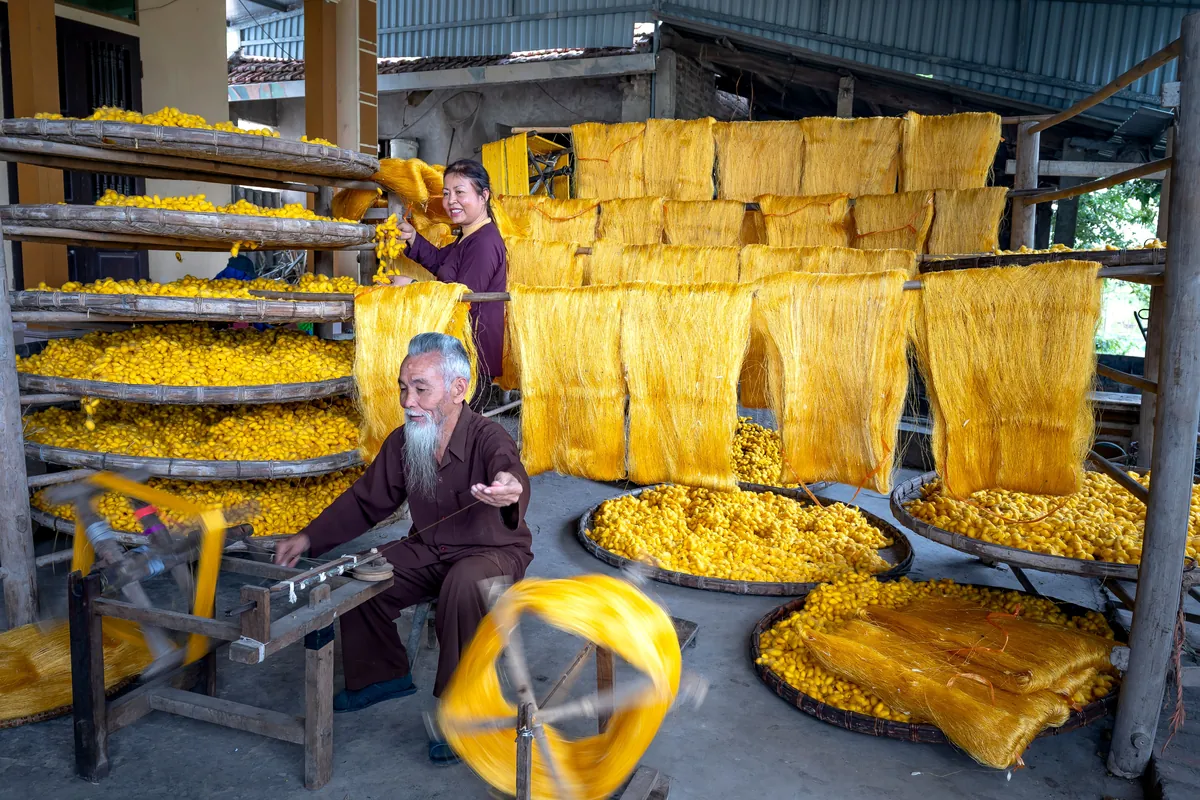
The silk reeling process turns sorted cocoons into skeins of raw silk through softening, reeling and finishing. Cocoons are sorted, stifled to stop the pupa, and cooked so the filament unwinds cleanly. They are then reeled on multi-end or automatic machines, re-reeled and booked into skeins. Twisting is optional and adds value. Quality is checked on denier, evenness, cleanness and tenacity, following Central Silk Board norms. Cocoon sorting and cooking control most of the final grade, so they deserve close attention.
- Cocoon sorting
- Stifling
- Cooking
- Reeling (multi-end or automatic)
- Re-reeling
- Skeining and booking
- Twisting (optional)
Raw Materials and Machinery for Silk Reeling
Your main input is fresh cocoons bought from cocoon markets. Common sources are Karnataka (Ramanagara), Andhra Pradesh and Tamil Nadu, with tasar from Jharkhand and muga and eri from Assam. The machines that matter most are the cocoon cooker, stifler and the reeling machine. Automatic reeling suits higher grade bivoltine silk.
- Cocoon cooker
- Stifler
- Multi-end or automatic reeling machine
- Re-reeler
- Twisting machine
Silk Reeling Licence and Approvals
Silk reeling licence and approvals start with registration with the State Sericulture Department. Silk reeling is generally Green or Orange because of cooking wastewater, so confirm your category with the State Pollution Control Board. Obtain consent to establish before construction and consent to operate before production. No QCO or FSSAI approval applies to this project.
| Pollution category | Silk reeling is generally Green or Orange (cooking wastewater) |
|---|---|
| HSN code | 5002 (raw silk) |
| GST | Classification-dependent; applied in the project financials |
| BIS / quality control order | No QCO |
| Other licences | Registration with the State Sericulture Department |
Choosing Between Multi-End and Automatic Reeling
Multi-end reeling machines suit smaller units that want lower machinery cost and are comfortable with more manual control. Automatic reeling machines are chosen for higher grade bivoltine silk, where evenness and consistency decide the price you get. Your choice should follow your target buyers, cocoon quality and available skilled labour. NPCS compares both routes in your project report so the decision rests on your numbers.
Choosing the Right Silk Reeling Plant Size
Plant size changes the whole project, with capacity of about 5–60 kg raw silk per day and investment of about ₹20 lakh–₹3 crore, excluding land. A small unit needs about 10 workers and modest power. A larger one needs more land, up to about 1 acre, and a load of up to about 100 kW. Match size to cocoon supply near you.
Government Schemes and Silk Reeling Project Finance
The Silk Samagra scheme offers Central Silk Board subsidies on reeling machinery, which can lower your machinery outlay. Lenders and scheme agencies expect a clear project report. NPCS reports are used for bank loans and programmes such as PMEGP, MSME schemes, Mudra and NABARD-linked projects, subject to each lender's requirements.
What Decides Success in a Silk Reeling Unit
Good operators focus on cocoon quality and reeling efficiency, because these set both grade and yield. The main risk is cocoon price swings, which can squeeze margins quickly. Plan for these points:
- Buy cocoons from reliable markets with consistent quality
- Sell silk waste to spun silk makers
- Sell pupae as feed or for oil
- Keep working capital ready for price swings
How NPCS Helps You Set Up a Silk Reeling Unit
NPCS supports the decisions that shape your unit: capacity, technology, machinery and approvals. Our team helps with machinery selection and technical specifications, vendor selection, plant layout and production process guidance. We also assist with installation and commissioning, and prepare the financial sections that lenders review.
NPCS's published client list records 22 assignments across textiles and apparel projects between 2012 and 2024, for clients in 11 states.
What Your Silk Reeling Project Report Covers
- Project introduction and BIS specifications
- Manufacturing process with flow sheet
- Market survey (demand, imports/exports, existing units)
- Personnel
- Plant and machinery with suppliers
- Land and building with layout
- Raw materials with sources and rates
- Financials (project cost, working capital, cost of production, profitability, break-even, 5–10 year cash flow, projected balance sheet, IRR/NPV/payback)
Silk Reeling: Frequently Asked Questions
How much does silk reeling setup cost in India?
An indicative range is about ₹20 lakh–₹3 crore, excluding land. The figure depends on capacity, machine type and building. Automatic machines cost more than multi-end ones. Your project report works out the cost for your capacity and location.
Which licences are needed for a silk reeling unit?
You need registration with the State Sericulture Department. Silk reeling is generally Green or Orange because of cooking wastewater, so consents from the State Pollution Control Board apply. No QCO or FSSAI approval is required for this project.
How much land and power does a silk reeling unit need?
A unit typically needs about 2,000 sq ft to 1 acre of land and a power load of about 20–100 kW. Water need is moderate. Exact figures depend on your daily capacity and machine choice.
How to start a silk reeling business?
Start by fixing capacity and choosing between multi-end and automatic machines. Then secure a cocoon source, register with the State Sericulture Department, obtain pollution consents and arrange finance. A detailed project report ties these steps together before you buy machinery.
How can NPCS help with a silk reeling project report?
NPCS prepares a silk reeling project report covering process, machinery, raw materials, financials and approvals, tailored to your capacity and location. Our team also guides machinery and vendor selection. Share your plan and we will outline the next steps.