
 Tata Steel
 JSW Steel
 ITC (Agri Business Division)
 Godrej & Boyce
 Aditya Birla Management Corporation
 Grasim Industries (Century Rayon)
 Thermax (Chemical Division)
 UPL
Cement kilns, steel plants and ceramic units burn pyrolysis oil as furnace fuel, and that steady demand is why entrepreneurs look at tyre and plastic recycling. A pyrolysis plant consultant helps you choose a technology that meets regulation, since only automated batch or continuous plants are permitted for tyres. NPCS supports you with feasibility, machinery selection, approvals and a detailed project report built for your capacity and location.
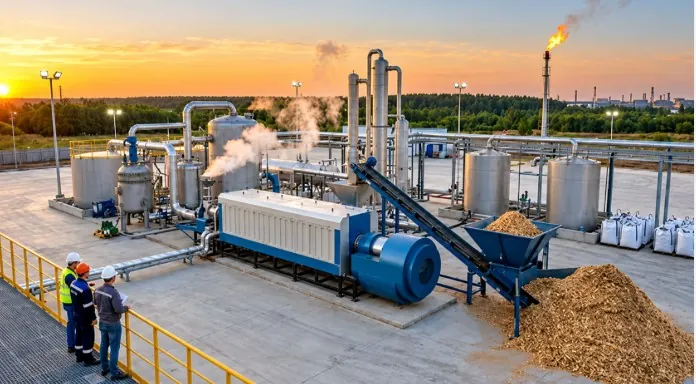
Pyrolysis Plant at a Glance
| Typical capacity | ~10–100 TPD feed |
|---|---|
| Land | ~2–5 acres |
| Power load | ~200 kW–1 MW |
| Water | Moderate, cooling |
| Manpower | ~20–60 |
| Indicative investment | ~₹5–40 crore (continuous plants at the higher end) |
Investment basis: excludes land.
Figures are indicative ranges. Your project report works them out for your capacity and location.
Market Demand for Pyrolysis Plants in India
Demand for pyrolysis products comes from fuel substitution, rising tyre and plastic waste volumes and EPR end-of-life obligations. Units cluster in Gujarat, Maharashtra, Tamil Nadu, Rajasthan, Punjab and Haryana. Seasonality is low, so output can be sold through the year, while export potential is low and most sales stay domestic.
- Cement, steel and ceramic plants buying oil as fuel
- Authorised oil buyers and refineries for co-processing
- Rubber and ink makers buying recovered carbon black
- Steel mills buying recovered wire
Pyrolysis Plant Products You Can Sell
Tyre pyrolysis oil suits industrial furnace buyers, while distilled oil may suit buyers needing tighter specifications. Recovered carbon and steel wire add separate revenue lines. Plastic oil needs a catalyst route and segregated feed, so many entrepreneurs start with tyres and add plastic later.
- Tyre pyrolysis oil (TPO)
- Plastic pyrolysis oil
- Recovered carbon black/char
- Steel wire
- Pyro-gas
- Distilled oil
Pyrolysis Plant Process Explained
The pyrolysis plant process heats shredded feed in an oxygen-free reactor to about 400–500°C, so the material breaks down into vapour, gas and solid residue. Vapour condenses into oil, and the remaining gas is scrubbed and burnt to fuel the reactor. Continuous systems are preferred because they give steadier output and easier compliance.
Quality is controlled at the oil stage through flash point, viscosity, sulphur, water and sediment and calorific value. Char is checked for ash and surface area. Emission control and safety interlocks run alongside every step.
- Feed preparation (shredding, de-wiring, sorting)
- Reactor feeding
- Heating to about 400–500°C without oxygen
- Vapour condensation into oil
- Non-condensable gas scrubbed and burnt as fuel
- Char discharge and cooling
- Steel separation
- Oil storage/distillation; emission control and safety interlocks
Raw Materials and Machinery for a Pyrolysis Plant
Feed is shredded end-of-life tyres or segregated PE and PP-rich plastic waste, with PVC excluded. You'll typically source it from tyre and plastic aggregators, municipal material recovery facilities and EPR channels. The reactor, condensers and air pollution control decide both output and compliance, so they deserve the most scrutiny when comparing suppliers.
- Shredder
- Feeding system
- Pyrolysis reactor (rotary or continuous screw)
- Condensers
- Oil-water separator
- Gas scrubber and burner
- Char cooling and milling
- Storage tanks
- PLC/SCADA
- Air pollution control
Pyrolysis Plant Licence and Approvals
Pyrolysis plant licence and approvals start with confirming that your technology fits the CPCB SOP, since tyre units are Red category and plastic units are generally Red too. Next come the State Pollution Control Board consent to establish before construction, hazardous waste authorisation and EPR portal registration. PESO licence for oil storage, factory licence and consent to operate follow.
| Pollution category | Tyre pyrolysis units are Red and must follow CPCB's SOP for TPO units (only automated-batch or continuous plants); plastic pyrolysis units are generally Red as well |
|---|---|
| HSN code | 2710 or 2707 (pyrolysis oil, classified by composition); 2803 (recovered carbon black); 7204 (steel scrap) |
| GST | Pyrolysis oil and recovered carbon black: 18% |
| BIS / quality control order | No QCO; buyer/refinery specifications for oil |
| Other licences | Compliance with the CPCB SOP for tyre pyrolysis (Jan 2024) and state guidelines; hazardous waste authorisation; registration as end-of-life processor on the CPCB EPR portal (tyres, plastics); PESO licence for oil storage; factory licence |
Choosing the Right Pyrolysis Plant Size
Feed capacity typically runs from about 10 to 100 TPD, and investment is an indicative ₹5–40 crore excluding land. Smaller units need less land and manpower, but continuous plants at the higher end give steadier throughput and simpler automation. Your feedstock contracts and oil offtake should set the size, not the other way round.
Securing Feedstock for Your Pyrolysis Plant
Feedstock decides whether a pyrolysis plant runs steadily. Tyre and plastic aggregators, municipal recovery facilities and EPR channels are the main sources, and written supply contracts reduce the risk of idle capacity. For plastics, segregation matters because PVC is excluded, so plan sorting and storage space before you finalise the layout.
Government Schemes and Project Finance for Pyrolysis
EPR end-of-life certificates for tyres and plastics can add revenue, and some states offer waste-to-value incentives. Lenders expect a clear view of technology compliance, feedstock and offtake. NPCS reports are used for bank loans and programmes such as PMEGP, MSME schemes, Mudra and NABARD-linked projects, subject to each lender's requirements.
What Decides Success in a Pyrolysis Plant
Operators who do well pair compliant technology with firm feedstock and buyers. Risks are mainly regulatory and operational.
- Technology compliant with the CPCB SOP
- Feedstock contracts and oil and carbon offtake
- EPR certificate revenue
- Odour, emissions and safety control
- Oil quality that buyers accept
How NPCS Helps You Set Up a Pyrolysis Plant
NPCS guides the decisions that shape a pyrolysis project: capacity, batch or continuous technology, machinery specifications and vendor selection. Our team also supports plant layout, installation and commissioning assistance, and prepares the pyrolysis plant project report that lenders and regulators review. Reports are tailored to your budget, feedstock and location.
NPCS's published client list records 5 assignments on pyrolysis projects between 2011 and 2020 for clients in 4 states, including techno-economic feasibility studies.
What Your Pyrolysis Plant Project Report Covers
- Project introduction and BIS specifications
- Manufacturing process with flow sheet
- Market survey (demand, imports/exports, existing units)
- Personnel
- Plant and machinery with suppliers
- Land and building with layout
- Raw materials with sources and rates
- Financials (project cost, working capital, cost of production, profitability, break-even, 5–10 year cash flow, projected balance sheet, IRR/NPV/payback)
Pyrolysis Plant: Frequently Asked Questions
What is the pyrolysis plant setup cost in India?
An indicative range is ₹5–40 crore, excluding land, with continuous plants at the higher end. The final figure depends on capacity, technology and pollution control. A project report works out the cost for your plant size and location.
Which licences and pollution category apply to a pyrolysis plant?
Tyre pyrolysis units are Red category and must follow the CPCB SOP, while plastic units are generally Red as well. You'll also need hazardous waste authorisation, EPR portal registration, a PESO licence for oil storage and a factory licence.
How much land and power does a pyrolysis plant need?
Typically about 2–5 acres of land and a power load of roughly 200 kW to 1 MW, depending on capacity. Water need is moderate and mainly for cooling. Exact figures depend on the technology you choose.
How to start a pyrolysis plant business?
Begin by choosing a technology that meets the CPCB SOP and securing feedstock and oil buyers. Then prepare a project report, apply for consent to establish, arrange finance and order machinery. Approvals should be in place before construction.
How can NPCS help with a pyrolysis project?
NPCS prepares the detailed project report and feasibility study, and supports technology and machinery selection, vendor choice, layout and commissioning assistance. Share your capacity and location, and our team will outline the approvals and project cost.