
 Tata Steel
 JSW Steel
 ITC (Agri Business Division)
 Godrej & Boyce
 Aditya Birla Management Corporation
 Grasim Industries (Century Rayon)
 Thermax (Chemical Division)
 UPL
Fibre makers, brand owners and sheet makers all need clean recycled PET, and that demand is what draws entrepreneurs to this project. A PET bottle recycling plant washes and flakes post-consumer bottles, and with extra steps it can produce food-grade rPET pellets or polyester fibre. As a PET bottle recycling plant consultant, NPCS helps you choose the right line, estimate the cost and plan approvals before you commit capital. Our team has worked on such projects since 1994.
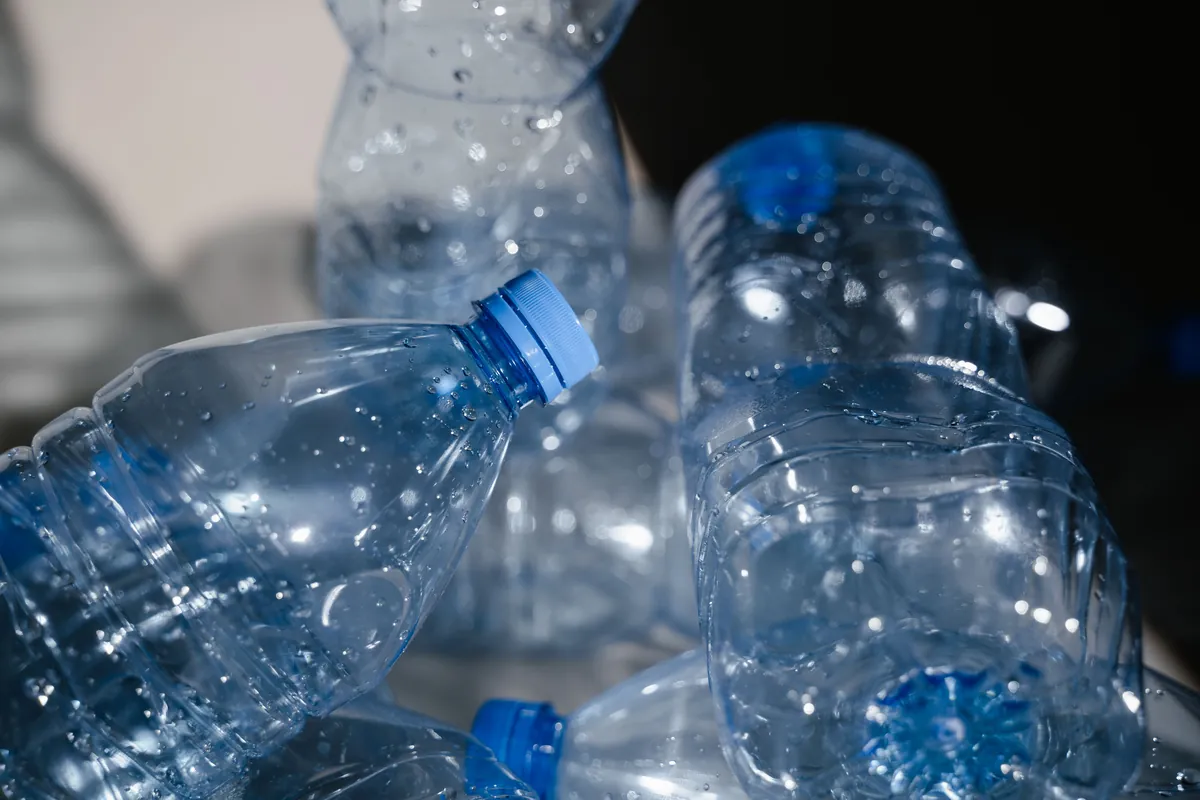
PET Bottle Recycling Plant at a Glance
| Typical capacity | ~10–100 TPD |
|---|---|
| Land | ~2–6 acres |
| Power load | ~500 kW–3 MW |
| Water | High (recycled) |
| Manpower | ~40–150 |
| Indicative investment | ~₹10–150 crore |
Investment basis: food-grade SSP lines at the top end; excludes land.
Figures are indicative ranges. Your project report works them out for your capacity and location.
Market Demand for PET Bottle Recycling in India
Demand for recycled PET is pushed by mandatory recycled-content targets under the Plastic Waste Management Rules and by steady fibre demand. Industry is concentrated in Gujarat, Maharashtra, Delhi-NCR, Tamil Nadu and Andhra Pradesh. Export potential is medium, and seasonality is low, so output can be planned through the year.
- Polyester fibre makers buying flakes
- Brand owners with recycled-content targets
- Sheet makers and strapping producers
- Food-grade bottle makers using approved rPET
PET Recycling Products You Can Make
Hot-washed flakes are the simplest product and suit fibre makers and sheet makers. Recycled polyester staple fibre adds a downstream step. Food-grade rPET pellets made by the SSP process need the most capital but serve brand owners with recycled-content targets.
- Hot-washed PET flakes, recycled polyester staple fibre (RPSF), food-grade rPET pellets (SSP process)
PET Bottle Recycling Plant Process
The PET bottle recycling plant process turns dirty baled bottles into clean flakes through sorting, grinding and hot washing. Sorting is done manually or with NIR (near-infrared) equipment, which separates PVC and off-colour material early. After the hot wash, float-sink rinsing removes caps and labels, and drying and flake sorting finish the line.
Quality is controlled at three points: PVC and colour contamination, moisture, and IV (intrinsic viscosity). Food-grade pellets add extrusion and an SSP reactor, and must meet FSSAI requirements for food-contact rPET.
- Bale breaking
- Sorting (manual, NIR)
- Label removal
- Grinding
- Hot wash
- Rinse and float-sink
- Drying
- Flake sorting
- (extrusion and SSP for food-grade pellets)
Raw Materials and Machinery for PET Recycling
Your main input is baled post-consumer PET bottles, along with caustic and detergents for washing. Collection networks exist in all metros, and aggregators operate in Gujarat, Maharashtra, Delhi-NCR and Tamil Nadu. Key machines include the NIR sorter, de-labeller, hot-wash reactors and centrifugal dryer, plus an extruder and SSP reactor for food grade.
- Bale opener
- Trommel
- NIR sorter
- De-labeller
- Granulators
- Hot-wash reactors
- Friction washers
- Centrifugal dryer
- Flake sorter
- Extruder and SSP reactor (food grade)
Licences and Approvals for a PET Bottle Recycling Plant
Plastic recycling with washing is generally Orange, though the State Pollution Control Board fixes the category. Start with business registration, then apply for consent to establish before construction. Register as a Plastic Waste Processor on the CPCB EPR portal, obtain a factory licence, and secure consent to operate before production.
- No QCO applies to flakes
- Food-contact rPET needs FSSAI recognition
| Pollution category | Plastic recycling with washing is generally Orange; the State PCB fixes the category |
|---|---|
| HSN code | 3915 90 (plastic waste); 3907 61 (PET resin) |
| GST | Plastic waste and flakes generally 18%; applied in the project financials |
| BIS / quality control order | No QCO for flakes; food-grade rPET needs FSSAI recognition |
| FSSAI | FSSAI recognition required for food-contact rPET |
| Other licences | Registration as Plastic Waste Processor on the CPCB EPR portal; factory licence |
Choosing the Right PET Recycling Technology
Flake-only lines suit first-time investors because they need less capital and a simpler team. Integrated fibre lines or bottle-to-bottle SSP lines earn more per tonne but sit at the top of the investment range. In practice, many promoters start with flakes and plan space and utilities so a pelletising or SSP stage can be added later.
Choosing the Right PET Plant Size
Plant size decides almost everything else. Capacity typically runs from about 10 to 100 TPD, with land of roughly 2–6 acres and manpower of about 40–150. Smaller units depend on local bale supply, while larger ones need steady aggregator contracts and high recycled water systems. Your project report tests each size against your feedstock and location.
Government Schemes and Project Finance for PET Recycling
EPR certificate revenue is the main policy lever here, since brand owners must use recycled content in rigid plastic packaging. NPCS reports are used for bank loans and government programmes such as PMEGP, MSME schemes, Mudra and NABARD-linked projects, subject to each lender's requirements. A bankable report lets lenders check your numbers clearly.
What Decides Success in a PET Bottle Recycling Plant
Good operators secure feedstock early, control contamination and hold valid EPR certificates. The main risks are bale price volatility and informal-sector competition. Caps and labels (PP/PE) and sludge also need a disposal or resale plan.
- Reliable bale supply
- Strict contamination control
- Valid EPR certificates
How NPCS Helps You Set Up a PET Bottle Recycling Plant
NPCS ties its services to your real decisions: capacity, flake or food-grade route, machinery and vendor selection, and approvals. We prepare the PET bottle recycling plant project report, support plant layout, and assist with installation and commissioning. Your report is tailored to your budget, location and raw material availability.
NPCS's published client list records 7 assignments on pet bottle recycling projects between 2012 and 2026 for clients in 6 states and 1 country, including bankable project reports, techno-economic feasibility studies and market research reports.
What Your PET Bottle Recycling Plant Project Report Covers
- Project introduction and BIS specifications
- Manufacturing process with flow sheet
- Market survey (demand, imports/exports, existing units)
- Personnel
- Plant and machinery with suppliers
- Land and building with layout
- Raw materials with sources and rates
- Financials (project cost, working capital, cost of production, profitability, break-even, 5–10 year cash flow, projected balance sheet, IRR/NPV/payback)
PET Bottle Recycling Plant: Frequently Asked Questions
What is the pet bottle recycling plant setup cost in India?
Indicative investment runs from about ₹10–150 crore, excluding land. Food-grade SSP lines sit at the top end. Your final cost depends on capacity, technology and location, which a project report works out for you.
Which licences are needed to start a PET bottle recycling plant?
You need registration as a Plastic Waste Processor on the CPCB EPR portal, a factory licence and State Pollution Control Board consents. Washing units are generally Orange, but the Board fixes the category. Food-contact rPET also needs FSSAI recognition.
How much land and power does a PET recycling plant need?
Typically about 2–6 acres of land and a power load of roughly 500 kW–3 MW. Water use is high, so recycling wash water matters. Exact needs depend on your capacity and whether you add extrusion or SSP.
How do I start a PET bottle recycling plant business?
Begin by fixing capacity and product, flakes or food-grade pellets. Then secure bale supply, prepare a project report, apply for consent to establish, and order machinery. Registration on the CPCB EPR portal should follow before operations start.
How does NPCS help with a PET bottle recycling plant?
NPCS prepares detailed project reports, feasibility studies and market research, and supports machinery selection, vendor selection and plant layout. Our team also assists with installation and commissioning. Share your capacity and location to get started.