
 Bajaj Steel Industries
 Tata Steel
 JSW Steel
 ITC (Agri Business Division)
 Godrej & Boyce
 Aditya Birla Management Corporation
 Grasim Industries (Century Rayon)
 Thermax (Chemical Division)
Brand owners in LED lighting, appliances and energy meters increasingly want boards assembled in India, and that demand is why entrepreneurs set up SMT units. A pcb assembly consultant helps you decide line size, machinery, testing and approvals before you commit capital. NPCS has advised manufacturers since 1994, and our team prepares reports that cover technology, costs and compliance for your chosen capacity and location.
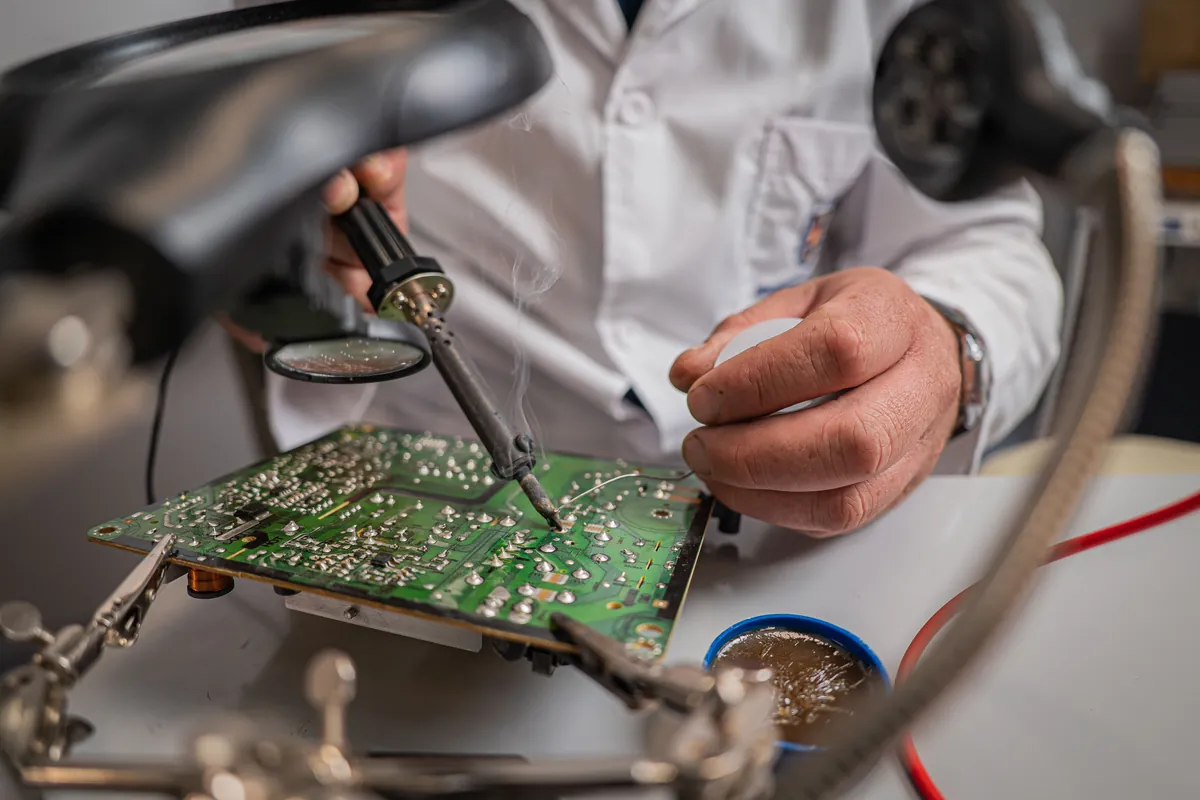
PCB Assembly at a Glance
| Typical capacity | ~1–10 lakh boards per month |
|---|---|
| Land | ~5,000 sq ft–3 acres |
| Power load | ~200 kW–1.5 MW |
| Water | Low |
| Manpower | ~30–300 |
| Indicative investment | ~₹5–80 crore |
Investment basis: excludes land.
Figures are indicative ranges. Your project report works them out for your capacity and location.
Market Demand for PCB Assembly in India
Demand for PCB assembly in India is driven by Make in India electronics and the China+1 shift, which push brands to source boards closer to home. Units cluster around Noida, Bengaluru, Chennai, Pune and Gujarat, near OEMs and component distributors. Export potential is medium, and seasonality is low, so orders tend to be steady through the year.
- LED driver and lighting brand owners
- Appliance and smart meter makers
- Automotive and industrial OEMs
- Telecom equipment suppliers
PCB Assembly Services You Can Offer
Most new units start with SMT assembly and add through-hole work, conformal coating or box build as customers ask for them. Contract manufacturing (EMS) suits you if you want to serve several brand owners instead of one product line.
- SMT assembly, through-hole and wave soldering, box build, conformal coating, contract manufacturing (EMS)
PCB Assembly Process Explained
The PCB assembly process starts with solder paste printing and ends with testing, coating and box build. Quality is controlled at several points rather than once at the end. AOI inspection checks boards after reflow, X-ray inspection covers BGA components, and in-circuit and functional testing confirm the board works. Workmanship usually follows IPC-A-610. For technology, you can begin with a single SMT line or invest in multiple high-speed lines, depending on order book and capital.
- Solder paste printing
- Pick-and-place
- Reflow soldering
- AOI inspection
- Through-hole insertion and wave soldering
- Functional testing
- Coating and box build
Raw Materials and Machinery for PCB Assembly
Bare PCBs, electronic components, solder paste, stencils and enclosures are the main inputs. Components are largely imported, while bare boards come from both domestic and imported sources. The machines that matter most are the pick-and-place machines, reflow oven and AOI, backed by test jigs and an ESD-safe area to protect sensitive parts.
- Stencil printer
- Pick-and-place machines
- Reflow oven
- AOI
- Wave soldering
- Test jigs
- ESD-safe area
PCB Assembly Licence and Approvals
You register the unit first, then secure the factory licence before production starts. Electronic assembly is a White category activity with no effluent, which keeps pollution clearance simple. Producers also need E-waste EPR registration. If your end product falls under the Compulsory Registration Scheme, it needs BIS registration.
| Pollution category | Electronic assembly: White (no effluent) |
|---|---|
| HSN code | 8534 or end-product headings (by product) |
| GST | 18% generally |
| BIS / quality control order | Products under the Compulsory Registration Scheme need BIS registration (end product) |
| Other licences | E-waste EPR for producers; factory licence |
Choosing the Right SMT Line for PCB Assembly
A single SMT line suits a new unit with a few anchor customers and limited capital. It lets you prove quality systems and build order history before expanding. Multiple high-speed lines make sense when you already hold volume commitments from brand owners or OEMs. NPCS compares both routes against your target capacity, so the machinery decision rests on expected utilisation rather than guesswork.
Choosing the Right PCB Assembly Plant Size
Plant size changes the economics sharply, with capacity typically ranging from about 1–10 lakh boards per month. Smaller units need less floor area and fewer people, while larger ones need much more power and manpower. Indicative investment spans roughly ₹5–80 crore excluding land. Start with the volume your confirmed customers can absorb, then add lines as utilisation holds.
Government Schemes and Project Finance for PCB Assembly
Relevant support includes the Electronics Component Manufacturing Scheme, PLI schemes for IT hardware and white goods, and SPECS. Eligibility depends on each scheme's current terms. NPCS reports are used for bank loans and government programmes such as PMEGP, MSME schemes, Mudra and NABARD-linked projects, subject to each lender's requirements.
What Decides Success in a PCB Assembly Unit
Units that do well run strong quality systems, keep their lines busy and source components reliably. The main risks are component lead times and thin margins. Solder dross and e-waste also need proper handling.
- Quality systems that customers can audit
- High line utilisation
- Dependable component sourcing
How NPCS Helps You Set Up a PCB Assembly Unit
Our team supports the decisions that shape a PCB assembly project: capacity, single or multiple lines, machinery selection and vendor selection. We also help with plant layout, installation and commissioning assistance, and prepare the project report and feasibility study that lenders review. Reports are tailored to your budget, technology choice and market area.
NPCS's published client list records 50 assignments across electrical and electronics projects between 2013 and 2026, for clients in 14 states and 7 countries.
What Your PCB Assembly Project Report Covers
- Project introduction and BIS specifications
- Manufacturing process with flow sheet
- Market survey (demand, imports/exports, existing units)
- Personnel
- Plant and machinery with suppliers
- Land and building with layout
- Raw materials with sources and rates
- Financials (project cost, working capital, cost of production, profitability, break-even, 5–10 year cash flow, projected balance sheet, IRR/NPV/payback)
PCB Assembly: Frequently Asked Questions
How much does PCB assembly setup cost in India?
Indicative investment ranges from about ₹5–80 crore, excluding land. The figure depends on capacity, number of SMT lines and testing equipment. A project report works out the exact cost for your capacity and location.
Which licences and pollution category apply to a PCB assembly unit?
Electronic assembly falls in the White category because it produces no effluent. You need a factory licence and E-waste EPR registration as a producer. BIS registration applies if your end product is under the Compulsory Registration Scheme.
How much land and power does a PCB assembly unit need?
Land typically ranges from about 5,000 sq ft to 3 acres, and power load from about 200 kW to 1.5 MW. Water need is low. Actual figures depend on how many lines and what testing you plan.
How to start a PCB assembly business?
Start by fixing target customers, capacity and whether to begin with a single SMT line. Then prepare a project report, finalise location, secure approvals and select machinery. Component sourcing and quality systems should be planned before orders begin.
How does a PCB assembly consultant help with the project report?
NPCS prepares a PCB assembly project report covering process, machinery, raw materials, manpower and financials. Our team also guides technology choice, vendor selection and approvals, so the plan holds up with banks and scheme applications.