
 Thermax (Chemical Division)
 Tata Steel
 JSW Steel
 ITC (Agri Business Division)
 Godrej & Boyce
 Aditya Birla Management Corporation
 Grasim Industries (Century Rayon)
Glove, condom, balloon and foam makers buy concentrated latex at 60% DRC, and entrepreneurs near rubber plantations set up plants to supply them. A natural latex concentration plant consultant helps you size the unit, choose machinery and plan approvals before you commit capital. Demand from dipped goods keeps this a steady business, but it depends on a reliable latex supply and sound effluent handling. Our team prepares the technical and financial groundwork so you can decide with clear numbers.
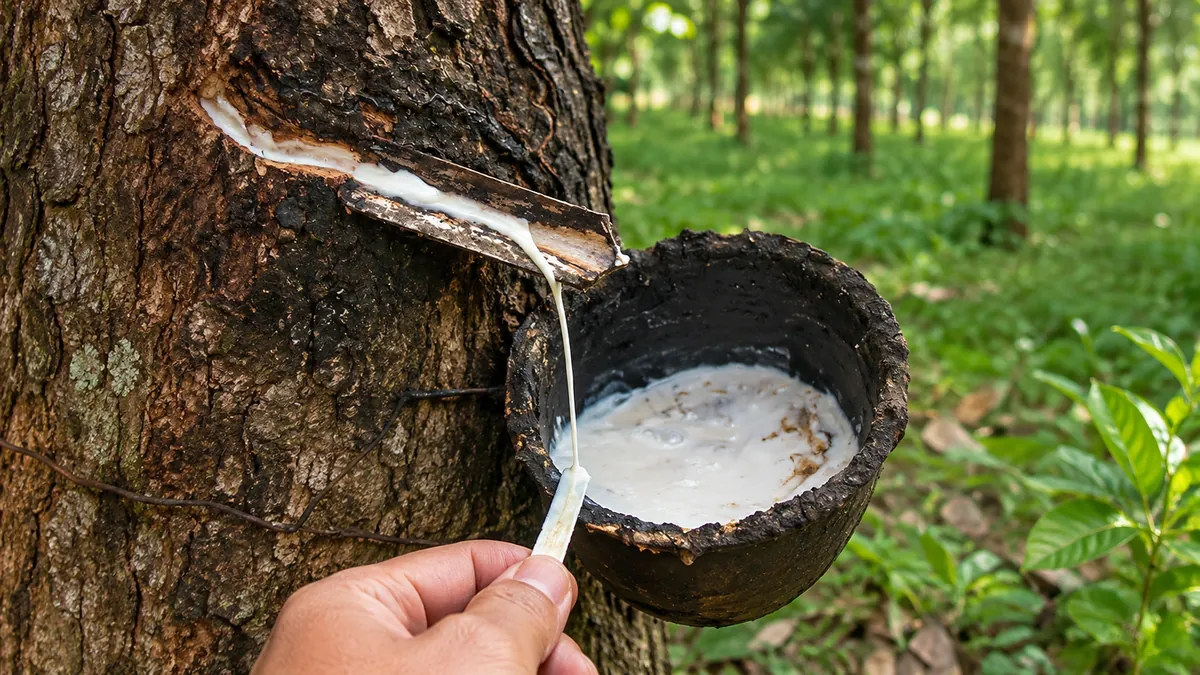
Natural Latex Concentration Plant at a Glance
| Typical capacity | ~1,000–10,000 TPA (dry rubber equivalent) |
|---|---|
| Land | ~1–4 acres |
| Power load | ~200–800 kW |
| Water | Moderate |
| Manpower | ~15–50 |
| Indicative investment | ~₹3–20 crore |
Investment basis: excludes land.
Figures are indicative ranges. Your project report works them out for your capacity and location.
Market Demand for Natural Latex Concentrate in India
Demand for concentrated latex comes mainly from dipped goods and gloves, which pull steady volumes from processors. Production is concentrated near plantations, so your location choice shapes both supply and cost. Export potential is medium, so most units start by serving domestic buyers.
- Glove, condom and balloon makers
- Latex foam manufacturers
- Adhesive producers
- Exporters of concentrated latex
- Clusters in Kerala (Kottayam), Tripura and Kanyakumari
Latex Grades You Can Produce
Most new units begin with centrifuged latex, since glove and foam makers buy it in the largest volumes. High and low ammonia grades suit different buyer specifications, so confirm these before you finalise preservation. Skim rubber is a by-product that you can process further.
- Centrifuged latex (high and low ammonia), creamed latex, skim rubber (by-product)
Natural Latex Concentration Plant Process
The natural latex concentration plant process turns preserved field latex into a stable 60% DRC product through centrifuging. Latex is collected, preserved and bulked so that batches are uniform before it reaches the centrifuges. After centrifuging, the concentrate matures and stabilises in storage tanks before dispatch.
Quality is controlled at the testing stage, where you check DRC, total solids, ammonia, mechanical stability and VFA number. Buyers refer to IS 5430, so your lab should report against it. The plant is sized by the number of centrifuge machines.
- Field latex collection and preservation
- Bulking
- Centrifuging
- Maturation and stabilisation
- Testing
- Filling in drums or tankers; skim latex coagulated into skim crepe
Raw Materials and Machinery for a Latex Plant
Field latex is the main input, along with ammonia and preservatives. It is sourced mainly from Kerala, Tripura, Karnataka (Dakshina Kannada) and Tamil Nadu (Kanyakumari). Centrifuges are the core machines, supported by collection and storage tanks, skim coagulation and crepe machines, and an effluent treatment plant.
- Collection tanks
- Centrifuges
- Storage tanks
- Skim coagulation
- Crepe machines
- ETP
Natural Latex Concentration Plant Licence and Approvals
Start with business registration and Rubber Board registration, then apply for consent to establish from the State Pollution Control Board before construction. Latex centrifuging units are generally Red category because of ammonia and effluent, so plan treatment early. After the plant is built, obtain consent to operate and the Rubber Board licences for processing and dealing.
| Pollution category | Latex centrifuging units are generally Red because of ammonia and effluent |
|---|---|
| HSN code | 4001 10 (natural rubber latex) |
| GST | 5% on natural rubber latex |
| BIS / quality control order | IS 5430 used by buyers |
| Other licences | Rubber Board registration and licences for processing and dealing |
Securing Field Latex for Your Plant
Your plant is only as steady as its latex supply, and the right sourcing plan matters more than machine capacity. Build a collection network with plantation owners and small growers within reach of your site. Tapping slows in summer and heavy monsoon, so plan collection points and preservation to protect quality. Fresh latex needs prompt ammonia treatment, which makes transport time a real cost.
Where to Set Up a Latex Concentration Plant
Set up close to plantations, because field latex must reach the plant quickly. Kerala (Kottayam), Tripura and Kanyakumari are established clusters with growers and buyers nearby. Karnataka (Dakshina Kannada) is also a sourcing region. Weigh latex availability first, then effluent disposal options and access to glove or foam buyers. Land of about 1–4 acres is typical, depending on capacity.
Government Schemes and Project Finance for Latex Units
Rubber Board development schemes are the main government support route named for this sector. Eligibility and benefits depend on each scheme's current terms, so check them before applying. NPCS reports are used for bank loans and programmes such as PMEGP, MSME schemes, Mudra and NABARD-linked projects, subject to each lender's requirements.
What Decides Success in a Latex Concentration Plant
Operators who do well build a dependable latex collection network and treat effluent seriously from day one. The main risks are ammonia odour and effluent, which can draw complaints and regulatory attention. Skim latex sold as skim crepe adds some extra revenue.
- Secure a steady latex collection network
- Design the effluent treatment plant properly
- Control ammonia odour at storage and filling
- Plan for lean summer and monsoon months
How NPCS Helps You Set Up a Latex Concentration Plant
Our team works with you on the decisions that shape this project: capacity, number of centrifuges, machinery and vendor selection, plant layout and approvals. We prepare a natural latex concentration plant project report with costs, working capital and profitability for your capacity and location. Support continues through installation and commissioning assistance.
NPCS's published client list records 9 assignments on natural latex concentration projects between 2019 and 2026 for clients in 5 states and 1 country, including detailed project reports, bankable project reports and techno-economic feasibility studies.
What Your Natural Latex Concentration Plant Project Report Covers
- Project introduction and BIS specifications
- Manufacturing process with flow sheet
- Market survey (demand, imports/exports, existing units)
- Personnel
- Plant and machinery with suppliers
- Land and building with layout
- Raw materials with sources and rates
- Financials (project cost, working capital, cost of production, profitability, break-even, 5–10 year cash flow, projected balance sheet, IRR/NPV/payback)
Natural Latex Concentration Plant: Frequently Asked Questions
What is the natural latex concentration plant setup cost in India?
An indicative investment is about ₹3–20 crore, excluding land. The figure depends on capacity, the number of centrifuges and the effluent treatment plant. A project report works out the cost for your capacity and location.
Which pollution category applies to a latex centrifuging unit?
Latex centrifuging units are generally Red category because of ammonia and effluent. You need consent to establish before construction and consent to operate afterwards from the State Pollution Control Board. Plan the effluent treatment plant early.
How much land and power does a latex concentration plant need?
Typically about 1–4 acres of land and a power load of about 200–800 kW, depending on capacity. Water requirement is moderate. Your final needs depend on the number of centrifuges and the effluent treatment design.
How to start a natural latex concentration plant business?
Begin with a feasibility study covering latex supply, capacity and buyers. Then register with the Rubber Board, secure pollution consents, finalise machinery and arrange finance. Securing a collection network near plantations should come before you commit to equipment.
How does NPCS help with a latex concentration project?
NPCS prepares detailed and bankable project reports, feasibility studies and market research for this project. Our team also guides machinery selection, vendor selection, plant layout and approvals. Share your planned capacity and location to begin.