
 Godrej & Boyce
 SRF
 Shyam Steel
 Tata Steel
 JSW Steel
 ITC (Agri Business Division)
 Aditya Birla Management Corporation
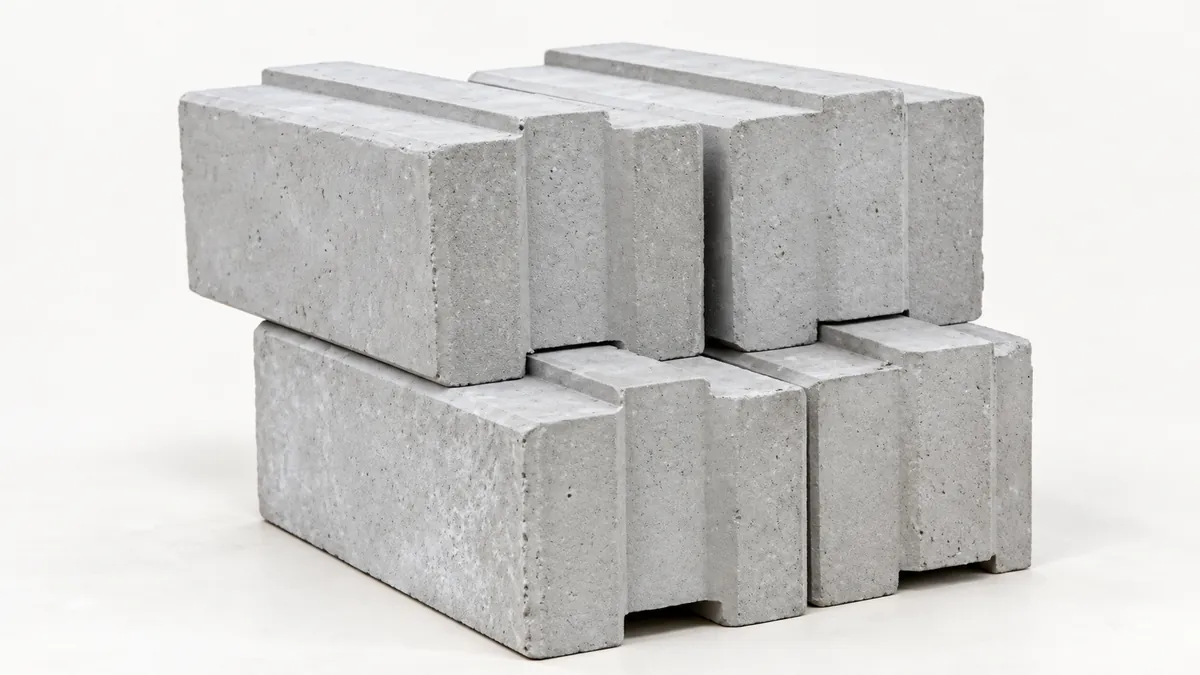
Builders and housing schemes are turning to lightweight blocks that go up faster and insulate better than clay bricks. An interlocking thermal block plant makes these blocks from cement, fly ash, sand and a foaming agent, with little or no mortar needed on site. As an interlocking thermal block plant consultant, NPCS helps you decide the block type, capacity and location, then prepares a bankable project report and guides machinery selection, so your plant is planned around real buyers.
Interlocking Thermal Block Plant at a Glance
| Typical capacity | ~2,000–20,000 blocks per day |
|---|---|
| Land | ~1–3 acres |
| Power load | ~50–200 kW |
| Water | Moderate |
| Manpower | ~10–40 |
| Indicative investment | ~₹30 lakh–₹3 crore |
Investment basis: excludes land.
Figures are indicative ranges. Your project report works them out for your capacity and location.
Market Demand for Thermal Blocks in India
Demand for interlocking thermal blocks comes mainly from faster construction, better insulation and fly-ash mandates. Most buyers are local, so the plant's strength comes from supplying nearby building sites reliably. Maharashtra, Karnataka, Tamil Nadu and Telangana are the main clusters. Export potential is low, so plan around domestic sales. Expect a slowdown during the monsoon.
- Builders and developers of housing projects
- Housing schemes seeking rapid, low-cost construction
- Contractors building boundary walls and homes
Interlocking Thermal Block Products You Can Make
Hollow interlocking blocks and CLC blocks suit most builders, while soil-stabilised and insulated blocks serve specific projects. Housing and boundary walls are the usual end uses. Start with the variant your nearest buyers already specify, then add others once your quality record is established.
- Interlocking hollow blocks, CLC (foam concrete) blocks, interlocking soil-stabilised blocks, insulated blocks
Interlocking Thermal Block Plant Process
The interlocking thermal block plant process runs from batching raw materials to curing and dispatch, and the main choice is between pressing and foam moulding. A hydraulic press shapes interlocking blocks, while CLC moulding uses a foam generator to create lightweight, insulating concrete. Quality is controlled at batching and curing, because mix ratios and curing time decide final strength. Finished blocks are tested for compressive strength, density, water absorption and thermal conductivity, with IS 2185 for concrete blocks as the reference standard.
- Batching
- Mixing (foam generation for CLC)
- Moulding or pressing
- Curing
- Stacking and dispatch
Raw Materials and Machinery for the Plant
Cement, fly ash, sand, foaming agent and stone dust are the main inputs. Cement is usually sourced locally, and fly ash comes from thermal power plants. The machines that matter most are the batching and mixer unit, the foam generator for CLC, the hydraulic block press and a well-planned curing yard.
- Batching and mixer
- Foam generator
- Hydraulic block press
- Moulds
- Curing yard
Licences and Approvals for an Interlocking Thermal Block Plant
Block making without a kiln is generally Green under pollution norms, which usually makes approvals simpler. Begin with business registration, then obtain consent to establish from the State Pollution Control Board before construction, and consent to operate before production. Tenders commonly refer to IS 2185, so plan testing early. Where you use fly ash, you may need a fly-ash supply agreement.
| Pollution category | Block making without a kiln is generally Green |
|---|---|
| HSN code | 6810 11 (building blocks) |
| GST | 18% on concrete blocks; fly-ash blocks with 90%+ fly ash follow the fly-ash entry |
| BIS / quality control order | IS 2185 used in tenders |
| Other licences | Fly-ash supply agreement where used |
Choosing the Right Block Technology
Hydraulic interlocking block presses and CLC moulding serve different buyers. A press suits dense, load-bearing interlocking blocks that need little mortar. CLC moulding suits lighter foam concrete blocks with better insulation. Your choice should follow what builders in your area accept, your fly-ash access and your budget. Our team compares both routes against your market before you commit to machinery.
Choosing the Right Plant Size
Plants range from roughly 2,000 to 20,000 blocks per day, with an indicative investment of about ₹30 lakh–₹3 crore excluding land. A small unit needs less capital and fewer workers, but a larger one spreads machinery and power costs over more blocks. Size the plant to confirmed local demand, since slow monsoon months can leave capacity idle.
Government Schemes and Project Finance
PMEGP and fly-ash utilisation promotion are the schemes relevant to this project. NPCS reports are used for bank loans and government programmes such as PMEGP, MSME schemes, Mudra and NABARD-linked projects, subject to each lender's requirements. A detailed, bankable report with clear costs and cash flow helps your application, though approval rests with the lender or agency.
What Decides Success in a Thermal Block Plant
Consistent strength and builder acceptance decide whether a plant grows. Masons used to clay bricks may be unfamiliar with interlocking blocks, so plan demonstrations. Broken blocks are the main waste to manage.
- Test every batch for strength and density
- Win builder trust with site demonstrations
- Train masons on interlocking methods
- Plan sales around the monsoon slowdown
How NPCS Helps You Set Up a Thermal Block Plant
Our team supports the decisions that shape this project: capacity, press versus CLC technology, machinery and vendor selection, plant layout and approvals. We prepare a detailed project report for lenders and help with installation and commissioning. You get guidance matched to your location, budget and buyers rather than a generic template.
NPCS's published client list records 26 assignments across building and construction materials projects between 2012 and 2026, for clients in 12 states and 5 countries.
What Your Interlocking Thermal Block Plant Project Report Covers
- Project introduction and BIS specifications
- Manufacturing process with flow sheet
- Market survey (demand, imports/exports, existing units)
- Personnel
- Plant and machinery with suppliers
- Land and building with layout
- Raw materials with sources and rates
- Financials (project cost, working capital, cost of production, profitability, break-even, 5–10 year cash flow, projected balance sheet, IRR/NPV/payback)
Interlocking Thermal Block Plant: Frequently Asked Questions
How much does it cost to set up an interlocking thermal block plant?
Indicative investment is about ₹30 lakh–₹3 crore, excluding land. The final figure depends on capacity, technology and building needs. A project report works out the cost for your planned capacity and location.
Which licences are needed for an interlocking thermal block plant?
You need business registration, consent to establish and consent to operate from the State Pollution Control Board. Block making without a kiln is generally Green. A fly-ash supply agreement may be needed where fly ash is used.
How much land and power does a block plant need?
A plant typically needs about 1–3 acres and a power load of about 50–200 kW, depending on capacity. Water need is moderate. Space is needed for mixing, pressing and a curing yard.
How to start an interlocking thermal block plant business?
Start by confirming local demand, then choose between pressing and CLC moulding. Next prepare a project report, secure fly ash and cement supply, obtain approvals, and select machinery. Our team can guide each step.
How does NPCS help with an interlocking thermal block plant?
NPCS prepares the project report and helps with technology choice, machinery selection, vendor selection, plant layout and commissioning support. Share your capacity and location, and our team will outline the project.