
 Godrej & Boyce
 SRF
 Shyam Steel
 Tata Steel
 JSW Steel
 ITC (Agri Business Division)
 Aditya Birla Management Corporation
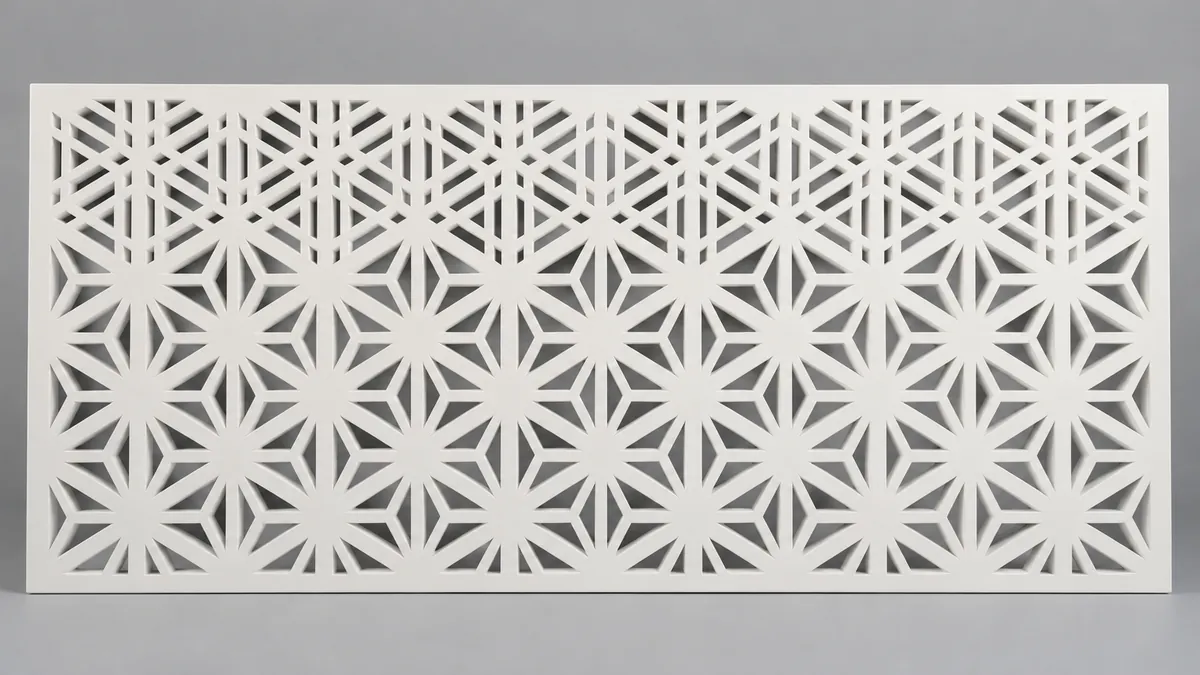
Architects, facade contractors, temple trusts and hotel developers keep asking for lightweight decorative cladding, and that demand is what draws entrepreneurs to GRC. A glass reinforced concrete products consultant helps you turn that demand into a working plant. The product is made from cement, sand and alkali-resistant glass fibre, cast into panels, jaalis, columns and domes. NPCS has advised on building materials projects since 1994, and we help you decide capacity, technology, machinery and approvals before you commit capital.
Glass Reinforced Concrete Products at a Glance
| Typical capacity | ~5,000–50,000 sq m per year |
|---|---|
| Land | ~0.5–2 acres |
| Power load | ~50–200 kW |
| Water | Moderate |
| Manpower | ~15–60 |
| Indicative investment | ~₹50 lakh–₹5 crore |
Investment basis: excludes land.
Figures are indicative ranges. Your project report works them out for your capacity and location.
Market Demand for GRC Products in India
Demand for GRC comes mainly from projects that want ornate looks without the weight of stone or solid concrete. Lightweight decorative facades are the main driver, and buyers use the material across buildings, landscaping and interiors. Production is concentrated around Delhi-NCR, Gujarat, Rajasthan, Maharashtra and Telangana. Export potential is medium, with the Middle East the market named for it.
- Architects and builders specifying facades
- Facade contractors buying finished panels
- Temple projects needing domes and jaalis
- Hospitality projects such as hotels
GRC Products You Can Make
Facade cladding panels are the usual starting line because they sell to architects and contractors in volume. Jaali screens, cornices, columns, domes and planters then suit temple, hotel and landscaping buyers. Architectural elements made to a client's drawing add custom work on top of your standard catalogue.
- Facade cladding panels, jaali screens, cornices and columns, domes and planters, architectural elements
Glass Reinforced Concrete Products Process
The glass reinforced concrete products process starts with a mould and ends with installation on site. Casting follows one of two routes: spray-up, which gives stronger and thinner sections, or premix casting, which suits simpler shapes. Because the mould sets the finish, mould making deserves as much attention as the casting itself.
Quality is checked through flexural strength, density and fibre content, following GRCA practice guidelines. Curing and finishing and sealing then decide whether panels reach the site without cracks or surface flaws.
- Mould making
- Spray-up or premix casting
- Compaction
- Curing
- Demoulding
- Finishing and sealing
- Installation
Raw Materials and Machinery for a GRC Unit
Cement and silica sand are usually sourced locally, while alkali-resistant glass fibre may be bought domestically or imported. Polymer admixtures and moulds complete the input list. The spray machine and premix mixer are the core equipment, and your mould stock, in FRP or rubber, determines how many designs you can offer.
- Spray machine
- Premix mixer
- Moulds (FRP
- Rubber)
- Curing area
- Finishing tools
Glass Reinforced Concrete Products Licence and Approvals
Start with business registration, then apply to the State Pollution Control Board for consent to establish before construction begins. Precast concrete products are generally Green category. A factory licence is also needed, and consent to operate follows once the plant is ready. No QCO applies to this product, and FSSAI is not relevant.
| Pollution category | Precast concrete products are generally Green |
|---|---|
| HSN code | 6810 (articles of cement or concrete) |
| GST | 18% |
| BIS / quality control order | No QCO |
| Other licences | Factory licence |
Choosing Between Spray-Up and Premix GRC Technology
Spray-up gives stronger, thinner panels, which suits large facade cladding where weight matters. Premix casting works better for smaller, repeated shapes such as planters and decorative pieces. Many new units begin with one route and add the other as orders grow. Your choice changes machinery cost, manpower and the product range you can offer.
Choosing the Right GRC Plant Size
Indicative capacity runs from about 5,000–50,000 sq m per year, with investment of about ₹50 lakh–₹5 crore excluding land. A smaller unit on around 0.5 acre can serve local architects and temple projects. A larger plant needs more land, power and people, and it makes sense only when order flow from contractors is steady.
Government Schemes and Project Finance for GRC Units
PMEGP and state incentives are the schemes relevant to a GRC unit. Lenders usually want a clear plan before they consider an application. NPCS reports are used for bank loans and government programmes such as PMEGP, MSME schemes, Mudra and NABARD-linked projects, subject to each lender's requirements.
What Decides Success in a GRC Products Business
Good operators build a strong design and mould library and take installation quality seriously. Payment delays on projects are the main risk to plan for, so working capital must absorb them. Mould waste is a small by-product to manage.
- Wide design and mould library
- Careful installation on site
- Cash buffer for delayed project payments
How NPCS Helps You Set Up a GRC Products Unit
Our team supports the decisions that shape a GRC plant: capacity, spray-up or premix technology, machinery selection and vendor choice. We also help with plant layout, production guidance, and installation and commissioning assistance. A glass reinforced concrete products project report from NPCS ties these choices to costs your lender can review.
NPCS's published client list records 26 assignments across building and construction materials projects between 2012 and 2026, for clients in 12 states and 5 countries.
What Your Glass Reinforced Concrete Products Project Report Covers
- Project introduction and BIS specifications
- Manufacturing process with flow sheet
- Market survey (demand, imports/exports, existing units)
- Personnel
- Plant and machinery with suppliers
- Land and building with layout
- Raw materials with sources and rates
- Financials (project cost, working capital, cost of production, profitability, break-even, 5–10 year cash flow, projected balance sheet, IRR/NPV/payback)
Glass Reinforced Concrete Products: Frequently Asked Questions
What is the glass reinforced concrete products setup cost in India?
Indicative investment is about ₹50 lakh–₹5 crore, excluding land, depending on capacity and technology. Moulds, spray equipment and curing space drive much of it. A project report works out the figure for your capacity and location.
Which licences and pollution category apply to a GRC unit?
Precast concrete products are generally Green category under the State Pollution Control Board. You'll need consent to establish and consent to operate, plus a factory licence. No QCO applies. Confirm the final category for your process with the board.
How much land and power does a GRC plant need?
A typical unit needs about 0.5–2 acres and a power load of about 50–200 kW. Water use is moderate. These are indicative ranges, and your actual need depends on capacity and the technology you choose.
How to start a glass reinforced concrete products business?
Begin by choosing your product range and technology, then prepare a project report. Next, register the business, obtain consent to establish and the factory licence, order machinery and moulds, and build a design library to show architects.
How does NPCS help with a GRC products project?
NPCS prepares the project report and advises on capacity, technology, machinery, vendors and plant layout. Our team also supports installation and commissioning, and the report can be used in bank loan and scheme applications, subject to lender requirements.