
 Godrej & Boyce
 SRF
 Shyam Steel
 Tata Steel
 JSW Steel
 ITC (Agri Business Division)
 Aditya Birla Management Corporation
Beverage, liquor, pharma and food companies buy bottles and jars in bulk, and builders buy float glass, which is why entrepreneurs and investors look at glass plants. A glass manufacturing plant consultant helps you decide the product, furnace type and capacity before you commit heavy capital. NPCS has advised industrial clients since 1994. Our team prepares the project report, helps you choose machinery and maps the approvals your plant will need.
Glass Manufacturing Plant at a Glance
| Typical capacity | ~100–500 TPD melt |
|---|---|
| Land | ~25–60 acres |
| Power load | ~5–15 MW plus gas |
| Water | Moderate |
| Manpower | ~200–600 |
| Indicative investment | ~₹300–1,500 crore |
Investment basis: capital intensive; excludes land.
Figures are indicative ranges. Your project report works them out for your capacity and location.
Market Demand for Glass Manufacturing Plants in India
Demand for glass in India comes mainly from packaging and construction. Beverage and pharma packaging pull container glass, while construction pulls float glass. Production is concentrated in Firozabad in Uttar Pradesh, Gujarat, Telangana and Andhra Pradesh. Export potential is medium, and seasonality is low, so output can run steadily through the year.
- Beverage and liquor companies buying bottles
- Pharma companies needing vials and bottles
- Food packers buying jars
- Builders and dealers buying float glass
Glass Products You Can Make
You can make container glass, float glass, tableware or specialty glass. Container glass suits beverage, pharma and food buyers, while float glass serves construction. Pick the variant by the customers you can secure first, since each needs a different forming line.
- Container glass (beverage, pharma, food jars), float glass, tableware, specialty glass
Glass Manufacturing Plant Process
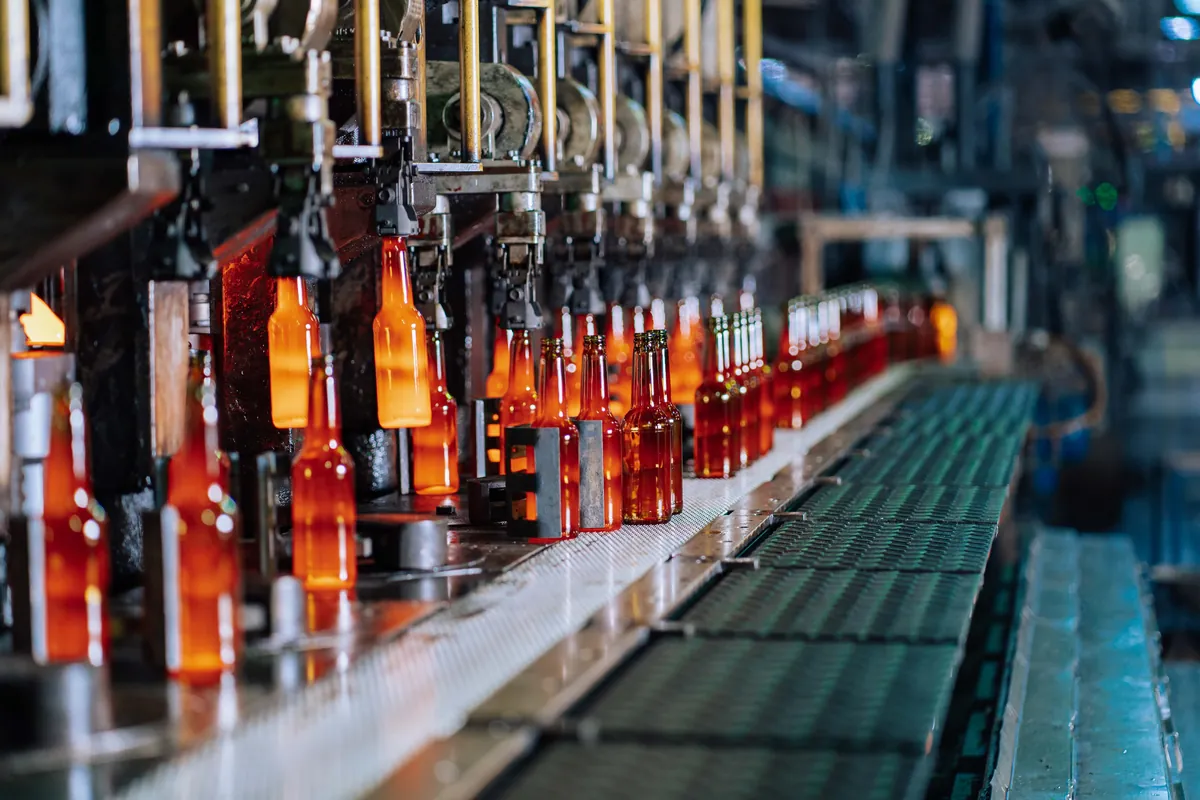
The glass manufacturing plant process starts with weighing and mixing the batch, then melting it in a furnace. Forming differs by product: IS machines shape bottles and jars, while a float bath produces flat glass. An annealing lehr then cools the glass slowly to relieve stress.
Quality is controlled at inspection. Typical checks cover dimensions, thermal shock, internal pressure and defects, against buyer and BIS specifications. Furnace choice matters too, since end-port and oxy-fuel furnaces differ in energy use, and IS machine sections are sized to your output.
- Batch weighing and mixing
- Melting in furnace
- Forming (IS machines for bottles, float bath for flat glass)
- Annealing lehr
- Inspection
- Packing
Raw Materials and Machinery for a Glass Plant
Silica sand, soda ash, limestone, dolomite, cullet and colourants form the batch, with natural gas as fuel. Silica sand typically comes from Rajasthan, Gujarat and Uttar Pradesh, and soda ash from Gujarat. The furnace and the forming line, either IS machines or a float bath, are the costliest and most critical machines.
- Batch house
- Furnace
- Forehearth
- IS machines or float bath
- Annealing lehr
- Inspection machines
- Palletiser
Glass Manufacturing Plant Licence and Approvals
Glass manufacturing plant licence and approvals start with business registration and a factory licence. Then secure your natural gas connection and check whether Environmental Clearance applies. The State Pollution Control Board category is Orange or Red depending on furnace fuel and size, so confirm it before construction, and obtain consent to operate before production.
- Food-contact glass must meet FSSAI packaging norms
- Pharma glass follows pharmacopoeia specifications
- Other buyers set their own product specifications
| Pollution category | Glass manufacturing is Orange or Red depending on furnace fuel and size (CPCB S.No. 65 float glass Orange); Environmental Clearance may apply |
|---|---|
| HSN code | 7010 (bottles and jars), 7005 (float glass) |
| GST | 18% |
| BIS / quality control order | Buyers set product specifications; pharma glass follows pharmacopoeia specifications |
| FSSAI | Food-contact glass must meet FSSAI packaging norms |
| Other licences | Natural gas connection; factory licence; Environmental Clearance where applicable |
Choosing the Right Glass Plant Size
Plant size is the biggest decision in a glass project. Melt capacity typically runs from about 100 to 500 TPD, and investment from about ₹300–1,500 crore, excluding land. A smaller furnace limits capital at risk but gives less room to absorb energy cost. A larger one needs firm customer commitments, since furnaces run continuously and uptime drives returns.
Where to Set Up a Glass Plant
Location should balance gas supply, sand and soda ash access, and nearness to buyers. Firozabad in Uttar Pradesh, Gujarat, Telangana and Andhra Pradesh are the established clusters. Gujarat sits close to both soda ash and silica sand sources. Plan for roughly 25–60 acres, and check state incentives before you fix the site.
Government Schemes and Project Finance for a Glass Plant
State incentives are the main scheme listed for glass projects, and they vary by state. Because capex is very high, most promoters rely on bank finance. NPCS reports are used for bank loans and government programmes, subject to each lender's requirements, so a clear report helps your application.
What Decides Success in a Glass Manufacturing Plant
Successful operators control gas cost, keep the furnace running and win customer approvals early. The main risks are very high capex and energy cost. Recycled cullet goes back into the batch, which helps cut raw material and fuel use.
- Negotiate gas supply before finalising the site
- Plan furnace maintenance to protect uptime
- Secure buyer approvals before commissioning
How NPCS Helps You Set Up a Glass Manufacturing Plant
NPCS supports the decisions that shape a glass project: product mix, furnace technology, capacity and machinery selection. Our team also assists with vendor selection, plant layout, installation and commissioning, and prepares a glass manufacturing plant project report suited to lenders. Each report is tailored to your capacity, budget and location.
NPCS's published client list records 4 assignments on glass manufacturing projects between 2016 and 2024 for clients in 2 states and 2 countries, including detailed project reports, bankable project reports and techno-economic feasibility studies.
What Your Glass Manufacturing Plant Project Report Covers
- Project introduction and BIS specifications
- Manufacturing process with flow sheet
- Market survey (demand, imports/exports, existing units)
- Personnel
- Plant and machinery with suppliers
- Land and building with layout
- Raw materials with sources and rates
- Financials (project cost, working capital, cost of production, profitability, break-even, 5–10 year cash flow, projected balance sheet, IRR/NPV/payback)
Glass Manufacturing Plant: Frequently Asked Questions
What is the glass manufacturing plant setup cost in India?
Investment is typically about ₹300–1,500 crore, depending on capacity and product. This is indicative, capital intensive and excludes land. Your project report works out the figure for your chosen melt capacity, furnace type and location.
Which licences and pollution category apply to a glass plant?
Glass manufacturing is Orange or Red depending on furnace fuel and size. You'll also need a factory licence, a natural gas connection and possibly Environmental Clearance. Food-contact glass must meet FSSAI packaging norms.
How much land and power does a glass plant need?
A plant typically needs about 25–60 acres and about 5–15 MW of power, plus gas. Water requirement is moderate. Exact needs depend on melt capacity and whether you make container or float glass.
How to start a glass manufacturing plant business?
Begin by choosing the product and capacity, then prepare a project report. Next, select the site and furnace technology, secure gas and approvals, and arrange finance. Confirm buyers early, since customer approvals decide how quickly you can sell.
How can NPCS help with my glass plant project?
NPCS prepares detailed project reports, feasibility studies and market research, and guides machinery and vendor selection. Share your planned capacity and location, and our team will outline the project cost and approvals.