
 Thermax (Chemical Division)
 Tata Steel
 JSW Steel
 ITC (Agri Business Division)
 Godrej & Boyce
 Aditya Birla Management Corporation
 Grasim Industries (Century Rayon)
A glass fibre plant melts glass batch and draws E-glass filaments into rovings, chopped strands and mats, or converts bought rovings into fabrics and mesh. Composite and FRP makers, wind blade makers and construction firms buy the output. A glass fibre manufacturing plant consultant helps you decide which route fits your budget before you commit capital. NPCS supports that decision with technical and financial planning.
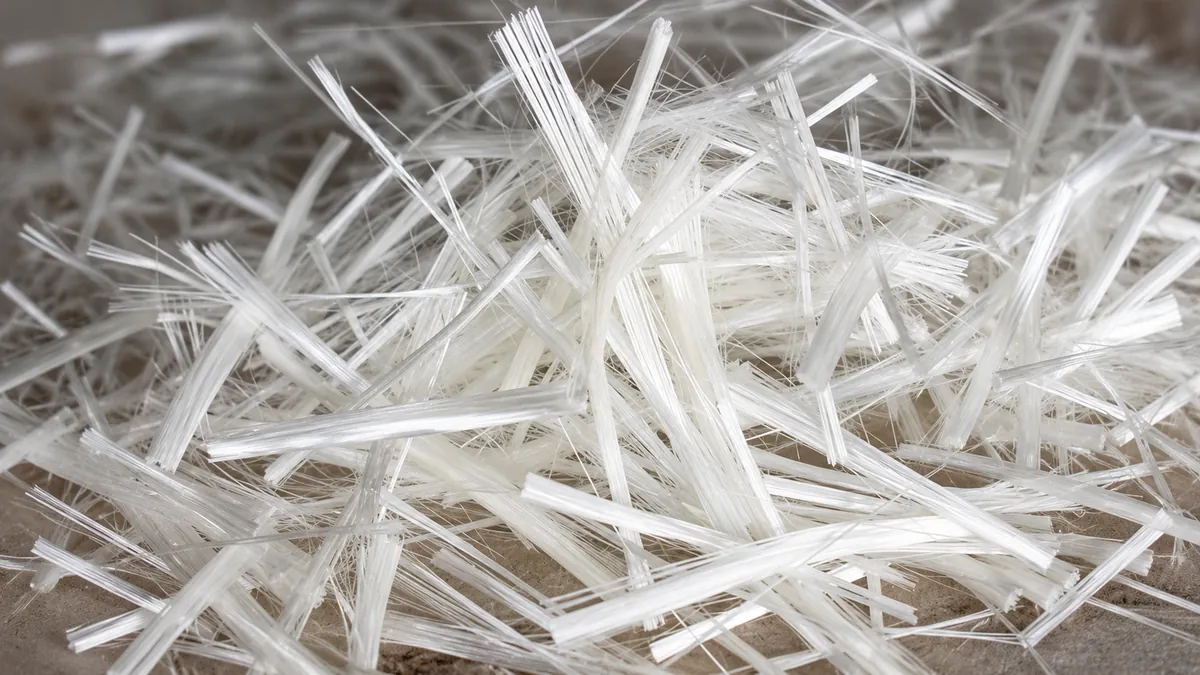
Glass Fibre Manufacturing Plant at a Glance
| Typical capacity | ~5,000–60,000 TPA (furnace) |
|---|---|
| Land | ~5–40 acres |
| Power load | ~2–20 MW |
| Water | Moderate |
| Manpower | ~50–500 |
| Indicative investment | ~₹10 crore (converting) to ₹1,000 crore (furnace) |
Investment basis: excludes land.
Figures are indicative ranges. Your project report works them out for your capacity and location.
Market Demand for Glass Fibre in India
Demand for glass fibre in India follows wind energy, composites and construction. Buyers use it in FRP products, wind blades, pipes and tanks, and construction mesh. Industry activity is concentrated in Gujarat, Maharashtra and Tamil Nadu, so a plant near these clusters stays close to its customers. Export potential is medium, and demand isn't strongly seasonal.
- Composite and FRP makers buying rovings and mats
- Wind blade makers needing woven rovings and fabrics
- Pipe and tank manufacturers using chopped strands
- Construction firms using fibreglass mesh
Glass Fibre Products You Can Make
Furnace-based plants can make direct rovings and chopped strands. Converting units usually start with mats, woven rovings, fabrics or mesh, since these use bought rovings. Pick the variant based on the buyer you can reach first, such as FRP makers or construction firms.
- Direct rovings, chopped strands, chopped strand mat, woven rovings and fabrics, fibreglass mesh
Glass Fibre Manufacturing Process
The glass fibre manufacturing plant process starts with melting the batch in a furnace. The molten glass passes through bushings, which form fine filaments. These are sized, wound and dried, then chopped or made into mats. Converting units skip melting and move straight to weaving and stitching.
Quality is controlled at each stage. Typical checks cover filament diameter, tex, strength and sizing content. Technology choice matters most here, because a furnace plant carries high capex while a converting unit needs far less.
- Batch melting
- Fiberising through bushings
- Sizing
- Winding
- Drying
- Chopping or mat making; converting: weaving and stitching
Raw Materials and Machinery for Glass Fibre
Furnace plants use glass batch made from silica, limestone, kaolin and colemanite, plus sizing chemicals. These minerals are sourced domestically. Converting units buy rovings, which come from domestic and imported suppliers. The furnace and bushings are the costliest items, while looms and mat lines matter most for converters.
- Furnace and bushings
- Winders
- Dryers
- Choppers
- Mat lines
- Looms
Licences and Approvals for a Glass Fibre Plant
Start with business registration, then apply for consent to establish from the State Pollution Control Board before construction. Glass melting is generally Orange or Red, while converting units are Green. After the plant is built, you'll need consent to operate. No QCO applies. A furnace also needs a natural gas connection.
| Pollution category | Glass melting is generally Orange or Red; converting units are Green |
|---|---|
| HSN code | 7019 (glass fibres) |
| GST | 18% |
| BIS / quality control order | No QCO |
| Other licences | Natural gas connection (furnace) |
Choosing the Right Glass Fibre Technology
Furnace-based fibre plants need high capex and a stable energy supply, but they make the fibre itself. Mat, fabric and mesh converting units cost far less and carry Green pollution status. They depend on bought rovings, however, so import prices matter. Many new entrants start with converting and study furnace expansion later.
Making Money from Glass Fibre Waste
Waste fibre from the line can be recycled instead of discarded. Feeding it back into production or selling it to buyers who accept it cuts material loss. Your project report can estimate how much waste to expect and how it affects cost of production.
Government Schemes and Project Finance
The National Technical Textiles Mission is the scheme named for this sector. A bankable project report supports loan and scheme applications, since lenders want costs, cash flow and payback worked out. NPCS reports are used for bank loans and government programmes, subject to each lender's requirements.
What Decides Success in a Glass Fibre Plant
Good operators control energy cost and reach a scale that spreads fixed cost. The main risk is competition from Chinese imports.
- Secure low-cost power and natural gas
- Match capacity to firm buyer demand
- Price carefully against imported fibre
- Recycle waste fibre to cut losses
How NPCS Helps You Set Up a Glass Fibre Plant
NPCS prepares the project report and feasibility study that compare furnace and converting routes for your budget. Our team also supports machinery selection, vendor selection, plant layout and production process guidance. We help with installation and commissioning assistance, and with the approvals and finance documents you'll need.
NPCS's published client list records 10 assignments on glass fibre manufacturing projects between 2020 and 2025 for clients in 8 states, including bankable project reports and techno-economic feasibility studies.
What Your Glass Fibre Manufacturing Plant Project Report Covers
- Project introduction and BIS specifications
- Manufacturing process with flow sheet
- Market survey (demand, imports/exports, existing units)
- Personnel
- Plant and machinery with suppliers
- Land and building with layout
- Raw materials with sources and rates
- Financials (project cost, working capital, cost of production, profitability, break-even, 5–10 year cash flow, projected balance sheet, IRR/NPV/payback)
Glass Fibre Manufacturing Plant: Frequently Asked Questions
How much investment is needed to start a glass fibre manufacturing plant?
Investment is indicative at about ₹10 crore for a converting unit and up to ₹1,000 crore for a furnace plant, excluding land. Your project report works out the exact cost for your capacity and location.
Which licences and pollution category apply to a glass fibre plant?
Glass melting is generally Orange or Red, while converting units are Green. You'll need consent to establish and consent to operate from the State Pollution Control Board. A furnace also needs a natural gas connection. No QCO applies.
How much land and power does a glass fibre plant need?
A furnace plant typically needs about 5–40 acres and about 2–20 MW of power, with moderate water use. Converting units need much less. Actual needs depend on your capacity and chosen technology.
How to start a glass fibre manufacturing plant business?
Decide between a furnace plant and a converting unit, then fix capacity and location. Prepare a detailed project report, apply for pollution board consents, arrange finance and select machinery. NPCS can guide each of these steps.
How does NPCS help with a glass fibre manufacturing plant project report?
NPCS prepares detailed and bankable project reports covering process, machinery, raw materials, approvals and financials. We tailor them to your capacity, budget and technology, and our team also advises on machinery, vendors and plant layout.