
 Godrej & Boyce
 SRF
 Shyam Steel
 Tata Steel
 JSW Steel
 ITC (Agri Business Division)
 Aditya Birla Management Corporation
Fire-safety norms and the shift to dry construction are pushing demand for boards made from silica, lime, cement and cellulose fibre. A calcium silicate board plant consultant helps you decide whether the capital-heavy autoclave route suits your budget and market. Investors usually set these plants up to supply false ceilings, dry-wall partitions, fire protection and industrial insulation. NPCS has worked on projects like this since 1994. Our team prepares the detailed project report, helps you choose the technology, and plans the approvals so your numbers hold up with lenders.
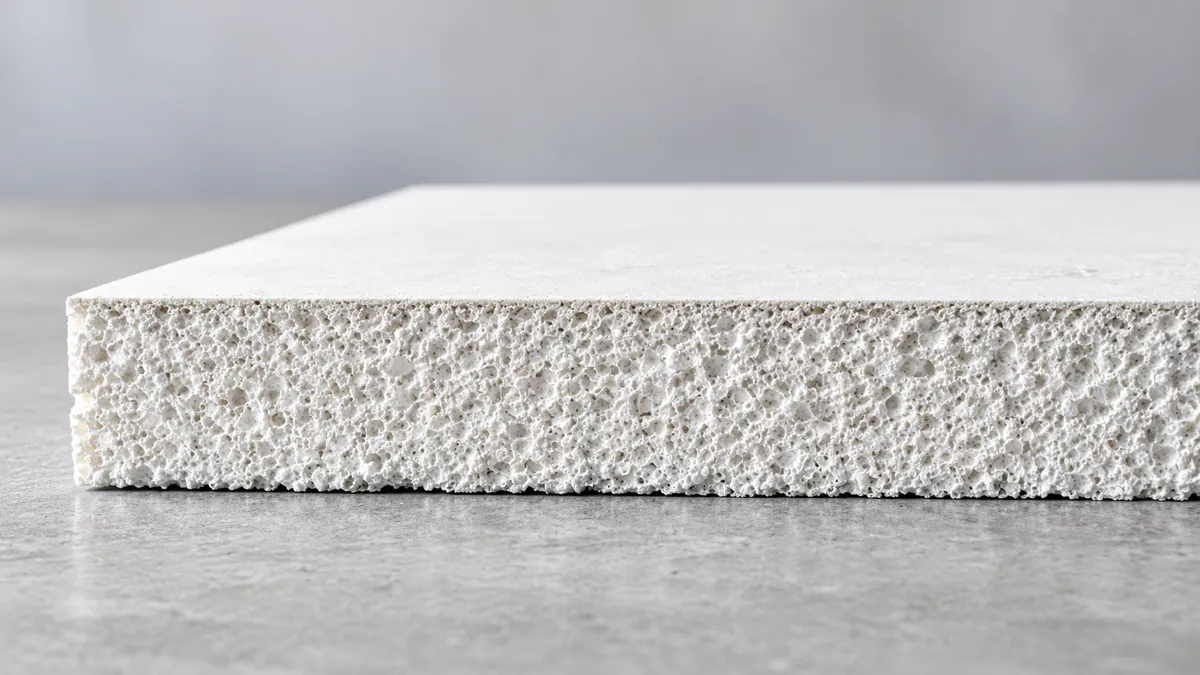
Calcium Silicate Board Plant at a Glance
| Typical capacity | ~5–30 million sq m per year |
|---|---|
| Land | ~8–20 acres |
| Power load | ~1.5–5 MW |
| Water | Moderate (recycled) |
| Manpower | ~80–250 |
| Indicative investment | ~₹60–250 crore |
Investment basis: capital-intensive autoclave line; excludes land.
Figures are indicative ranges. Your project report works them out for your capacity and location.
Market Demand for Calcium Silicate Boards in India
Demand comes mainly from fire-safety rules, dry construction and commercial real estate. Metro, airport and commercial projects specify fire-rated boards, which supports steady volumes. Export potential is medium, and seasonality is low, so sales are fairly even through the year. Existing industry is concentrated in Gujarat, Maharashtra, Andhra Pradesh and Tamil Nadu.
- Interior and dry-wall contractors
- Builders of commercial and institutional projects
- Industrial insulation users
- Metro and airport construction contractors
Calcium Silicate Board Products You Can Make
Most new units begin with ceiling and partition boards, which sell through contractors and builders. Fire-rated boards suit commercial projects where certification matters. High-temperature insulation boards serve industrial users and need tighter testing, so many plants add them after the core range is stable.
- Ceiling boards, partition boards, fire-rated boards, high-temperature insulation boards
Calcium Silicate Board Plant Process
The calcium silicate board plant process turns a silica, lime and cellulose slurry into cured, sanded boards. Sheets are formed on a Hatschek machine or a flow-on line, then pressed, pre-cured and autoclaved. Press capacity sets board density, so it shapes both strength and product positioning.
Quality is controlled at several points. You test density, flexural strength, moisture movement and fire rating, typically against IS 14862-type standards and fire tests. Autoclaving and drying are the stages where most energy is used, so they deserve close attention in planning.
- Slurry preparation
- Sheet forming (Hatschek or flow-on)
- Pressing
- Pre-curing
- Autoclaving
- Drying
- Sanding and cutting
- Packing
Raw Materials and Machinery for a Calcium Silicate Board Plant
Silica (quartz) powder, lime, cement, cellulose pulp and additives go into the mix. Silica and lime are commonly sourced from Rajasthan and Gujarat, while pulp may be domestic or imported. The machines that matter most are the Hatschek machine, the press and the autoclaves, since they set output and capital cost.
- Pulpers
- Mixers
- Hatschek machine
- Stacker
- Press
- Autoclaves
- Dryer
- Sanding and cutting line
Calcium Silicate Board Plant Licence and Approvals
Approvals follow a set order: unit registration, then consent to establish from the State Pollution Control Board before construction, then operating approvals. Board manufacturing with autoclaves and dust is generally Orange, though the State PCB fixes the category. Check the current BIS position for your product early, as coverage changes often.
- Boiler approval under IBR
- Factory licence
- Fire safety approvals for product testing
- Consent to operate after commissioning
| Pollution category | Board manufacturing with autoclaves and dust: generally Orange; the State PCB fixes the category |
|---|---|
| HSN code | 6811 (articles of asbestos-cement, cellulose fibre-cement) |
| GST | 18% |
| BIS / quality control order | QCO coverage changes often; NPCS verifies the current BIS requirement for your product during project planning |
| Other licences | Boiler (IBR); factory licence; fire safety approvals for product testing |
Choosing the Right Calcium Silicate Board Plant Size
Plant size changes the project more than almost any other decision. Indicative capacity runs from ~5–30 million sq m per year, with investment of ~₹60–250 crore excluding land. Land needs range from ~8–20 acres, power from ~1.5–5 MW and manpower from ~80–250 people. A smaller line lowers capital risk but may struggle on energy cost per board. A larger line spreads fixed costs but depends on distribution reaching enough buyers.
Choosing Between Hatschek and Flow-On Lines
Technology choice is a core decision in any calcium silicate board plant. Hatschek machines and flow-on lines both form sheets, and each suits different product mixes and budgets. Press capacity then sets board density, which decides whether you target ceilings, partitions or fire-rated boards. NPCS compares the routes against your capacity, budget and target buyers before machinery is finalised.
Government Schemes and Project Finance for Board Plants
State incentives may apply to a unit of this size, and they vary by state. Because capex is high, most promoters need term loans. NPCS reports are used for bank loans and government programmes such as PMEGP, MSME schemes, Mudra and NABARD-linked projects, subject to each lender's requirements.
What Decides Success in a Calcium Silicate Board Plant
Successful operators secure product approvals, build strong distribution and keep energy use under control. The main risks are high capex, imported inputs and competition from gypsum board.
- Obtain product approvals and test results before launch
- Build contractor and builder distribution early
- Recycle trim and broken boards into the process
- Plan pulp sourcing against import exposure
How NPCS Helps You Set Up a Calcium Silicate Board Plant
Our team supports the decisions that carry the most weight: capacity, technology, machinery and approvals. We prepare the calcium silicate board plant project report with financials a lender can test. We also help with machinery selection, vendor selection, plant layout, and installation and commissioning assistance.
NPCS's published client list records 5 assignments on calcium silicate board projects between 2016 and 2025 for clients in 4 states, including techno-economic feasibility studies.
What Your Calcium Silicate Board Plant Project Report Covers
- Project introduction and BIS specifications
- Manufacturing process with flow sheet
- Market survey (demand, imports/exports, existing units)
- Personnel
- Plant and machinery with suppliers
- Land and building with layout
- Raw materials with sources and rates
- Financials (project cost, working capital, cost of production, profitability, break-even, 5–10 year cash flow, projected balance sheet, IRR/NPV/payback)
Calcium Silicate Board Plant: Frequently Asked Questions
How much does it cost to set up a calcium silicate board plant in India?
Indicative investment is ~₹60–250 crore, depending on capacity and technology. It excludes land and reflects a capital-intensive autoclave line. Your project report works out the exact figure for your capacity, location and machinery choice.
Which licences are needed for a calcium silicate board plant?
You need State Pollution Control Board consent, a factory licence, boiler approval under IBR and fire safety approvals for product testing. The unit is generally Orange, but the State PCB fixes the category. NPCS also verifies current BIS requirements.
How much land and power does a calcium silicate board plant need?
Typically ~8–20 acres of land and ~1.5–5 MW of power, depending on capacity. Water use is moderate and recycled. Final figures depend on your line size, so confirm them in the project report.
How to start a calcium silicate board plant business?
Start with a feasibility study covering demand, capacity and technology. Then fix the location, secure raw material sources, apply for consent to establish, and finalise machinery and finance. A detailed project report ties these steps together.
How does NPCS help with a calcium silicate board plant?
NPCS prepares the detailed project report and feasibility study, helps compare Hatschek and flow-on technology, and supports machinery and vendor selection. We also plan approvals and finance, and assist with installation and commissioning.