
 Tata Steel
 JSW Steel
 ITC (Agri Business Division)
 Godrej & Boyce
 Aditya Birla Management Corporation
 Grasim Industries (Century Rayon)
 Thermax (Chemical Division)
 UPL
Formulation companies in India and abroad buy active pharmaceutical ingredients from plants that run multi-step chemical synthesis under GMP. An API manufacturing plant consultant helps you decide the molecules, plant design, approvals and finance before you commit capital. Demand is supported by import substitution of key starting materials and by global generics. NPCS, working since 1994, prepares detailed reports and guides machinery, technology and approval decisions so your plan stands up to lenders and regulators.
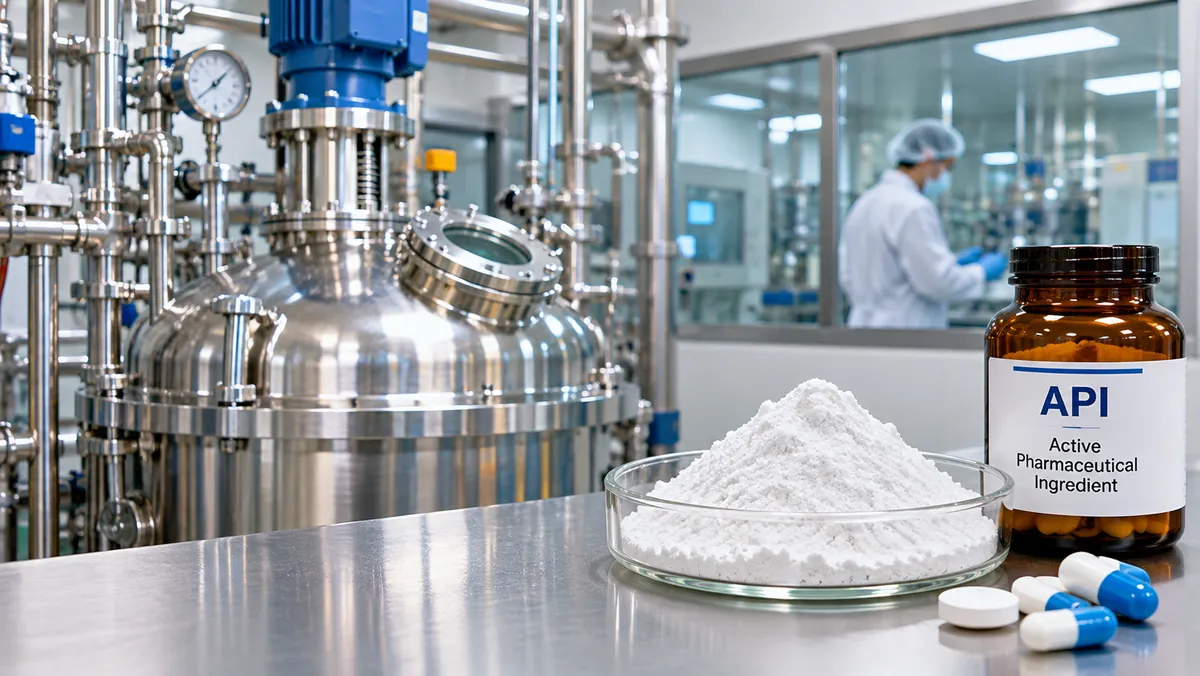
API Manufacturing Plant at a Glance
| Typical capacity | ~50–2,000 TPA (product-dependent) |
|---|---|
| Land | ~5–30 acres |
| Power load | ~1–8 MW |
| Water | High (ZLD in many clusters) |
| Manpower | ~100–600 |
| Indicative investment | ~₹50–500 crore |
Investment basis: excludes land.
Figures are indicative ranges. Your project report works them out for your capacity and location.
Market Demand for API Manufacturing Plants in India
Indian API makers sell mainly to formulation companies, exporters and innovator firms that outsource through contract manufacturing (CDMO). Two forces drive demand: import substitution of KSMs, which are largely sourced from China today, and steady global demand for generics. Export potential is high, and seasonality is low, so plants can run steadily through the year.
- Formulation companies buying generic APIs
- Exporters supplying regulated and other markets
- Innovator companies using CDMO partners
- Clusters at Hyderabad, Visakhapatnam, Vadodara-Ankleshwar, Baddi and Aurangabad
API Products and Business Models You Can Choose
You can make generic APIs, key starting materials and intermediates, or work as a CDMO for innovators. Generic APIs suit formulation buyers, while KSMs fit import substitution. CDMO work suits promoters who can meet innovator quality and confidentiality demands.
- Generic APIs, key starting materials (KSMs) and intermediates, contract manufacturing (CDMO) for innovators
API Manufacturing Process Explained
An API plant turns starting materials into a purified drug substance through multi-step synthesis, then isolates and finishes it in clean areas. Solvent recovery runs throughout, which cuts cost and eases effluent load. Technology choices include multi-purpose plants versus dedicated product blocks, and continuous flow chemistry.
Quality is controlled at every stage rather than only at the end. Testing covers assay, impurities, residual solvents and polymorph, against pharmacopoeia monographs and the revised Schedule M. For regulated markets, you'll also need DMF filings.
- Synthesis in reactors (multi-step)
- Work-up and isolation
- Crystallisation
- Centrifuging
- Drying
- Milling and sifting
- Packing in clean areas; solvent recovery throughout
Raw Materials and Machinery for an API Plant
Inputs are starting materials and intermediates, solvents, reagents and catalysts. These come from domestic chemical clusters and from imports, with KSMs largely sourced from China. On the equipment side, reactors, solvent recovery, HVAC clean rooms and a QC lab with HPLC and GC matter most, since they decide compliance and yield.
- Glass-lined and SS reactors
- Centrifuges
- ANFD
- Dryers
- Solvent recovery
- HVAC clean rooms
- QC lab with HPLC and GC
API Manufacturing Plant Licence and Approvals
Bulk drug manufacturing is in the Red pollution category, so approvals need early planning. In practice, secure Environmental Clearance, which is categorised by capacity, and State Pollution Control Board consents before construction. Then obtain the drug manufacturing licence, and plan WHO-GMP and foreign regulatory approvals if you'll export.
- Environmental Clearance and pollution board consents
- Drug manufacturing licence
- WHO-GMP and foreign approvals for exports
- MSIHC and PESO compliance
| Pollution category | Bulk drug manufacturing is Red; Environmental Clearance required (category by capacity) |
|---|---|
| HSN code | 2941 and other Chapter 29 headings (by molecule) |
| GST | 18% generally on APIs |
| BIS / quality control order | No QCO |
| Other licences | Drug manufacturing licence; Environmental Clearance; WHO-GMP and foreign regulatory approvals for exports; MSIHC and PESO compliance |
Choosing the Right API Plant Technology
Multi-purpose plants let you run several molecules in the same reactors, which suits a growing product basket and CDMO work. Dedicated product blocks suit a high-volume molecule where cost and consistency matter most. Continuous flow chemistry is another route to evaluate for suitable reactions. Your project report compares these options against your molecule list, capacity and budget before machinery is finalised.
Where to Set Up Your API Plant
Established clusters at Hyderabad, Visakhapatnam, Vadodara-Ankleshwar, Baddi and Aurangabad give access to chemical suppliers, skilled people and effluent infrastructure. Water need is high, and ZLD applies in many clusters, so check effluent norms before buying land. A typical unit needs about 5–30 acres, depending on capacity and product mix.
Government Schemes and Project Finance for API Plants
The PLI scheme for critical KSMs and APIs and the Bulk Drug Parks scheme are relevant to this sector. NPCS reports are used for bank loans and government programmes such as PMEGP, MSME schemes, Mudra and NABARD-linked projects, subject to each lender's requirements. A bankable report helps present costs, cash flow and compliance plans clearly.
What Decides Success in an API Manufacturing Plant
Good operators get regulatory compliance, process chemistry and cost control right. The main risks are Chinese price competition and effluent compliance. Spent solvents are recovered, and process residues go to incineration, so plan both from day one.
- Strong regulatory compliance record
- Efficient process chemistry and solvent recovery
- Competitive cost against imports
- Effluent systems sized for ZLD norms
How NPCS Helps You Set Up an API Manufacturing Plant
NPCS ties its services to the decisions you face: capacity, multi-purpose or dedicated blocks, machinery selection, vendor selection and plant layout. Our team also supports production process guidance, installation and commissioning assistance, and bankable reports for lenders. You get an API manufacturing plant project report tailored to your molecule, budget and location.
NPCS's published client list records 5 assignments on api manufacturing projects between 2013 and 2024 for clients in 3 states and 1 country, including detailed project reports, bankable project reports and techno-economic feasibility studies.
What Your API Manufacturing Plant Project Report Covers
- Project introduction and BIS specifications
- Manufacturing process with flow sheet
- Market survey (demand, imports/exports, existing units)
- Personnel
- Plant and machinery with suppliers
- Land and building with layout
- Raw materials with sources and rates
- Financials (project cost, working capital, cost of production, profitability, break-even, 5–10 year cash flow, projected balance sheet, IRR/NPV/payback)
API Manufacturing Plant: Frequently Asked Questions
How much investment is needed to start an API manufacturing plant?
An indicative range is ~₹50–500 crore, which excludes land. The final figure depends on capacity, molecules, clean-room needs and effluent systems. Your project report works out the cost for your specific plan.
Which licences and pollution category apply to an API plant?
Bulk drug manufacturing is Red category, and Environmental Clearance is required, categorised by capacity. You also need a drug manufacturing licence, and WHO-GMP and foreign approvals for exports, along with MSIHC and PESO compliance.
How much land and power does an API plant need?
Typically about 5–30 acres of land and ~1–8 MW of power, depending on capacity and product mix. Water requirement is high, and ZLD applies in many clusters, so check local norms first.
How do I start an API manufacturing plant business?
Begin by choosing molecules and a model: generic APIs, KSMs or CDMO. Then fix capacity, technology and location, obtain Environmental Clearance and licences, and arrange finance. A detailed project report ties these steps together.
How does NPCS help with an API manufacturing plant?
NPCS prepares detailed and bankable project reports and feasibility studies, and guides machinery, vendor and technology choices. Share your molecules, capacity and location, and our team will outline the cost and approvals.