
 Tata Steel
 JSW Steel
 ITC (Agri Business Division)
 Godrej & Boyce
 Aditya Birla Management Corporation
 Grasim Industries (Century Rayon)
 Thermax (Chemical Division)
 UPL
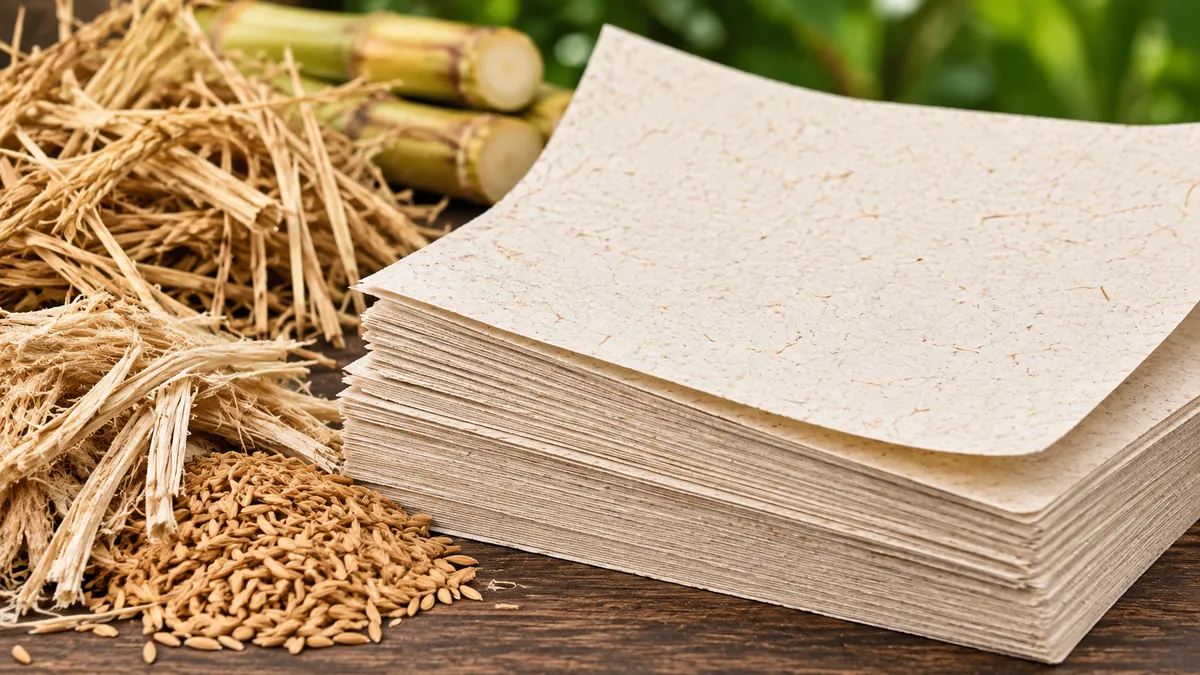
Paper mills that run on rice straw, wheat straw and rice husk turn a field waste into writing paper, kraft and duplex board. An agro-residue paper plant consultant helps entrepreneurs in Punjab, Haryana and Uttar Pradesh decide capacity, pulping route and effluent plan before money is committed. Packaging converters and stationery makers are the usual buyers. NPCS supports you with a detailed project report, machinery guidance and approval planning built around your site.
Agro-Residue Paper Plant at a Glance
| Typical capacity | ~50–300 TPD |
|---|---|
| Land | ~20–60 acres |
| Power load | ~5–15 MW |
| Water | Very high |
| Manpower | ~150–400 |
| Indicative investment | ~₹100–600 crore |
Investment basis: excludes land.
Figures are indicative ranges. Your project report works them out for your capacity and location.
Market Demand for Agro-Residue Paper Plants in India
Demand rests on two things: steady paper and packaging consumption, and the pressure to stop crop residue burning. Mills that buy straw give farmers a use for it, which is why the industry sits close to the paddy and wheat belt. Your buyers are mostly local, as export potential is low.
- Packaging converters buying kraft and duplex board
- Stationery makers needing writing and printing paper
- Makers of moulded products from straw pulp
- Mills in Punjab, Haryana and Uttar Pradesh near straw supply
Paper and Board Products You Can Make
Your grade decides the machine, the pulp quality and the customer. Packaging board suits converters, while writing and printing paper serves stationery makers. Moulded products from straw pulp need a simpler finishing setup. Choose the grade your nearest buyers already purchase.
- Writing and printing paper, kraft and duplex board, moulded products from straw pulp
Agro-Residue Paper Plant Process
The agro-residue paper plant process turns cleaned straw into pulp, then into finished paper on a paper machine. Pulping can follow the soda route or other routes, and large mills treat chemical recovery as essential. Bleaching is done only where the grade needs it.
Quality is controlled at stock preparation and on the finished reel. Labs typically check burst, tensile, brightness and GSM. In practice, a stable pulp stage saves more trouble than any later correction.
- Straw cutting and cleaning
- Pulping (soda or other routes)
- Washing
- Bleaching (if needed)
- Stock preparation
- Paper machine
- Finishing
Raw Materials and Machinery for an Agro-Residue Paper Plant
Rice and wheat straw, rice husk, waste paper and pulping chemicals are the main inputs. Straw is sourced mainly from Punjab, Haryana and Uttar Pradesh, and waste paper is often blended in. Digesters, chemical recovery and the paper machine drive most of the cost. Effluent treatment is as important as any production machine.
- Straw cutters
- Digesters
- Washers
- Chemical recovery
- Paper machine
- Rewinders
- ETP
Licences and Approvals for an Agro-Residue Paper Plant
Pulp and paper with pulping falls in the Red pollution category, so approvals shape your timeline. Start with business registration and Environmental Clearance, and secure water allocation early. Then obtain consent to establish from the State Pollution Control Board before construction, and consent to operate before commercial production. No QCO applies.
| Pollution category | Pulp and paper with pulping is Red |
|---|---|
| HSN code | 4802, 4804, 4805 (by grade) |
| GST | Classification-dependent by grade; applied in the project financials |
| BIS / quality control order | No QCO |
| Other licences | Environmental Clearance; water allocation |
Securing Straw for Your Agro-Residue Paper Plant
Straw availability is seasonal, so a mill must collect and store enough residue to run through the year. Plan collection points across Punjab, Haryana or Uttar Pradesh, with covered storage and a buying schedule that matches harvest. Waste paper can fill gaps in supply. Price swings in straw affect cost of production, so your project report should test them.
Choosing the Right Pulping Technology
Agro-based pulping with chemical recovery is essential for large mills. The soda route is common, but other routes exist, and the choice affects effluent load and chemical cost. A smaller unit may blend more waste paper, while a large mill needs recovery for black liquor. Silica in straw can complicate recovery, so test your straw type.
Government Schemes and Project Finance
Stubble management support for crop residue utilisation is the scheme linked to this project. Lenders will still ask for a clear project report with costs, cash flow and effluent plans. NPCS reports are used for bank loans and government programmes such as PMEGP, MSME schemes, Mudra and NABARD-linked projects, subject to each lender's requirements.
What Decides Success in an Agro-Residue Paper Plant
Good operators secure residue collection early and treat effluent as a core process. The main risks are listed here.
- Silica in straw causing chemical recovery problems
- Effluent treatment falling short of consent conditions
- Seasonal straw supply
- Handling black liquor from chemical recovery
How NPCS Helps You Set Up an Agro-Residue Paper Plant
NPCS works on the decisions that matter most here: capacity, pulping route, machinery and vendors, plant layout and approvals. Our team prepares a project report tailored to your straw source and market, and supports installation and commissioning. We also help shape the financials so lenders can assess the project clearly.
NPCS's published client list records 5 assignments across paper, wood and bamboo products projects between 2013 and 2023, for clients in 3 states and 1 countries.
What Your Agro-Residue Paper Plant Project Report Covers
- Project introduction and BIS specifications
- Manufacturing process with flow sheet
- Market survey (demand, imports/exports, existing units)
- Personnel
- Plant and machinery with suppliers
- Land and building with layout
- Raw materials with sources and rates
- Financials (project cost, working capital, cost of production, profitability, break-even, 5–10 year cash flow, projected balance sheet, IRR/NPV/payback)
Agro-Residue Paper Plant: Frequently Asked Questions
How much investment is needed to start an agro-residue paper plant?
An indicative range is ₹100–600 crore, excluding land, for capacities of about 50–300 TPD. The final figure depends on capacity, grade, pulping route and effluent plant. Your project report works out the cost for your site.
Which licences and pollution category apply to an agro-residue paper plant?
Pulp and paper with pulping is Red category. You need Environmental Clearance, water allocation, and consent to establish and operate from the State Pollution Control Board. No QCO applies, and FSSAI is not applicable.
How much land and power does an agro-residue paper plant need?
Typically about 20–60 acres of land and about 5–15 MW of power, depending on capacity. Water requirement is very high, so confirm water allocation before buying land.
How do I start an agro-residue paper plant business?
Begin with a feasibility study covering straw supply, grade and capacity. Then fix your site, apply for clearances, select machinery and arrange finance. A detailed project report ties these steps together before construction starts.
How does NPCS help with an agro-residue paper plant?
NPCS prepares the project report, guides technology and machinery selection, supports vendor choice and plant layout, and assists with installation and commissioning. Share your capacity and location, and our team will outline the next steps.