CONTENTS
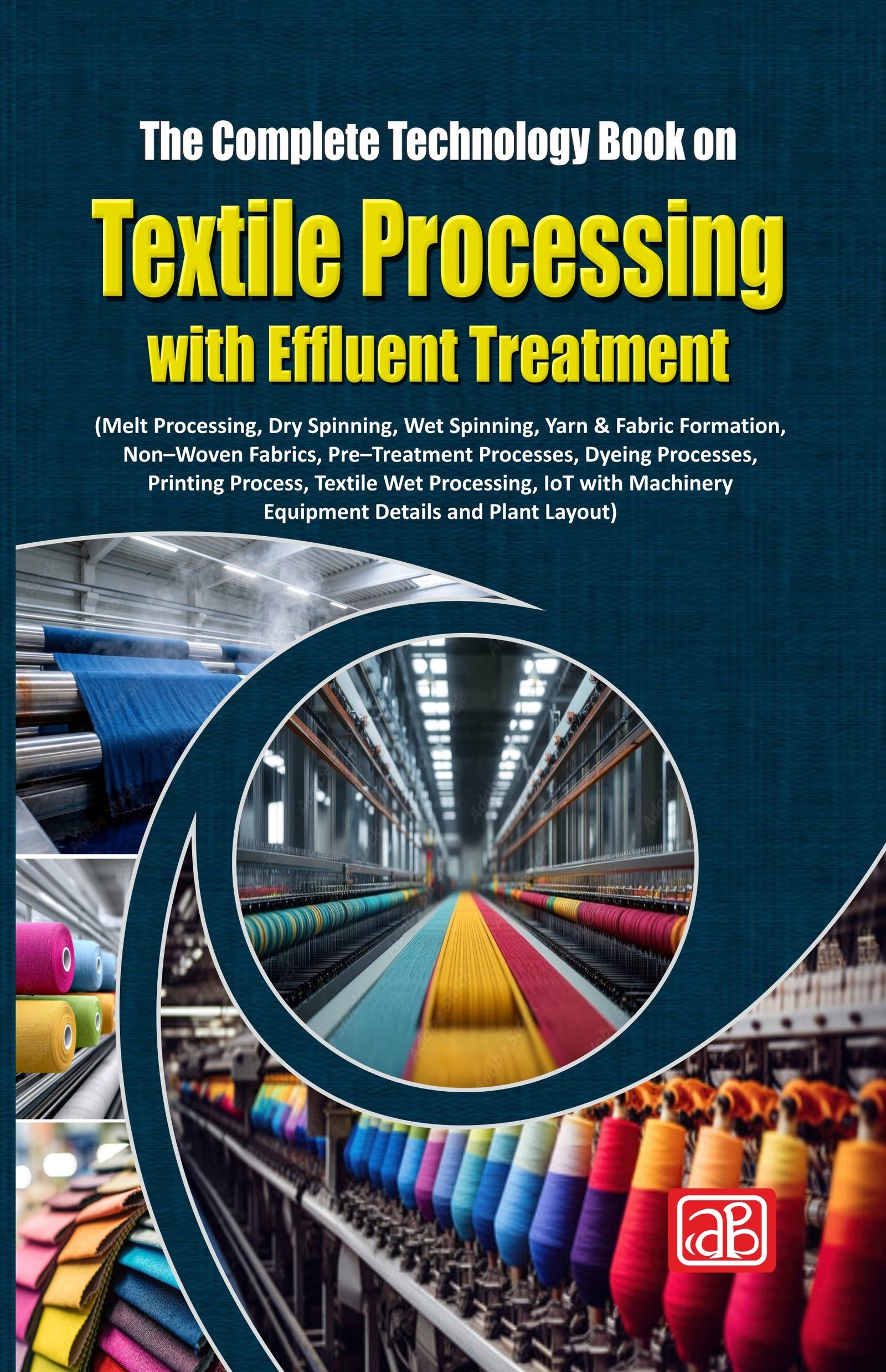
The Complete Technology Book on Textile Processing with Effluent Treatment
Chapter 1: Textile Fibre
Introduction
The Origin of Textile Fibres
Essential Properties of a Textile Fibre
Classification of Textile Fibres
Significance of Textile Fibres
Properties of Textile Fibre
Important Properties of Fibres
Fibre shape and strength of yarns
Fibre Extensibility
Softness
Plasticity and Thermoplasticity
Lustre
Fibre Density
Solubility in Various Solvents
Affinity for Dyes
Fibre Structure
The Special Properties of Synthetic Fibres
Basic Aspects of Textile Fibres: Filament and Staple
Filament and Staple Yarn
Fabrics
Woven Fabrics
Knitted Fabrics
Lace and Net Fabrics
Braided Fabrics
Felt Fabrics
Bonded Fibre Fabrics
Chapter 2: Textile Mills and Textile Fibres
Woven Textile Fabrics
Cotton
Wool
Silk
Rayon
Acetate
Nylon
Vinyon
Mohair
Linen
Glass Fibres
Dacron
Orlon
Vicara
Yarns for Weaving
Chapter 3: Natural Fibres: Cotton, Wool, and Silk
Introduction
Cotton
Origin and Botanical Background
Chemical Composition and Structure
Physical and Mechanical Properties
Grades, Varieties, and Applications
Wool
Origin and Historical Background
Chemical and Structural Composition
Physical and Mechanical Properties
Varieties, Grading, and Applications
Silk
Origin, History, and Sericulture
Chemical Composition and Structure
Physical and Mechanical Properties
Chapter 4: Melt Processing of Synthetic Polymers
Introduction
Historical Development
Polymers Amenable to Melt Processing
Fundamental Principles of Melt Processing
Melt Processing Equipment and System Architecture
Spinline Dynamics and Filament Formation
Quenching, Cooling, and Solidification
Molecular Structure Development During Melt Spinning
Orientation Mechanisms and Birefringence
Crystallisation Kinetics and Morphology
Skin–Core Structural Differentiation at High Speeds
Process Variables and Their Influence on Fibre Properties
Melt Temperature and Viscosity Control
Extrusion Rate and Take-up Speed
Quench Conditions and Solidification Point
Molecular Weight, Chain Architecture, and Additive Effects
Drawing and Post-spinning Operations
Cold and Hot Drawing Principles
Coupled Spin-Draw and High-speed Spinning
Texturing and Heat Setting
Polymer-Specific Melt Processing Considerations
Polyesters (Poly(ethylene terephthalate))
Polyamides (Nylon 6 and Nylon 6,6)
Polyolefins and Specialty Polymers
Specialised Melt Processing Techniques
Modified Cross-Section Fibres
Bicomponent and Composite Spinning
Melt Blown and Spunbond Nonwoven Technologies
High-speed and Compact Spinning Systems
Fibre Morphology, Defects, and Quality Considerations
Industrial Significance and Technological Relevance
Recent Developments and Future Perspective
Chapter 5: Spinning Process: From Raw Polymer to Finished Fibre
Dry Spinning
Introduction
Principle of Dry Spinning
Raw Materials Used
Complete Dry Spinning Process
Machinery and Equipment Used
Fibres Manufactured by Dry Spinning
Process Parameters
Quality Control
Advantages of Dry Spinning
Industrial Applications
Basics of Dyeing
Types of Dyes
Direct Dyes
Reactive Dyes
Acid Dyes
Basic Dyes
Vat Dyes
Sulphur Dyes
Disperse Dyes
Azo Dyes
Pigments
Natural Dyes
Dyeing Methods
Dyeing Machines
Common Dyeing Problems and Their Solutions
Safety and Environmental Considerations
Future Developments
Conclusion
Chapter 6: Wet Spinning
Introduction
Industrial and Scientific Significance
Fundamental Principles of Wet Spinning
Wet Spinning Process
Quality Control Testing
Polymer-Specific Process
Acrylic Fibres (Acrylonitrile Copolymers)
Odacrylic Fibres
Viscose Rayon
Aromatic Polyamides (Aramids)
Effluents, Environmental Considerations, and Solvent Management
Fibre Properties Achievable by Wet Spinning
Conclusion
Chapter 7: Sustainability Challenges in Textile Processing
Introduction
Water Consumption and Pollution Issues
Water Use Across Textile Processing Stages
Pollutant Types and Wastewater Composition
Sources of Wastewater Generation
Major Textile Hubs: India, Bangladesh, and China
Impacts on Aquatic Ecosystems and Human Health
Regulatory Limits and Discharge Standards
Challenges in Wastewater Management
Environmental Impact of Textile Wet Processing
Why Wet Processing Is Environmentally Dominant
Chemical Toxicity of Dyes and Auxiliaries
Microfiber Pollution and Emerging Contaminants
Soil, Groundwater, and Biodiversity Impacts
Life Cycle Assessment Insights
Carbon Footprint and Energy Consumption
Energy Requirements in Textile Processing
Sources of Energy and Fuel Switching
Carbon Emissions Across the Value Chain
Global Warming Potential and Benchmarks
Low-carbon Textile Mills and Recent Progress
Need for Green Manufacturing
Concept and Principles
Cleaner Production Techniques
Waterless and Low-Liquor Dyeing Technologies
Eco-Friendly Dyes and Chemicals
Water Recycling, Reuse, and ZLD Systems
Energy Efficiency and Renewable Integration
Digitalization and Smart Manufacturing
Circular Economy in Textiles
Certifications and Eco-Labels
Industry Challenges in Adoption
Future Outlook and Innovation Trends
Conclusion
Chapter 8: Yarn and Fabric Formation
Introduction
Spinning
Ring Spinning
Rotor (Open-End) Spinning
Air-Jet Spinning
Analysis of Spinning Systems
Fabric Formation Techniques
Weaving
Knitting
Nonwoven Fabrics
Chapter 9: Fabric Formation – Knitting
Introduction
How Does It Work?
Types of Knitting
Weft Knitting
Plain Knitting (Single Jersey)
Rib Knitting
Interlock Knitting
Warp Knitting
Tricot Knitting
Raschel Knitting
Advantages
Machinery and Equipment Used
Circular Knitting Machines
Flat Knitting Machines
Warp Knitting Machines
Key Components of Knitting Machines Include:
Uses of Knitted Fabrics
Conclusion
Chapter 10: Fabric Formation – Weaving
Introduction
Basic Weaving Process
Fundamental Principles
Weaving Process
Types of Looms
Hand Looms
Power Looms
Shuttle Looms
Shuttleless Looms
Common Fabric Structures
Plain Weave
Twill Weave
Satin Weave
Weaving Process in Textile Manufacturing
Machinery and Equipment
Applications
Chapter 11: Non-Woven Fabrics
Introduction
What Are Non-Woven Fabrics
Manufacturing Methods
Conclusion
Chapter 12: Textile Processing
Introduction
Role of Textile Processing Units
Dyeing
Printing
Finishing
Classification of Textile Processes
Chapter 13: Indian and Global Textile Industry
Introduction
Industry Structure and Value Chain
Market Size, Growth Trends, and Export Potential
Key Textile Clusters (India and Global)
Textile Clusters in India
Global Textile Clusters
Comparative Insights
Emerging Opportunities for Startups
Challenges and Future Outlook
Conclusion
Chapter 14: How to Start a Textile Processing Business
Understanding the Industry and Market Dynamics
Business Planning and Project Structuring
Legal Framework and Environmental Compliance
Financial Planning and Funding Strategy
Setting Up the Production Facility
Raw Material and Chemical Management
Effluent Treatment Plant: Design and Operation
Human Resources and Skill Development
Marketing and Business Development
Operations, Monitoring, and Continuous Improvement
Growth, Expansion, and Sustainability
Chapter 15: Pre-Treatment Processes
Chapter 16: Dyeing Processes
Introduction
Basics of Dyeing
Factors Affecting Dyeing
Types of Dyes
Process of Dyeing
Pre-Treatment Stage (Preparation of Textile Material)
Dyeing Stage
Dyeing Methods
Post-Treatment Stage (Finishing Operations)
Conclusion
Chapter 17: Printing Process
Fixation
Fixation with Vapour of Organic Solvent
Dyestuffs for Methylene Chloride Fixation Processes
Improved Fixation of Reactive Dye on Cellulose Fibre
Treatments of Cellulosics
Crosspadding or Overprinting Impregnated Cellulose Materials
Basic Dyes and Simultaneous Crosslinking
Printing and Simultaneous Finishing
Other Treatments
Addition of Lactone for pH Adjustments
Sodium Hydrosulfite After-Treatment of Aromatic Polyesters
Improved Pretreatment and After-Treatment for Optimum Handle
Aftertreatment with Surfactant and Reductone
Coloration of Aromatic Polyester or Cellulose Triacetate
Special Effects
Continuous Process for Two-Colour Effect on Blend
Double-Surface Multicolor Printed Cloth
Double Face Printing of Polyester Fabrics
Well-Defined Multicolor Patterns on Porous Substrates
Polymer-Printed Fabric Having Differential Dyeing
Acid Dye Mixture for Differential-Dyeing Nylons
Spotted Effect on Synthetic Fiber Materials
Resist Printing Polyesters with Acid Dyes
Discharge Effects on Prints with Disperse Dyes
Reserve Effects in Multicolor Printing
Relief Printing to Simulate Animal Skin
Camouflage Dyeings and Prints on Synthetics and Blends
Photographic Techniques
Continuous Repetitive Patterns on Piled Fabrics
Impregnation with Leuco Ester of Vat Dyestuff
Other Processes
Continuous Process for Optical Brightening and Printing
Continuous Dyeing and Printing of Piece Goods
Printing Heavy Pile Fabrics with Powder Preparations
Improved Alignment of Printed Patterns
Uniform Heat-Setting of Continuous Synthetic Filament Groups
Voluminous Substrate Rolled Up with Foamed Dye
Continuous Printing Process by Direct Liquid Film Transfer
Method for Printing and Flocking Simultaneously
Sprayed Carriers for Continuous Print Fixation
Chapter 18: Different Types of Effluent Treatment in the Textile Industry
Introduction
Overview
Classification of Effluent Treatment Methods
Physical Treatment Methods
Chemical Treatment Methods
Neutralisation
Coagulation and Flocculation
Chemical Precipitation
Oxidation
Reduction
Ion Exchange
Biological Treatment Methods
Aerobic Treatment
Activated Sludge Process
Sequencing Batch Reactor
Trickling Filters
Moving Bed Biofilm Reactor
Anaerobic Treatment
Combined Anaerobic–Aerobic Systems
Constructed Wetlands and Phytoremediation
Advanced Treatment Methods
Advanced Oxidation Processes (AOPs)
Membrane Filtration
Microfiltration (MF)
Ultrafiltration (UF)
Nanofiltration (NF)
Reverse Osmosis (RO)
Electrochemical Treatment
Photocatalytic Degradation
Membrane Bioreactor (MBR)
Zero Liquid Discharge (ZLD) Systems
Integrated Effluent Treatment
Conclusion
Chapter 19: Advanced Treatment Technologies for Textile Effluents
Introduction
How It Works
Hydroxyl Radical Generation
Types of Advanced Oxidation Processes
Process
Advantages
Machinery and Equipment Used
Ozone Generator
UV Irradiation Chambers / Reactors
Chemical Dosing Systems
Reaction Tanks and Contact Chambers
pH Adjustment Units
Sedimentation Tanks and Clarifier
Filtration System
Monitoring and Control Instrumentation
Chapter 20: Biological Approaches to Textile Wastewater Treatment
Introduction
How Biological Treatment Works
Working Principle
Process Flow
Primary Treatment (Pre-Treatment)
Equalization
Biological Reactor (Aerobic or Anaerobic)
Secondary Clarification / Sedimentation
Sludge Recycling
Tertiary Treatment / Polishing
Types of Biological Treatment Processes
Activated Sludge Process (ASP)
Anaerobic Digestion
Moving Bed Biofilm Reactor (MBBR)
Sequential Batch Reactor (SBR)
Fungal and Algal Treatment
Microbial Fuel Cells (MFC)
Advantages of Biological Treatment Methods
Machinery and Equipment Used
Sources and Applications
Dyeing and Printing Units
Fabric Washing and Scouring
Sizing and Desizing
Bleaching Operations
Chapter 21: Chemical Treatment Systems
Introduction
How Chemical Treatment Methods Work
pH Neutralization
Chemical Precipitation
Chemical Oxidation
Ozonation
Fenton's Process
Photocatalytic Oxidation
Advantages of Chemical Treatment Methods
Machinery and Equipment Used
Chemical Storage Tanks
Chemical Dosing Pumps
Rapid Mixing Tanks (Flash Mixers)
Reaction Tanks
Ozone Generator
UV Lamp Systems
pH Monitoring and Control Systems
Sedimentation Tanks and Filter Presses
Activated Carbon Adsorption Units
Sources and Applications
Types of Textile Effluents Where Chemical Treatment Is Applied
Industries and Sectors Where Chemical Treatment Is Applied
Chapter 22: Physicochemical Treatment Methods in the Textile Industry
Introduction
How Physicochemical Treatment Works
Screening and Preliminary Treatment
Coagulation
Flocculation
Sedimentation (Clarification)
Filtration
Chemical Oxidation (Optional but Common)
pH Correction and Final Discharge
Advantages of Physicochemical Treatment
Machinery and Equipment Used
Sources and Applications
Types of Textile Effluents Treated
Industries and Sectors Where It Is Applied
Chapter 23: Textile Wet Processing Technology
Introduction
Importance of Textile Wet Processing
Role in Improving Fabric Properties
Improvement in Appearance
Enhancement of Fabric Feel (Handle)
Improvement in Durability
Classification of Wet Processing
Pretreatment
Coloring (Dyeing and Printing)
Finishing
Stages of Textile Wet Processing
Chapter 24: Industrial Automation and Industry 4.0
Introduction
Automation in Textile Mills
PLC and SCADA Systems in Textile Industry
Artificial Intelligence (AI) in Textile Manufacturing
Chapter 25: IoT in Textile Plant
Introduction
Concept of Internet of Things (IoT)
Evolution of IoT in Textile Industry
Traditional Textile Manufacturing
Automation Era
Industry 4.0 and IoT
Architecture of IoT in Textile Plants
Sensing Layer
Network Layer
Data Processing Layer
Application Layer
Components of IoT Systems in Textile Plants
PLC and SCADA Systems
Applications of IoT in Textile Plants
Advantages of IoT in Textile Plants
Steps for Implementing IoT in Textile Plants
Future of IoT in Textile Industry
Role of IoT in Industry 4.0 Textile Manufacturing
Chapter 26: Recovery and Reuse of Wastewater
Conservation and Reuse of Water
Chapter 27: BIS Specifications
Chapter 28: Plant Layout Description
Introduction
Plant Layouts and Process Flow Diagrams
Photographs of Plant and Machinery with Their Supplier's Contact Details
Double Roller Gin Machine
Carding Machine
Weaving Machine
Airjet Weaving Machine
Knitting Machine
Circular Knitting Machine
Rapier Loom
Air Jet Loom
Water Jet Loom
Needle Loom Machine
Textile Printer
Textile Testing Equipment
Dyeing Jiggee
Yarn Dyeing Machinery
Textile Washing
Spinning Machine
Cone Winding Machine
Cut and Loop Tufting Machine
Speed Frame
Comber
Multi Cage Screen Stretching Machine