
 New
Bestseller
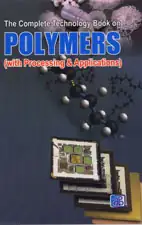
The Complete Technology Book on Polymers with Processing & Applications
Polymers Processing and Applications Handbook
Covers modified natural products, synthetic condensation and addition polymers, and how they are processed and applied. It helps entrepreneurs and technical staff in the plastics and polymer industry.
₹1,100 US$29.73
Plus GST as applicable
- Paperback
- 560 pages
- In stock, ships in 5 working days
- ISBN
- 8178330105
- Pages
- 560
- Author
- NIIR Board of Consultants & Engineers
- Publisher
- Asia Pacific Business Press Inc.
- Language
- English
- Product code
- NI181
Who this book is for
- Entrepreneurs entering the polymer industry
- Polymer chemists and engineers
- Plastics fabricators
- Students of polymer science
What's inside
- Polymers from the viewpoints of consumer, designer, fabricator and engineer
- Rayon, cellulose film and cellulose derivatives
- Phenolic, amino, polyester and epoxy resins
- Polyurethanes and silicones
- Polyethylene, polypropylene and vinyl polymers
- Diene rubbers and polystyrene
Table of contents
Show or hide the full contents
1. INTRODUCTION
VIEWPOINT OF THE CONSUMER
VIEWPOINT OF THE INDUSTRIAL DESIGNER
VIEWPOINT OF THE FABRICATOR
VIEWPOINT OF THE PHYSICAL CHEMIST
VIEWPOINT OF THE ORGANIC CHEMIST
VIEWPOINT OF THE CHEMICAL ENGINEER
VIEWPOINT OF THE ECONOMIST
2. MODIFIED NATURAL PRODUCTS
CUPRAMMONIUM RAYON
VISCOSE RAYON
REGENERATED CELLULOSE FILM
CELLULOSIC DERIVATIVES
Cellulose Esters
Cellulose Nitrate
CELLULOSE ACETATE
CELLULOSE PROPIONATE
HIGHER CELLULOSE ESTERS
MIXED ESTERS OF CELLULOSE
CELLULOSE ETHERS
METHYL CELLULOSE
ETHYL CELLULOSE
CARBOXYMETHYL CELLULOSE
HYDROXYETHYL CELLULOSE
CYANOETHYL CELLULOSE
3. SYNTHETIC CONDENSATION PRODUCTS
PHENOPLASTS
Other Aldehydes
OTHER PHENOLS
FILLERS
OIL-SOLUBLE RESINS
CAST RESINS
MANUFACTURE
APPLICATIONS
Urea-Formaldehyde Resins
MELAMINE-FORMALDEHYDE RESINS
ANILINE-FORMALDEHYDE RESINS
MISCELLANEOUS AMINOPLASTS
SULFONAMIDE-FORMALDEHYDE RESINS
POLYESTERS
Saturated Polyesters
Linear Polycarbonates
Unsaturated Polyesters
Polymerized Oils
Alkyd Resins
Unsaturated Polyester Resins
LINEAR POLYAMIDES
POLYURETHANES
SILICONES
POLYOXYMETHYLENES
POLYOXYETHYLENES
EPOXY RESINS
THIOPLASTS
FURAN RESINS
4. SYNTHETIC ADDITION PRODUCTS
ALIPHATIC HYDROCARBONS AND DERIVATIVES POLYETHYLENE
High-Pressure Process
Low-Pressure Process
Irradiated Polyethylene
Chlorosulfonated Polyethylene
POLYTETRAFLUOROETHYLENE
POLYCHLOROTRIFLUOROETHYLENE
POLYPROPYLENE
POLYBUTENES
Butyl Rubber
POLYSULFONES
POLY(VINYL ACETATE)
POLY(VINYL ALCOHOL)
POLY(VINYL CETALS)
POLY(VINYL AND VINYLIDENE ETHERS)
POLY (VINYL KETONES AND ALDEHYDES)
POLY(VINYLIDENE CHLORIDE)
VINYLIDENE CHLORIDE COPOLYMERS
POLYACRYLONITRILE
Vinylidene Cyanide
ALIPHATIC DIENES
Polyisoprene
POLYCHLOROPRENE
POLYBUTADIENE
Butadiene-Acrylonitril Copolymers
Butadiene-Styrene Copolymers
AROMATIC VINYL COMPOUNDS
Polystyrene
POLY(A-METHYL STYRENE)
POLY (VINYL TOLUENES)
POLY(DIVINYL BENZENES)
HETEROCYCLIC VINYL COMPOUNDS
poly(N-vinyl carbazole)
POLY(N-VINYL PYRROLIDONE)
POLY(VINYL PYRIDINES)
CYCLIC UNSATURATED COMPOUNDS
Coumarone-Indene Resins
POLYCYCLOPENTADIENE
POLYTERPENES
5. POWDER TECHNOLOGY FOR COATING OF PLASTICS
WHY POWDER COAT PLASTICS
EFFECT OF COSMIC RADIATION
RESISTANCE TO MECHANICAL WEAR
ELECTRICAL PROCESSING CHARACTERISTICS
IMPROVING WEATHER RESISTANCE
EXTERNAL POWDER DRAIN TREATMENT
PRETREATMENT OF PLASTICS
ELECTRICAL CHARACTERISTICS
6. ACRYLIC AND POLYURETHANE DISPERSIONS IN INDUSTRIAL COATINGS FOR PLASTICS
INTRODUCTION
PLASTICS NEED COATINGS
PROBLEMS WHEN PAINTING PLASTICS
WATER-BORNE COATINGS FOR PLASTICS
ADHESION OF WATER-BORNE COATINGS ON PLASTICS
HARDNESS
WATER RESISTANCE
CHEMICAL AND SOLVENT RESISTANCES
SELECTION OF PRODUCTS FOR WATER-BASED PLASTIC COATINGS
CONCLUSIONS
7. FABRICATING AND PROCESSING
MOLDING
Cold Compression Molding
Hot Compression Molding
Transfer Molding
Injection Molding
Jet Molding
EXTRUDING
CALENDERING
SKIVING
SHEET FORMING
ATMOSPHERIC PRESSURE FORMING
Cold Bending
Hot Bending
Stretch Forming
Plug-and-Ring Forming
Slip Forming
Drawing
Die Pressing
Rotoforming
Veneering
Postforming
FLUID-PRESSURE FORMING
Vacuum-Forming Methods
Pressure-Forming Methods
LAMINATING AND IMPREGNATING
Cellular Laminates
COATING
Surface Coatings
Strippable Coatings
EXPANDING
CASTING AND EMBEDDING
SPINNING
FINISHING OF PLASTICS
8. APPLICATION
FIBERS
PLASTICS
Constructional Uses
Thermal, Electrical, and Optical Uses
Ion Exchange
Adhesives, Coatings, and Films
ADHESIVES
COATINGS
FILMS
ELASTOMERS
Need a detailed project report?
This book explains the technology. For a bank loan or an investment decision, NPCS also prepares project reports with plant cost, machinery and five-year financials.
About this book
Read the full description
Polymers are the most rapidly growing sector of the materials industry. No wonder polymers are found in everything from compact discs to high tech aerospace applications. The Indian plastic and polymer industry has taken great strides. In the last few decades, the industry has grown to the status of a leading sector in the country with a sizable base. The material is gaining notable importance in different spheres of activity and the per capita consumption is increasing at a fast pace. Continuous advancements and developments in polymer technology, processing machineries, expertise and cost effective manufacturing is fast replacing the typical materials in different segments with plastics. Monomers and polymers are of little or no practical use until the raw product from the manufacturing process been transformed by more or less standardized fabrication and processing techniques into useful forms. There are different methods of processing of polymers for solid; molding, extrusion, calendaring, sheet forming, laminating and impregnating and for liquids and melts; coating, expanding or foaming, casting, spinning, laminating and impregnating. Plastics are divided into thermosetting and thermoplastic materials. Compression and transfer molding are the two main methods used to produce molded parts from thermosetting plastics; however, injection molding is under development and may become important in future. Plastic foams are from a wide variety of polymers have a wide range of applications and are made by a variety of methods depending upon the polymer and the application. Elastomers are indispensable to our modern civilization, without them two of largest industries; transportation and electrical, would never have attained their present state of development. The reason why plastics are popular is that they may offer such advantages as transparency, self lubrication, light weight, flexibility, economy in fabricating and decorating. Properties of plastics can be modified through the use of fillers, reinforcing agents and chemical additives. Polymer Energy system is an award winning, innovative, proprietary process to convert waste plastics into renewable energy. On the basis of value added, Indian share of plastic products industry is about 0.5% of national GDP.
Some of the fundamentals of the book are modified natural products, synthetic condensation products, melamine formaldehyde resins, aniline formaldehyde resins, miscellaneous amino plasts, sulfonamide formaldehyde resins, polyesters, saturated polyesters, linear polycarbonates, unsaturated polyesters, polymerized oils, synthetic addition products, aliphatic hydrocarbons and derivatives polyethylene, powder technology for coating of plastics, acrylic and polyurethane dispersions in industrial coatings for plastics, water borne coatings for plastics
adhesion of water borne coatings on plastics, fabricating and processing, cold bending, hot bending, stretch forming, plug and ring forming, slip forming, drawing
die pressing, roto forming, veneering, post forming, fluid pressure forming, vacuum forming methods, pressure forming methods, laminating and impregnating etc.
Three factors are essential for any successful processing of polymers, namely materials, machinery and process control. Polymers have importance in manufacturing of various domestic and industrial products. This book is an invaluable resource to new entrepreneurs, technocrats, researchers, professionals etc.
Questions about this book
Is this a printed book or a PDF?
This is a paperback edition, shipped within 5 working days of payment. The free sample PDF on this page shows the contents and introduction.
Can I order from outside India?
Yes. Buyers outside India pay the US$ price shown. WhatsApp or email us for the delivery time to your country.
Can colleges, libraries or companies order in bulk?
Yes. Write to npcs.india@gmail.com or WhatsApp us with the titles and quantities for a quote.
How do I pay?
Add the book to the cart and pay online, or WhatsApp us to order and pay by bank transfer.
Related books
New New
 Bestseller
Speciality Plastics, Foams, PET and Preform Handbook
₹1,275 US$33.95
Flexible Packaging Investment Opportunity in India
₹29,500 US$500
India Flexible Packaging Market Report
₹35,400 US$750