

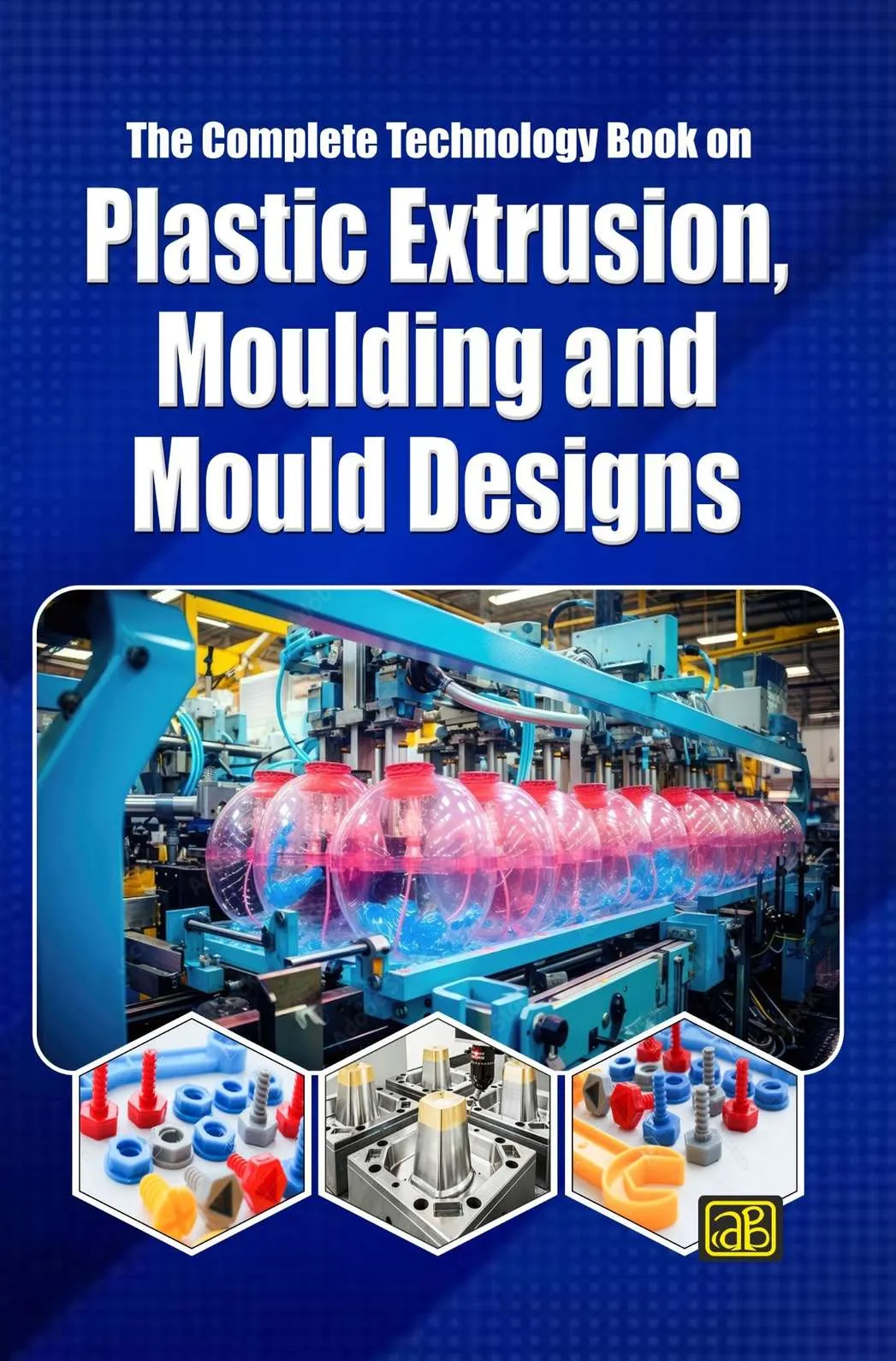
The Complete Technology Book on  Plastic Extrusion, Moulding and Mould Designs

The Complete Technology Book on Plastic Extrusion, Moulding and Mould Designs

By by Niir Board of Consultants & Engineers

Format: paperback
Code: NI179
Pages: 360
ISBN: 9788178330082
Publisher: Asia Pacific Business Press Inc.
$47 ₹1475 new
Download PDF

In the modern landscape, plastic has become indispensable, finding applications in both household and industrial domains. To truly grasp the essence of plastic production, one must understand the basics of plastic extrusion, moulding, and mould designs. These techniques are central not only to the creation of plastic items but also to ensuring their quality and efficiency.

Plastic extrusion is a fundamental method in the production world. It involves heating raw plastic until it melts and then shaping it into a continuous profile through a die. This process is integral for creating a wide range of products such as pipes, tubes, and sheets. The adaptability of plastic extrusion enables manufacturers to craft items in various shapes and sizes, tailored to the specific demands of different industries.

Moulding, contrastingly, is the act of forming plastic using a fixed mould. This category includes multiple methods like injection moulding, blow moulding, and compression moulding. Each method brings its unique set of benefits to the table. Injection moulding stands out due to its capability to produce intricate shapes with exceptional accuracy and speed. This makes it a popular choice for high-volume production of complex items.

The significance of mould designs cannot be overstated. The design phase is critical, as it directly impacts the final product's shape and quality. A carefully crafted mould ensures consistency and adherence to required specifications. Considerations in this phase include selecting the appropriate materials, configuring the mould, and designing efficient cooling systems. These elements collectively contribute to the optimal performance of the mould and consequently, the quality of the finished product.

Understanding the synergy between plastic extrusion, moulding, and mould design is crucial. These processes are interlinked, and their successful integration is key to efficient plastic production. For anyone in the manufacturing sector, from beginners to seasoned professionals, a solid grasp of these techniques is vital for driving innovation and enhancing production outcomes.

The demand for plastic products created through extrusion, moulding, and mould technologies is experiencing significant growth, primarily driven by factors like increasing industrial activity, growing consumer goods markets, and the automotive sector's need for lightweight materials, with Asia Pacific being a key region for this expansion; this growth is projected to continue with a focus on sustainable and innovative plastic solutions.  Overall, the demand for plastic products created through extrusion and moulding is expected to continue growing, with a focus on innovation and development of sustainable materials and manufacturing processes to address environmental concerns.

From plastic extrusion, injection moulding, compression moulding, and blow moulding to plant layout and BIS standards, this book covers everything you need to start, manage, and expand a plastic manufacturing unit.

A total guide to manufacturing and entrepreneurial success in one of today's most plastic industry. This book is one-stop guide to one of the fastest growing sectors of the plastic industry, where opportunities abound for manufacturers, retailers, and entrepreneurs. This is the only complete handbook on the commercial production of plastic. It serves up a feast of how-to information, from concept to purchasing equipment.

    1. INTRODUCTION TO PLASTIC EXTRUSION
      1. What is Plastic Extrusion?
      2. Plastic Extrusion Materials
      3. Advantages of Plastic Extrusion
      4. Disadvantages of Plastic Extrusion
      5. Various Plastic Processing Technique
      6. Applications for Plastic Extrusion
      7. Four Types of Plastic Extrusion Processes
      8. Two Types of Plastic Extruders
      9. Plastic Extruder Components
      10. Plastic Extrusion Process
      11. Types of Plastic Extrusion Cooling Methods
    2. INTRODUCTION TO INJECTION MOULDING
      1. Principles of Injection Moulding Operations
      2. Industries that Employ Injection Moulding
      3. Types of Injection Moulding
      4. How does the Plastic Injection Molding Process Work?
      5. Pros and Cons of Plastic Injection Molding
      6. Injection Molding Process Conditions
    3. INTRODUCTION TO PLASTIC MOLD
      1. Structure of an Injection Mold
      2. Classification of Injection Mold
      3. Difference
      4. The Main Plastic Mold System
        1. Runner
        2. Temperature Control for Cooling
        3. Venting
        4. Ejection
      5. Plastic Mold Gates
        1. Direct Gate
        2. Side Gate
        3. Pin Point Gate
        4. Fan Gate
        5. Submarine Gate
    4. HOW TO START BUSINESS OF PLASTIC EXTRUSION

    AND MOULDING

    1. REINFORCEMENTS FOR THERMOSETS
      1. Reinforcements for Thermosets
        1. Laminate Composition
        2. Reinforcements for Filament Winding
      2. Fiberglass Technology
        1. High Strength
        2. Heat and Fire Resistance
        3. Chemical and Weather Resistance
        4. Moisture Resistance
        5. Thermal Conductivity
        6. Electrical Properties
        7. Dimensional Stability
        8. Making Glass Fibers
        9. Glass Composition
      3. Glass Fabric Construction and Weaves
        1. Fabric Count
        2. Weave
        3. Finishes and Finishing
      4. Applications
        1. Electrical
        2. Reinforced Plastics
        3. Coated Fabrics
        4. Scrims
        5. Filtration
      5. Kevlar 49
        1. Yarn Properties
        2. Epoxy Composites
    2. INJECTION MOULDING, BLOW MOULDING,

    EXTRUSION

      1. Injection Molding Machines
        1. Preheating and Predrying
        2. Pellet Geometry
        3. Lubrication


        1. Mold Surface Temperature
        2. Injection Pressure
        3. Feed Cushion
        4. Plunger Forward Time
        5. Molding Cycles
        6. Molding Shrinkage
        7. Dimensional Tolerances
      1. Screw Plasticization in Injection Molding
        1. Screw Design
        2. Screw Drive Characteristics
        3. Nonreturn Valves
        4. Cylinder Temperature Control
        5. Screw Back Pressure
        6. Screw Speed
        7. Rate of Injection
      2. Injection Mold Design
        1. Basic Design Considerations
        2. Functions of the Mold Components
        3. Sprue Bushing
        4. Runners
        5. Gates
        6. Cavity, Force and Mold Cores
        7. Venting
        8. Water Channels
        9. Ejector Mechanisms
      3. Molding Problems
      4. Blow Molding
        1. Extrusion-Blow Molding
        2. Molds
        3. Finishing Containers
      5. Extrusion
    1. INJECTION MOULDING PROCESS
      1. Introduction
      2. Basic Principles of Injection Moulding
      3. Preliminary Checking for Moulding
      4. Injection Moulding Technique
      5. Press Capacity
        1. Shot Capacity
     
        1. Plasticizing Capacity
        2. Clamping Force
        3. Injection Pressure
        4. Ejection Force
      1. Mould Cooling
        1. Water Cooling
        2. Air Cooling.
        3. Oil Heating/Cooling.
        4. Mould Cooling Time
      2. Melt Processing
      3. Equipments for Injection Moulding
        1. Heating Cylinder
        2. Nozzle
        3. Non-Return Valve
        4. Adapter
        5. Screw
        6. Cylinder Temperature
        7. Injection Rate
        8. Clamping Force
      4. Start Up and Shut Down Procedures
        1. Start Resin Change/Purging
        2. Temporary Shut Down
        3. Normal Shut Down
        4. Start Up after Emergency Shut Down
        5. Cylinder Temperature
        6. Thermal Stability of Acetals
        7. Back Pressure
        8. Injection Pressure
        9. Injection Rate
        10. Moulding Cycle
        11. Mould Temperature
        12. Reground Resin
      5. Economical Production of Parts
      6. Safety Precautions for Moulding Acetal Resins
      7. Mould Shrinkage
        1. Post Moulding Shrinkage
      8. Annealing of Mouldings
        1. Annealing Procedure


        1. Cooling Procedure
      1. Environmental Changes
        1. Thermoplastic Materials
        2. Thermosetting Materials and Elastomers
    1. THIN WALLED INJECTION MOULDING
      1. Definition of Thin Wall
      2. Evaluation of Production Cost
      3. Benefits of Thin Wall Moulding
      4. Factors of Flowability
      5. Mould & Machine Requirement for Thin Walled Injection Moulding
    2. MOLD COOLING BEST BET FOR HIGH PROFITS
      1. General
      2. Costs
      3. Benefits
      4. Summary
    3. GAS INJECTION MOULDING TECHNOLOGY
      1. Multiple-Polymer Injection Moulding
      2. Two-Shot Moulding Processes
      3. Innovative Applications
        1. Two-Polymer Injection Moulding
        2. Composite Injection Moulding (Combiform)
        3. Multi-Component Injection Moulding
        4. Gas Assisted Injection Moulding Process
      4. Conclusions
    4. COMPRESSION MOLDING
      1. Working Principle of Compression Molding Process
      2. Three Types of Compression Molds
      3. Application
      4. Advantages of Compression Moulding Process
      5. Equipment used in the Process
      6. How does Compression Moulding work?
      7. What Standards are used in Compression Molding?
    5. ROTATIONAL MOLDING
      1. Types of Rotational Molding Machines
      2. Applications of Rotational Molding


      1. Rotational Molding Process
        1. Mold Preparation and Material Loading
        2. Mold Assembly and Closure
        3. Heating and Rotation
        4. Cooling Phase
        5. Demolding
        6. Finishing
      2. Leading Rotational Molding Machines
      3. Materials used in Rotational Molding
    1. BLOW MOLDING PROCESS
      1. History
      2. Blow Moulding: What is it used for?
        1. Packaging Industry
        2. Consumer Goods
        3. Automotive Industry
        4. Industrial Applications
        5. Medical and Pharmaceutical Industry
        6. Agriculture and Horticulture
        7. Construction Industry
      3. What is Raw Materials?
      4. Blow Moulding Process Parts
      5. How does Blow Molding Work?
        1. Material Selection and Preparation
        2. Formation of the Parison or Preform
        3. Blowing Process
        4. Cooling and Ejection
      6. Types of Blow Moulding
    2. DESIGN
      1. Introduction
      2. Product Design
        1. Functional Importance of the Component
        2. Properties of Plastic Raw Materials and its Behaviour
        3. Processing of Plastics
        4. Economical and Psychological Factors
        5. Similar Products
        6. Preparation of Prototype and Part Drawing


      1. Fundamentals of Mould Design
        1. Type of Mould and Construction
        2. Arrangement of Flash Faces
        3. Line of Draw
        4. Gate, Runners and Feed
        5. Component Retention
        6. Number or Impression and Arrangement
        7. Extraction of Component
        8. Component Tolerance
        9. Wear and Tear of Elements.
        10. Clamping Force
        11. Possible Problems and Solutions
    1. PRINCIPAL TYPE OF INJECTION MOULDS
      1. Hand Injection Moulds
      2. Single Cavity Two Plate Moulds
      3. Multi–Cavity Moulds
      4. Three Plate Moulds
      5. Multi–Colour Moulds
      6. Hot-Runner Moulds
        1. Advantages of Hot-Runner Moulding System
        2. Manifold System
        3. Heating Systems
    2. MOULD MATERIAL AND PROCESSING METHODS
      1. Introduction
      2. The Effect of Alloying Elements in Steel
      3. Mould Machining
      4. Characters and Logo marking
      5. Mould Polishing & Finishing
      6. Photo Engraving
      7. Mould Materials and Die Life
    3. BIS STANDARDS
    4. COST OPTIMIZATION FOR SMALL-SCALE UNITS
      1. Budget-Friendly Machinery and Tools for Startups
      2. Strategies to Minimize Waste and Energy Consumption
      3. Affordable Materials Sourcing for Plastic anufacturing
      4. Integrating Cost Optimization Strategies
      5. Conclusion


  1. PHOTOGRAPHS OF PLANT AND MACHINERY


PLASTIC EXTRUSION AND MOULDING

CHART & DIAGRAM

PLANT LAYOUT DESCRIPTION OF PLANT LAYOUT AND PROCESS FLOW

WITH SUPPLIERS CONTACT DETAILS


Customer Reviews

No reviews yet. Be the first to write one!


Write a Review

Call Us WhatsApp