
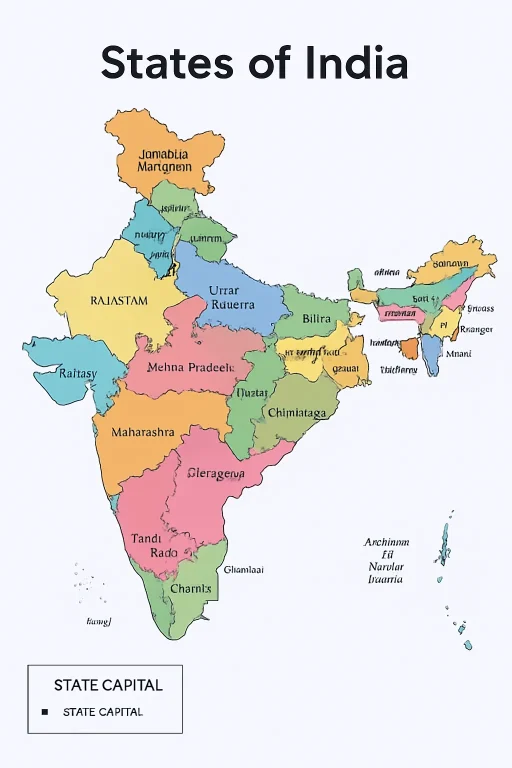


India is one of the most diverse countries in the world. Its strength lies in the unique character of its states. Each state carries its own history, culture, economy, and political identity. Together, they form the world’s largest democracy. To understand India fully, one must study its states. This means looking at how they were formed, how they function, and what they contribute to national growth. For entrepreneurs, policymakers, and citizens, knowing about the states of India is not just about geography. It’s also about spotting opportunities and appreciating diversity.
Federal Structure of Indian States
India is a federal union made up of 28 states and 8 union territories. Each state has its own government but operates within the country’s constitutional framework. This structure allows for regional autonomy while ensuring unity at the national level. The Indian states vary widely in geography. They range from the snow-covered Himalayas in Jammu and Kashmir to the tropical coastline of Kerala. They also include the desert expanses of Rajasthan and the fertile plains of Punjab. States differ in population size, economic status, cultural practices, and social indicators.
The existence of these states allows for decentralized governance. This means decisions can be made closer to the people they affect. This system promotes inclusivity and helps address local issues more effectively.
For more information, check out our project report
Historical Formation of Indian States
The modern map of India did not form overnight. At the time of independence in 1947, India consisted of British provinces and numerous princely states. Integrating them into one nation was a complex task. The first major step toward structuring states was in 1956 with the States Reorganisation Act. This law reorganized boundaries mainly based on language.
Over the decades, new states have continued to form to improve governance and representation. For instance, Uttarakhand split from Uttar Pradesh in 2000, Jharkhand separated from Bihar the same year, and Telangana broke away from Andhra Pradesh in 2014. This ongoing process shows how India’s federal system responds to regional needs and desires.
Governance and Administrative Roles
Each state plays an important role in India’s governance. They have their own legislative assemblies and chief ministers who manage state-specific tasks. The Indian Constitution divides powers between the Union and the states using three lists:
- The Union List includes defense and foreign affairs, handled by the central government.
- The State List covers areas like police, public health, and agriculture.
- The Concurrent List includes responsibilities shared by both the center and the states, such as education and environmental protection.
This division helps ensure balanced governance. States focus on regional development, while the center handles national priorities. For entrepreneurs and businesses, this structure means policies and opportunities can change significantly across states based on local leadership and priorities.
To explore more, check our books
Cultural Diversity of Indian States
One of the most notable features of India’s states is their cultural diversity. Each state has its unique language, art, music, dance, cuisine, and festivals. For example, Punjab is known for Bhangra and colorful festivals like Baisakhi, while Tamil Nadu takes pride in classical Bharatanatyam dance and Pongal celebrations. States like West Bengal are famous for their literary contributions, while Rajasthan showcases royal architecture and folk traditions.
This cultural richness directly impacts the economy. States draw tourists, promote handicrafts, and develop industries around local specialties. Kerala thrives on Ayurveda-based wellness tourism, while Himachal Pradesh attracts visitors with its scenic landscapes and adventure activities. This mix of tradition and modernity gives each state a distinct identity and contributes to India’s image worldwide.
Related articles:- How to Start a Profitable Scrap Business in India
Economic Contributions of Indian States
India’s economic strength comes from the combined power of its states. Each state plays a unique role in shaping the national GDP:
- Maharashtra, Gujarat, and Tamil Nadu are leading industrial centers, excelling in manufacturing, finance, and trade.
- Punjab, Haryana, and Uttar Pradesh are agricultural heartlands, producing wheat, rice, and sugarcane.
- Karnataka and Telangana have become global IT hubs, with Bengaluru and Hyderabad attracting international tech companies.
- Jharkhand, Odisha, and Chhattisgarh are rich in minerals, supplying coal, iron ore, and steel for industries.
- Kerala and Goa rely heavily on tourism and services.
This state-based economic model lets entrepreneurs spot opportunities based on regional strengths. For example, a textile business might succeed in Gujarat, while IT startups may find better resources in Karnataka.
Demographics and Social Indicators

India’s population is unevenly spread across its states. Uttar Pradesh is the most populous, with more than 200 million residents, while states like Sikkim and Mizoram have populations below 2 million. This demographic variation affects governance, economic strength, and electoral politics.
Diversity also includes languages and religions. States like Maharashtra and Gujarat mainly speak Marathi and Gujarati, respectively, while linguistic diversity is most evident in states like Nagaland and Manipur. Cultural and religious practices vary widely, making India a mosaic of identities.
Urbanization also differs across states. Maharashtra and Delhi have highly urbanized populations, while Bihar and Assam remain largely rural. For businesses, these demographic patterns provide insights into consumer behavior, workforce availability, and market size.
Education, Healthcare, and Human Development
States play a critical role in shaping India’s education system. Kerala consistently ranks high in literacy and boasts a strong educational infrastructure. However, some states still struggle with low literacy rates and inadequate facilities.
Healthcare and human development indicators also vary widely. Tamil Nadu and Maharashtra have developed healthcare systems, while rural areas in states like Bihar and Madhya Pradesh face challenges with access and quality. These disparities highlight the need for focused development efforts.
For entrepreneurs, human development indicators matter because they affect the availability of skilled labor, employee healthcare, and long-term market sustainability.
Tourism Across Indian States
Tourism highlights India’s state diversity. Each state offers something unique:
- Rajasthan’s palaces and forts showcase its royal heritage.
- Kerala’s backwaters and wellness tourism attract visitors from around the world.
- Himachal Pradesh and Uttarakhand provide trekking, adventure, and spiritual tourism.
- Goa is known for its beaches and Portuguese influence.
- Uttar Pradesh is home to iconic monuments like the Taj Mahal, while Odisha features the Sun Temple at Konark.
Tourism boosts state economies and enhances India’s cultural presence worldwide. For entrepreneurs, tourism opens doors in hospitality, transport, handicrafts, and eco-friendly ventures.
Challenges Faced by Indian States
Despite their strengths, Indian states face challenges such as uneven economic growth, unemployment, and infrastructure gaps. Many people migrate from less developed states to stronger ones, putting pressure on urban centers. Environmental issues, water shortages, and healthcare inequalities also affect states in different ways.
Addressing these challenges needs cooperation between state and central governments, along with innovations from private businesses. For entrepreneurs, these gaps often signal opportunities to develop solutions that foster growth while supporting business expansion.
Role of NPCS in State-Based Opportunities
For those looking to explore opportunities in India’s states, Niir Project Consultancy Services (NPCS) is vital. NPCS produces Market Survey cum Detailed Techno Economic Feasibility Reports, covering manufacturing processes, raw materials, plant layouts, and financials. By providing reliable data and insights, NPCS helps entrepreneurs assess whether to start new businesses tailored to each state’s strengths. This guidance bridges the gap between ideas and execution, making it easier to create successful ventures across India.
Conclusion
The states of India form the foundation of the country’s identity, economy, and governance. Each state contributes differently through agriculture, industry, technology, or culture. Understanding their unique strengths and challenges is essential for anyone wanting to engage with India’s growth.
For entrepreneurs, the states provide a roadmap to opportunity. By aligning business goals with a state’s strengths, it is possible to build ventures that are both profitable and sustainable. With expert help from organizations like NPCS, entrepreneurs can move forward confidently, knowing their plans are supported by research, feasibility studies, and strategic insights.
Ultimately, the states of India are not just administrative divisions; they are living, dynamic entities that embody the country’s unity in diversity. Appreciating their uniqueness while striving for common national progress ensures that India remains one of the most vibrant and promising nations in the world.
Discover the best ideas for yourself by using our startup selector tools
Frequently Asked Questions
How many states and union territories does India have?
As of 2024, India has 28 states and 8 union territories.
What is the difference between a state and a union territory?
A state has its own elected government, whereas a union territory is directly governed by the central government of India.
What is the largest state in India by area?
Rajasthan is the largest state in India by area.
Which state is the most populous in India?
Uttar Pradesh is the most populous state in India.