

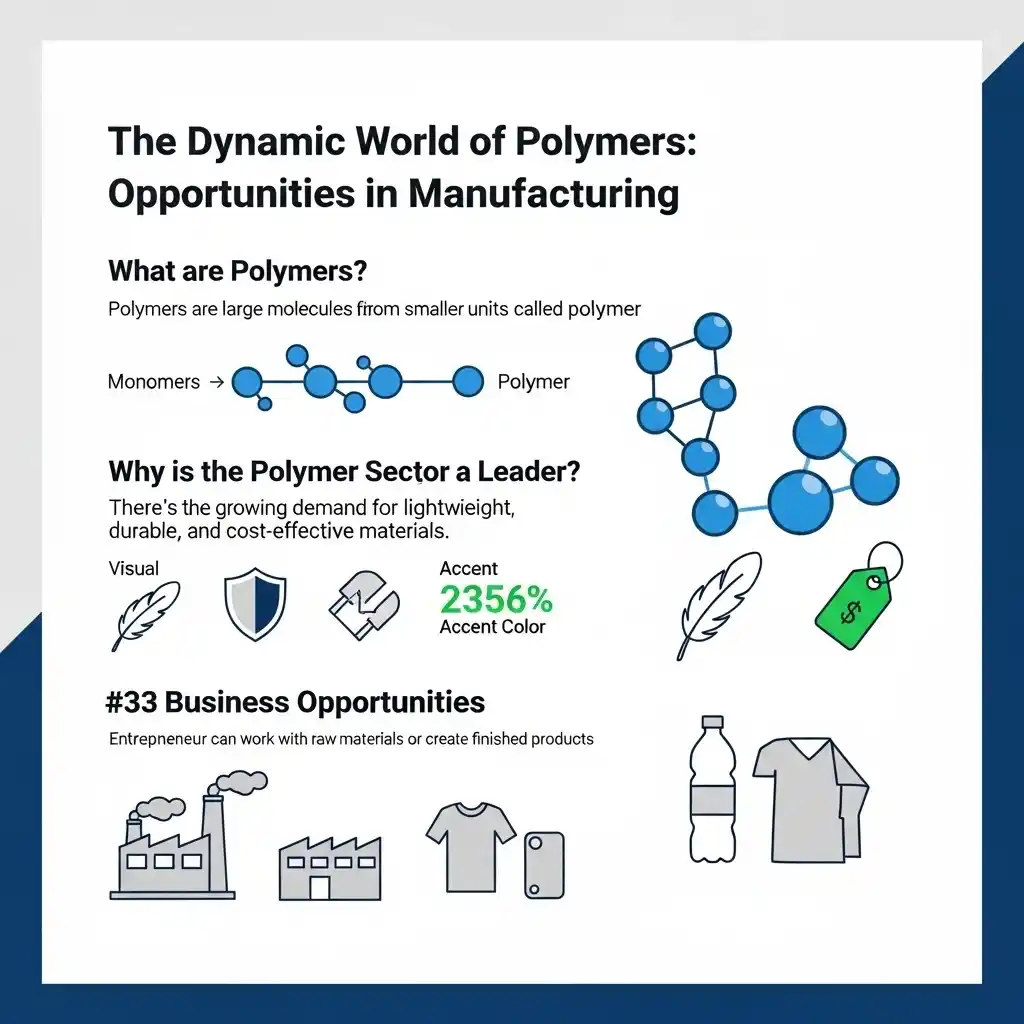
Among all the dynamic and versatile sectors of manufacturing, polymers have proven to be one of the most promising with endless business opportunities. Polymers are large molecules and are formed by the joining of monomers. They are used in packaging, constructions, textiles, and electronics.
As a sector, it is usually expected to lead the way in terms of emerging demands that require durable yet lightweight materials at the lowest possible prices. They include several segments-raw materials to finished products for consumers and industries that are entering.
This is a very rewarding field, where growth opportunity is maximized because polymers can easily be tailored to a very specific need.
Scope of polymer business
This is a vast market still burgeoning with avenues owing to technological innovation and increasing applications across industries. Packaging, globally, is another big area of demand pertaining to consumer goods, food, and beverages. Polymers find their use in the automotive and aircraft industries to make lighter, fuel-efficient models.
These are used in the healthcare sector for medical implants, drug delivery systems, and surgical instruments. Electronic applications include flexible circuits, insulation, and casings. Highly diversified polymers have a broad spectrum of scope as small and large enterprises deal with them.
This sector is also now moving into eco-friendly, biodegradable materials. This will, again open new paths of innovation.
Types of Polymers and Their Applications
If one wants to excel in the industry, then the various forms of polymer knowledge must be acquired. Thermoplastic, thermosetting, elastomer, and specialty polymers describe the four broad categories of polymers.
Examples of thermoplastics include polyethylene (PE) and polypropylene (PP). These materials can be remolded many times and find applications in packaging, bottling, and containers. Thermosetting Plastics are heat-resistant plastics that can bond compositely with other materials; hence they are used for adhesives, electrical components, and coatings.
Rubber is an elastomer, and tires and seals depend on it. Specialty Polymers, such as fluoropolymers, have applications in the aerospace and electronics industries. Hence, every line targets a specific market. This enables diversification or specialization based on ones ambitions.
Read More: Start a Profitable Styrene Acrylic Emulsion Plant: Cost & Market Guide
Process overview of manufacturing
For someone starting a new polymer business, a detailed insight into the polymer production process is necessary. The two polymerization pathways that process polymers can be addition and condensation polymerizations.
In addition polymerization, a polymer is never formed together with a by-product, whereas condensation polymerization also produces a small water molecule along with the polymer. The products are given deforming processing by various means like extrusion, blow molding, spinning, and molding.
Right for pipes is extrusion while injection molds are commonly used in toys and auto parts. These ways help in producing high-quality products with precise specifications satisfying customers.
Market Trend and Possibilities
Biological improvements and demands for environmental sensitivity have revolutionized the way polymer businesses are run. Biodegradable plastics and polymers occupy a significant space as a greener alternative to petroleum products.
The growng importance of sustainability has further encouraged companies to invest in green manufacturing and recyclable processes. Smarter polymers with unique shape memory and self-healing properties are also popular, reinforcing the demand for healthcare and robotics markets.
However, these opportunities are most felt for polymer manufacturers willing to innovate and produce eco-friendly solutions at competitive cost-effective prices in countries that experience high growth in construction and packaging industries.
Read More: Start-Up an Eco-Friendly Business of Bio Plastics and Biodegradable Products Manufacturing
Key Steps for Starting a Polymer Business
Before entering the polymer business, an entrepreneur has to understand what business model will be applied. That is, they can either go for raw polymer production, finished products, or recycling services. Creating a detailed feasibility study will establish the target market and investment needs.
There is also polymerization method selection, raw material sourcing, and environmental clearance to be done for setting up a production unit. Marketing becomes very important here because industries like the ones for which products are being manufactured are looking for suppliers who can deliver very high-quality products at competitive rates.
Starting small with niche-product manufacturing-a specialty coating, for instance-can quickly build into a large-scale production plant catering to global markets.
Read Our Project Report: Click Here
Investment and Infrastructure Need
Setting up a polymer business may require one to invest in pretty hefty amounts. This is particularly true when developing a large production plant. Land purchases and acquiring machinery, which include polymerization equipment as well as extrusion and mold machines, will be the first initialization costs.
They include quality testing laboratories and packaging facilities. At a later point, entrepreneurs may start with small-scale processing facilities while continuing to outsource the raw polymer production. Security measures should be ensured in the structures, as this industry uses chemicals and equipment that operate at high temperatures.
Investments in training and skilled personnel would allow operation to become efficiently managed. Certifications such as ISO standards increase trust in buyers and make getting into international markets possible.
Environmental Impact and Recycling
Polymer waste and pollution have been a source of criticism for the industry, but there are also opportunities to address this issue. Many companies invest in polymer recycling facilities that turn waste plastics back into raw materials. This reduces environmental impact and production cost.
Biodegradable and biocompostable polymers are another step towards sustainability. Entrepreneurs who enter this industry must consider integrating recycling into their business model to meet the growing demands of consumers and regulators.
Focusing on eco-friendly methods not only enhances the brand’s image, but also attracts investors and customers who are environmentally aware.
Read Our Book: Click Here
Polymer Industry Challenges
The polymer industry is profitable but also comes with some challenges. Entrepreneurs must be prepared for these. The fluctuating crude oil price affects raw material costs as most polymers are petroleum based. Businesses must constantly innovate to stay competitive in a highly-competitive market.
The environmental regulations are getting stricter and companies must adopt sustainable practices. In addition, the capital and technical expertise required to set up large-scale manufacturing facilities is high.
Businesses that are innovative, sustainable, and have efficient manufacturing processes can overcome these obstacles and establish a strong presence on domestic and international markets.
Read More: Profitable Chemical Products in High Global Demand with Local Manufacturing Opportunities
Future of the Polymer Business
New technologies are reshaping the manufacturing process and product design, which bodes well for the future of polymer. The demand for specialized materials is expected to rise with the advent of additive manufacturing (3D printing), while smart and bio-based polymers are likely to create new opportunities in high-tech industries.
Packaging will continue to be a key driver of growth. Developing countries’ construction and manufacturing industries will expand, creating huge markets. Entrepreneurs that invest in R&D, use eco-friendly products, and diversify offerings will thrive in this changing industry.
Find the Best Idea for Yourself With our Startup Selector Tool
Conclusion
The polymer industry is a profitable and dynamic sector, which offers many opportunities for global growth, innovation, and sustainability. Entrepreneurs can select their niche according to resources and expertise.
The industry is expected to grow due to the increasing demand for packaging, construction, technology, and healthcare.
Success requires careful planning and compliance with environmental regulations. It also demands a willingness and ability to embrace new trends, such as recycling and bio-based products.
Entrepreneurs who enter this market now have the opportunity to create thriving businesses which not only generate profits but also contribute towards a sustainable future.
Frequently Answered Questions (FAQs).
Q1. Why are eco-friendly products often priced higher?
They are more expensive, but they have a higher price because of their eco-friendly customers.
Q2. What are the skills needed to run a business in polymer manufacturing?
It is important to hire engineers and technicians with the right skills.
Q3. Is recycling polymers a great business idea?
Recycling polymers reduces waste, conserves resources and meets regulatory standards. This also provides an opportunity to create affordable raw materials.
Q4. What are the key challenges facing this industry?
These include the high level of competition, the fluctuating prices of raw materials, the environmental regulations and the need to invest significant capital.
Q5 . What industries are the biggest consumers of polymers?
These include packaging, automotive, electronics, textiles and healthcare.


