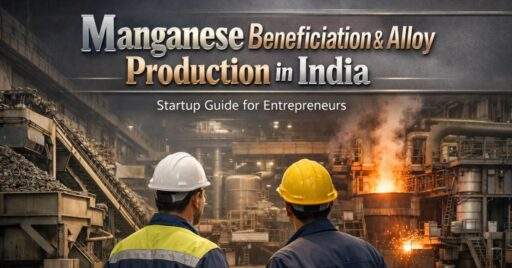


The most dynamic and necessary sector of all is mineral products. Given that industrial development happens around the world, capital-intensive sectors such as construction, manufacturing, infrastructure, and actually many others increase demands for mineral-based products.
Besides, India, loaded with minerals, has stretched into an area of opportunity to allow entrepreneurs to set solid trends in establishing highly profitable businesses. Coupled with high local demand and export potential, new startups can explore the prospering environment.
The following paragraphs provide 20 of the best mineral-based manufacturing business ideas alongside their pertinency to the market, growth potential, and entrepreneurial opportunities:
1. Cement Manufacturing
Infrastructure and real estate development rely on cement as a major backbone. India is the world’s second-largest cement producer; therefore, demand comes from housing, roads, and industrial projects. T
here are two areas of entrepreneurial opportunity in mini-cement plants or niche products such as white cement and blended cement. In addition, governmental initiatives like Smart Cities and affordable housing have a high potential for long-term estimates of an increase in demand.
2. Gypsum Board and POP
Gypsum products nowadays are becoming increasingly important in modern construction because they are commonly used in interior finishing and prefabricated housing. Therefore, producing POP and gypsum boards can be highly margin lucrative. Further, the viability of the business is boosted even more by import substitution and export potential.
Read Our Book: Click Here
3. Ceramic Tiles Manufacturing
With urbanization along with increased lifestyle standards, demand has grown for ceramic and vitrified tiles. By going more with digitally printed or eco-friendly tiles, startup manufacturers can get an edge into appealing both domestic and international markets.
4. Glass Manufacturing
Glass is used in construction, automotive and packaging. With innovation in tempered, laminated, and solar control glass, entrepreneurs have the opportunity to set up units for construction glass, pharmaceutical vials, or solar panels.
5. Stone Crushing and Aggregates
Crushed stones, sand, and aggregates form the backbone of all construction and real estate projects. This opens lucrative opportunities in establishing the small scale stone-crushing units, especially in areas where construction activities flourish.
6. Lime and Calcium Carbonate Products
Calcium carbonate is catering to industries like paints, plastics, rubber, and paper. Correspondingly, quicklime and hydrated lime have their applications in steel, chemicals, and agriculture. Start-ups can manufacture lime kilns or micronized calcium carbonate to serve domestic and exported markets.
Read More: Silica Sand: Best Mineral Based Industry for Starting a Business
7. Granite and Marble Processing
Granite and marble are the topmost stones for flooring and monuments. India stands well among the countries that export processed granite and marble resulting that polishing and cutting units are also reputed ventures between domestic real estate and international customers.
8. Silica Sand Processing
High-purity silica is of utmost importance for glass making, foundries, and photovoltaic cells. Thus, it will become an opportunity for entrepreneurs to establish a washing and processing plant for the production of high-quality silica for several industries.
9. Quartz Processing and Feldspar
Both of these are essential raw materials for ceramics, glass, and electronics. There is space for start-ups to establish beneficiation and grinding units to meet the requirements for both the domestic hubs and the global supplier of electronics.
10. Fly Ash Bricks and Blocks
Power stations create fly ash and which can be used to create eco-friendly bricks and blocks. Most states have outlawed the use of red clay bricks, prompting the fly ash bricks to present a low-cost, sustainable, and very profitable solution to construction.
Read More: Start Business of Feldspar Processing.
11. Refractory Products
Refractories sustain high temperatures required in steel, cement, and glass industries. Entrepreneurs can manufacture firebricks, castables, or monolithic refractories to serve in the developing industrial capacity of India.
12. Bentonite Processing
Found in different applications like foundries, oil drilling, and cosmetics, bentonite is abundantly produced in India, especially in Gujarat, making it highly lucrative to set up processing plants that manufacture drilling-grade and foundry-grade bentonite.
13. Talc Powder Manufacturing
Talc is the widely used material for cosmetics, plastics, paints, and ceramics. By setting up micronized talc powder plants using the most advance-grinding technology, start-ups can access both domestic and export markets.
Read More: Good Time to Start Your Own Zinc Ingots Manufacturing Business
14. Mica Products
Mica is used for insulation in electronics as well as in cosmetics and paints. Entrepreneurs can produce either mica powder for cosmetics or insulation-grade mica for industrial applications, thus leveraging India ‘s old historic advantage of production and export.
15. Graphite and Carbon Products
Graphite is a vital raw material for batteries, refractories, and lubricants. The burgeoning market for electric vehicles further fuels the increasing demand for battery-grade graphite, thus presenting startup ventures with staggering profit opportunities in both the natural and synthetic graphite products.

16. Abrasive Products (Emery and Garnet)
Abrasives such as garnet, emery, and alumina are used for polishing, cutting, and grinding. As the metal fabrication and engineering industries are growing, there is steady demand for manufacture of abrasive products.
17. Kaolin Clay Processing
Kaolin finds use in ceramics, paper, rubber, and paints. With deposits in Kerala and Rajasthan, processing can be done extensively; moreover, kaolin of very high quality is being exported to Europe and the Middle East.
Read Our Project Report: Click Here
18. Cement Fibre Boards
Cement fibre boards are eco-friendly substitutes of plywood and gypsum boards. With cement fibre-board manufacturing fast growing and extremely profitable with the increasing demand for prefab housing and modular construction technology, this market can prove to be sustainable.
19. Activated Carbon from Minerals
Mineral saturated activated carbon is important to the area of water purification, gold recovery processing, and use in chemical industries. Creating activated carbon using minerals may provide cash flows that support both the sustainability of the environment and industrial requirements.
20. Mineral Pigments
Paint, plastics, and coatings generally have mineral pigments that are oxides, sulfates, and clays. With growth in construction and automotive sectors, pigment manufacturing warrants demand and high profitability.
Find the Best Idea for Yourself With our Startup Selector Tool
How NPCS Helps Entrepreneurs
NIIR Project Consultancy Services (NPCS) is a comprehensive company that helps startups in the mineral sector.
Market Survey cum Techno-Economic Feasibility Reports (DPRs) would discuss manufacturing process, process flow diagram, selection of machinery and raw materials, marketing, capacity planning to a full financial analysis.
NPCS analysis will help the entrepreneur in accurately gauging feasibility and lowering risk while boosting operational efficiency, raising funds, and extracting maximum profit, thus ensuring a successful sustainable business launch.
FAQs
Which Mineral-Based Products are the Best for Startups?
Cement, fly ash bricks, ceramic tiles, refractory products, and mineral pigments have high margins and strong demands.
Typical investment required for the small scale mineral products unit:
Usually, ₹25–60 lakh is required for small units, while larger plants may require as much as ₹1–5 crore depending on the kind of product and production capacity required.
Startups can also export mineral products manufactured from India.
Yes, India holds abundant mineral reserves and competitive production costs, which assure strong exports to Europe, the Middle East, and Southeast Asia.
Are Green Mineral Products Increasingly Accepted?
Indeed. Environmental regulations and the growing trend of green buildings are increasing demand for fly ash bricks, cement fibre boards, and sustainable pigments.
What kind of approvals are required before starting a mineral-based manufacturing business?
Usually, factory-registration, environmental clearance, pollution control board approvals, and product specific certification for select mineral-based products are needed by entrepreneurs.