


India Oman CEPA Export Guide
99.38% Duty-Free — But Most Indian MSMEs Are Not Ready
Prior to the India – Oman CEPA, India’s exports within Oman were only duty-free on 15.33% of their value. That number rose to 99.38% overnight.
It is not a news headline. That is a structural benefit of billions of rupees, lying there, unclaimed.
In the previous financial year, bilateral trade between India and Oman had already reached a level of USD 11.18 billion against USD 10.61 billion in the previous year. The total value of the market for imports in Oman is almost USD 28 billion per year. India’s share? Remained thin in most categories.
Commerce Minister Piyush Goyal and Omani Ambassador on Indian soil formally activated the CEPA. The first consignment each day under preferential tariff arrived – for agriculture and gems & jewellery shipments – from Mumbai, Kolkata and Chennai. The window is open. The Chinese, Turkish and Thai competitors are still paying custom on their entries. You are not. Source: PIB, Ministry of Commerce & Industry
The question is not about export or not to Oman. The question remains what your unit’s readiness is.(India Oman CEPA Export Guide
Get Detailed Project Report (DPR): Investment Opportunities & Business Ideas in Oman
The Gap: India Is Already Present — But Well Below Its Potential
Scan the data by sector and there is a pattern. However, India’s share of agricultural exports to Oman is 17.8% despite only 25.78 million USD worth of gems & jewellery exports from India to Oman, compared to an annual demand of 1.07 billion USD in Oman. This is a penetration rate of just 2.4%.
The electronics exports from India to Oman stood at USD 146 million while the total imports from Oman were estimated at USD 1.7 billion with difference exceeding USD 1.5 billion. In the case of marine products, India’s share in the import market from Oman is just USD 10 million as compared to USD 35.3 million of annual imports.
The pharma opportunity is even better, with the Omani pharma market valued at USD 302.84 million and expected to increase at a CAGR of 6.6% during the forecast period. The Hyderabad, Ahmedabad and Pune based pharma clusters in India are ready to play their part in filling this void – but even the 90-day fast-track marketing authorization pathway CEPA offers would be unattainable without the USFDA, EMA or the UK MHRA. (Source: APEDA)
The states which can capture this trade are already there with active export infrastructure like Andhra Pradesh, Tamil Nadu, Gujarat, Maharashtra, Uttar Pradesh and Punjab. The missing piece in the picture is the unit level readiness – product certification, halal compliance, BIS/FSSAI approval, and IEC registration.
Table 1: Sector-wise Export Opportunity for Indian MSMEs Under India–Oman CEPA
Data Sources: PIB/Ministry of Commerce & Industry (pib.gov.in), APEDA (apeda.gov.in)
| Sector | India’s Current Exports to Oman (USD mn) | Oman Market Size (USD mn) | Duty Eliminated | Key Indian States/Clusters |
| Gems & Jewellery | 25.78 | 1,070 | 5% → 0% | Surat, Jaipur, Mumbai |
| Marine Products | 10.0 | 35.3 | Up to 5% → 0% | AP, Kerala, Tamil Nadu, Gujarat |
| Agriculture & Processed Food | 477–552 | ~3,100* | Full elimination | UP, Punjab, Maharashtra, Gujarat |
| Pharmaceuticals | (growing) | 302.84 | 0% (binding) | Hyderabad, Ahmedabad, Pune |
| Engineering Goods | 875.83 | 1,700 (electronics alone) | Up to 5% → 0% | Pune, Chennai, Coimbatore |
| Textiles & Apparel | (growing) | ~800 | Full elimination | Surat, Tirupur, Ludhiana |
| Footwear & Leather | — | — | Full elimination | Agra, Chennai, Kanpur |
* Estimated from APEDA trade data | AP = Andhra Pradesh
Why Now: Three Tailwinds Indian Exporters Cannot Ignore
One is that there is an instant responsibility for duty math
All concession duty-free under CEPA apply from Day One and do not phase out over a number of years. MFNs now do not apply to an Indian textile exporter to Oman. Not a footwear company in Agra or processed food factory in Pune. The price competitiveness gain is instant.(India Oman CEPA Export Guide)
Second, Oman is not only a destination, but also a gateway
Oman’s ports at Sohar, Duqm and Salalah are directly linked to the markets of the GCC and East Africa. The import into Sohar can be further transhipped under the regional trade agreements in Oman. Importers can transship goods onward from Sohar in accordance with Oman’s regional trade agreements. For the Indian SMEs that have failed to break into the Saudi Arabia or the UAE markets, Oman is a market where they can enter with the support of the infrastructure to make logistics easier. Oman Ministry of Commerce, Industry and Investment Promotion (OMCIIP)
Thirdly, non-tariff barriers have been significantly reduced
From now on certificates issued by India’s Export Inspection Council (EIC) are mandatory for Oman. Indian NPOP and halal certification system is officially recognized. This saves food exporters and pharma units from the hassle of retesting and weeks of clearance delays at the Omani ports.
For MSMEs who are considering entering this market, the following three government schemes are important:
- PMEGP (Prime Minister’s Employment Generation Programme): Subsidy of 25-35% of the project cost for the manufacturing unit, through KVIC/District Industries Centres. (msme.gov.in/pmegp)
- Owning to CGTMSE, the credit facilities of MSME Units are now available to the first-generation entrepreneurs without any security margin up to ₹5 crore. (cgtmse.in)
- RoDTEP (Remission of Duties and Taxes on Export Products): Refunds taxes embedded in export products to exporters which enhances the net realisation. Administered by DGFT. (dgft.gov.in)
Build a profitable business with the right idea
How to Set Up an Export Unit: Step-by-Step for First-Timers
Step 1 — Choose Your Product and Verify CEPA Coverage
If you wish to spend a rupee, make sure you check your product’s HS code and its tariff treatment in Oman with the CEPA schedule. This takes the form of the tariff concession list published on the DGFT website (dgft.gov.in). There are immediate zero-duty products such as agriculture, engineering goods, gems, textiles, marine products, and pharmaceuticals. Some of the products have immediate zero-duty: agriculture, engineering goods, gems, textiles, marine products and pharmaceuticals.
Step 2 — Register Your Business and Export Identity
Fill these forms out in the following order:
- To avail MSME schemes, there’s a mandatory step of Udyam Registration which can be done online free of cost at udyamregistration.gov.in.
- IEC Registration is necessary to register for GST. Before registering for GST, it is required to obtain IEC Registration.
- Importer Exporter Code (IEC) from DGFT — Online processing and will be processed within 2-3 working days ₹500.
- Authorised Dealer (AD) Code of your bank – places a link from the bank account to the export deal.
- EIC Registration (for product categories that need Export Inspection Council certificates) — required in Oman (EIC certificates are accepted at port)
The third step in the production process is to set up your production unit.
Step 3 — Set Up Your Production Unit
Minimum investment range: ₹15 lakh – ₹42 lakh for a small export unit; ₹60 lakh – ₹1.6 crore for a medium unit. Figures vary by product category.
Space: 800–2,000 sq ft for a small unit; 3,000–8,000 sq ft for a medium unit. Industrial clusters in Bhiwadi (Rajasthan), Hosur (Tamil Nadu), Vapi (Gujarat), or Haridwar (Uttarakhand) offer plug-and-play MSME shed options at ₹12–25/sq ft monthly rent.(India Oman CEPA Export Guide)
Machinery: Product-specific. A food processing unit (for basmati, cashews, and biscuits) must include a food cleaning and grading line, a dryer, a packing machine, and a cold storage facility. An engineering goods unit requires the use of CNC machines, welding equipment and quality inspection instruments. If a unit focuses on pharmaceuticals, it requires a sterile filling line and a clean room.
Raw materials: wherever available, preferably from local sources. Basmati (Punj/Haryana) (APEDA registered), Shrimp and Fish (coastal markets of AP/Kerala), Steel and Copper (Bhilai/Sterlite supply chain), Textile Yarn (Surat/Ludhiana).
Step 4 — Obtain Product Certifications
According to the product type, the following is required for Oman:
- All food and agri products must have FSSAI Export Certificate.
- Halal Certification: For meat, dairy and processed food. Purchase from APEDA approved bodies/ Halal India
- Safe Work Practices: for non-engineering products and electronics
- Pharmaceutical products: CDSCO/WHO-GMP, 90-day fast-track at Oman USFDA/EMA approval.
- CEPA preference is only valid when a Certificate of Origin (CoO) is correctly issued – obtained from FIEO, EPC, or Chamber of Commerce.
Step 5 — Find Buyers and Ship
Sign up at the India Business Portal (indiabusinessportal.in), the trade portal of the Federation of Indian Export Organisations (FIEO) and attend India GCC trade fairs organised by Federation of Indian Export Organisations (FIEO). There is about 6,000 active India – Oman Joint Ventures – these are your fastest buyer leads.
Time from registration to first shipment: 3-6 months for food/agri, 6-9 months for engineering/pharma units.
Number of team members: To start 5 to 8 people (3-5 production staff, 1 QC officer, 1 Export documentation executive).

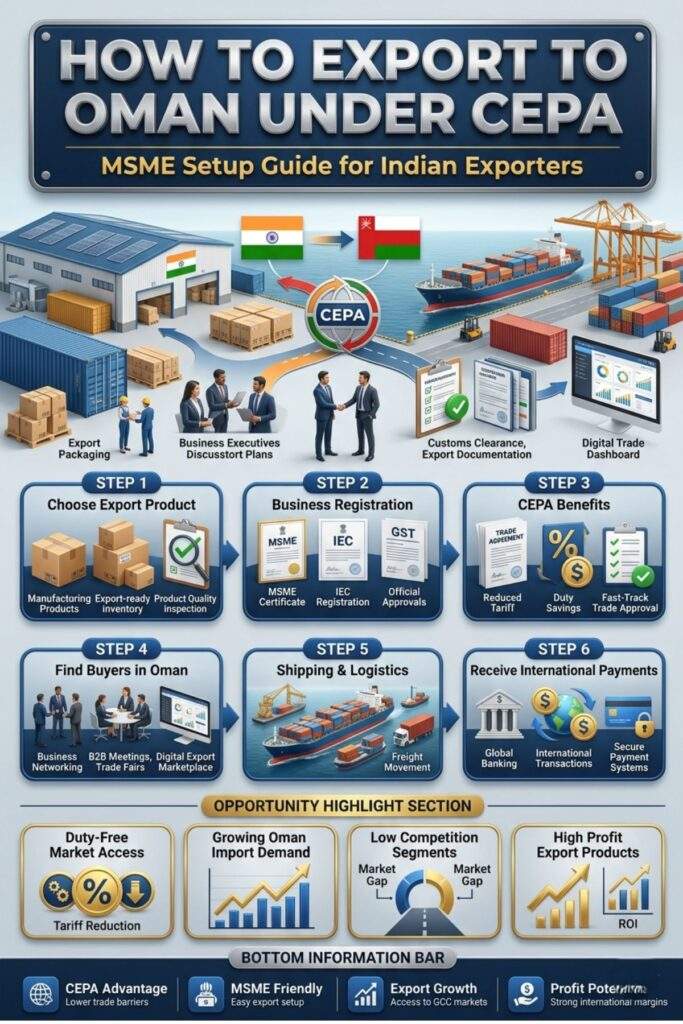
Table 2: Investment Breakdown for MSME Export Unit Setup (INR)
| Cost Head | Small Unit (INR) | Medium Unit (INR) |
| Factory/Workspace (lease deposit + fit-out) | 3,00,000 – 8,00,000 | 10,00,000 – 25,00,000 |
| Core Production Machinery | 5,00,000 – 15,00,000 | 20,00,000 – 60,00,000 |
| Quality Testing & Lab Equipment | 1,00,000 – 3,00,000 | 5,00,000 – 12,00,000 |
| Cold Chain / Packaging Line | 1,50,000 – 4,00,000 | 6,00,000 – 18,00,000 |
| Export Registrations (IEC, AD Code, EIC, FSSAI/BIS) | 30,000 – 60,000 | 60,000 – 1,50,000 |
| Working Capital (3 months) | 4,00,000 – 10,00,000 | 15,00,000 – 40,00,000 |
| Halal / NPOP Certification | 50,000 – 1,50,000 | 1,50,000 – 4,00,000 |
| Total Estimated Investment | 15,30,000 – 41,60,000 | 58,10,000 – 1,60,50,000 |
Note: Figures based on NPCS DPR benchmarks and MSME Ministry cost norms. Actual costs vary by state, product, and scale.
Financial Snapshot: What the Numbers Look Like
Capital Expenditure: ₹18–45 lakh for small agri-processing or textiles export business. ₹60 lakh–₹1.6 crore for engineering goods or pharma.
Monthly Operating Cost: ₹3.5-8 Lakhs per month for 10-person small unit (wage, utility, packaging, logistics to port, compliance fee).
Revenue at 60% Capacity: ₹18 – 35 lakh/month based on product. The value of food/agri at 100% capacity is Rs.30 lakh to 60 lakh per month and engineering goods is Rs.50 lakh to 120 lakh per month.
Gross Margins: Food and agri: 22-32%. Engineering goods: 18–26%. Drugs (generics): 28-40%. Stones processing: 12-18%.
Net margins can reach 12–22% in food and engineering exports after subtracting overhead and logistics costs under RoDTEP benefits.
Payout Period: Good at 2.5-4 years for a small unit with 70%+ capacity utilization. For food exporters who have a definite buyer, break even in 14-22 months is achievable.
Related Article: India-Oman CEPA Active: 8 Startup Business Ideas With 99% Duty-Free Access to a USD 28 Billion Market
Table 3: Key Government Schemes for MSME Export Units — Eligibility and Benefits
Source: Ministry of MSME (msme.gov.in), DGFT (dgft.gov.in), APEDA (apeda.gov.in)
| Scheme | Nodal Agency | Key Benefit | Applicable Sectors |
| PMEGP | KVIC / DIC | Subsidy up to 35% of project cost | All MSME manufacturing |
| CGTMSE | SIDBI / MoMSME | Collateral-free loans up to ₹5 crore | All MSME sectors |
| PLI Scheme | Ministry of Commerce | 4–6% production-linked incentive | Electronics, pharma, food |
| MEIS / RoDTEP | DGFT | Duty remission on exports | All export sectors |
| APEDA Market Dev. | APEDA | Subsidy for certification, trade fairs | Agri & processed food |
| MSME Export Hub | MoMSME / NSIC | Cluster support & buyer linkage | All export MSMEs |
| Mudra Tarun | MUDRA / Scheduled banks | Loans up to ₹10 lakh, no collateral | Micro exporters, startups |
Entrepreneur Spotlight
Rajesh Patel | Morbi, Gujarat | Ceramic Tiles Export Unit | Annual Turnover: ~₹12 crore
Rajesh started a 4,000 sq ft ceramic tile manufacturing unit in Morbi — the world’s largest tiles cluster — with a ₹35 lakh investment under PMEGP in his early thirties. Within three years, he was exporting to the UAE and Oman. His first Oman shipment required a Certificate of Origin from the Rajkot Chamber of Commerce and halal-compliant packaging for residential clients. Today, he employs 22 workers and targets the Sohar free zone for warehousing.
Key Lesson: “The certification process took four months — start it before your production line is ready, not after.”
Startup Business Ideas Under India–Oman CEPA
The CEPA provides specific export windows which are best suited for lean startups with investments less than ₹50 lakh:
Basmati and Parboiled Rice Export Unit — Oman imports rice worth hundreds of millions every year, India is dominating this sector. A unit manufacturing process packed, or graded products can begin exporting within 4 months in a unit registered by the APEDA and certified by EIC, located in Haryana or UP. Capital: ₹20–35 lakh.(India Oman CEPA Export Guide)
Halal Processed snacks and Biscuits — These sweet biscuits and packaged foods are mentioned specifically in the agri-gains list of CEPA. If your company is a food processing unit in Pune, Surat or Lucknow for Omani retail chain then you require FSSAI, halal cert and custom packaging. Capital: ₹25–45 lakh.
Frozen Marine Products: Shrimp Processing: Andhra Pradesh, Kerala and Tamil Nadu are the major shrimp producing states. Shrimp-peeling and IQF (individually quick frozen) unit registered with MPEDA can target Omani restaurants and supermarkets. Capital: ₹30–60 lakh.
Generic Pharmaceuticals (OTC segment) — Omani Pharma market is expanding at a CAGR of 6.6%. Formulations plant in Ahmedabad or Baddi and possessing WHO-GMP can leverage the 90 days marketing authorization route under CEPA to gain access to Omani pharmacies. Capital: Rs. 60 Lacs to Rs. 1.5 Crs.(India Oman CEPA Export Guide)
Download the Full Guide: Drugs & Pharmaceutical Technology Handbook
IT Services and Digital Consulting (ITSC) — 127 services sectors opened in Oman. As per the mobility provisions of the CEPA, an Indian IT SME (Web Development, ERP or Accounting Software) can register as an Independent Professional and conduct business in Oman for maximum of 180 days per year without establishing a full subsidiary. No capital needed other than the ability to deliver services.
Project Planning Support: Where to Get Techno-Economic Guidance
If an entrepreneur is serious in establishing an export unit in the country with a focus on Oman, he is strongly advised to get an export unit Detailed Project Report (DPR) before approaching banks or submit an application under PMEGP. With over 45 years of experience in industrial consulting, NIIR Project Consultancy Services (NPCS) of New Delhi provides techno-economic feasibility studies, plant layout designs, machinery specifications and financial projections to various manufacturing and export units in India. NPCS has partnered with the first-generation entrepreneurs, MSME operators, industrial investors and has touched various sectors including food processing, pharmaceuticals, engineering goods, chemicals etc.
Reports and technical handbooks can be obtained at niir.org and entrepreneurindia.co. NPCS is able to offer a full package service from product selection to financial modelling, if you are planning a project that needs a custom DPR preparation or a feasibility study that fits into the CEPA export opportunities.
Your Next Step: One Action, This Week
The CEPA is live. Duty gated open. However, the first-mover advantage is a fleeting one, as Indian companies are expected to soon enter into Oman’s import market.
Choose one product from the sectors listed in the table below (Table 1). Look for its HS code and CEPA tariff concession on DGFT portal. Next, submit your Udyam Registration & IEC within 7 days.
With those two documents in hand, go to niir.org and look for the appropriate DPR/feasibility study for the particular sector. You’ll get that report before you spend a rupee on plant setup, telling you the exact machinery you need, the margins that will be realistic, and the regulatory checklist.(India Oman CEPA Export Guide)
The competition is not sitting around waiting. Neither should you.

Citation Sources & References
- PIB / Ministry of Commerce & Industry — India–Oman CEPA Press Release (01 Jun 2026)
- APEDA — Agricultural and Processed Food Products Export Development Authority
- DGFT — Directorate General of Foreign Trade, India
- FIEO — Federation of Indian Export Organisations
- Ministry of MSME, Government of India — PMEGP & CGTMSE
- Oman Ministry of Commerce, Industry and Investment Promotion
FAQ
Q1. What is the investment required to set up an Oman-exporting unit?
You can set up a small food or agri-processing export unit for Rs 18-42 lakh. This investment will include machinery, working capital and certifications. Units exporting engineering goods and pharmaceuticals can cost Rs 60 lakh-1.6 crore. Under PMEGP and CGTMSE you only have to contribute 10-25% equity and the rest is provided.
Q2. Which licenses do I require before exporting to Oman?
At a minimum, you require Udyam registration, GST registration, Importer Exporter Code (IEC) from the DGFT and AD Code from your bank. You must have an FSSAI export certificate and halal approval for food products. Depending on your product category you might also need specific product certifications such as BIS, EIC, CDSCO, NPOP, etc. Certificate of Origin is mandatory for claiming preferential tariff under CEPA.
Q3. How will the CEPA specifically benefit Indian pharmaceutical companies?
As per CEPA products approved by the USFDA, EMA (Europe), UK MHRA or TGA (Australia) will have marketing approval in Oman within 90 days – without inspection. Where inspection is required, the time period is 270 working days. This eliminates the biggest hurdle in getting into the Oman market for Indian generic manufacturers. (Source: PIB Press Release)
Q4. What raw materials would be most in demand when exporting to Oman?
Specific products highlighted under trade expansion categories of CEPA are basmati rice, frozen shrimp, cashew kernels, bovine meat (frozen boneless), sweet biscuits, engineering steel, copper products, electronic components, pharmaceutical generics. Potential raw material sources are Punjab/Haryana for rice, AP/Kerala for seafood, Bhilai/Vizag for steel, Surat for textiles.(India Oman CEPA Export Guide)
Q5. Are there any government schemes for the setting up of Oman-export units?
Yes, multiple schemes exist. The PMEGP offers 25-35% subsidy for new MSME manufacturing units. CGTMSE provides collateral-free loans up to 5 crores to MSMEs. APEDA gives market development assistance for agri-food exporters including reimbursement for exhibition participation, and certification costs. RoDTEP is for refund of embedded taxes for all export goods. Check the websites msme.gov.in and apeda.gov.in for scheme specifics and updates.
Q6. Where can I get detailed project reports for manufacturing units intending to export?
A library of detailed project reports for more than 500+ manufacturing sectors – including all relevant categories under CEPA exports – is available from NIIR Project Consultancy Services (NPCS) at niir.org and entrepreneurindia.co. The reports cover all aspects such as plant layout, machinery list, raw materials sourcing, financial projections and a regulatory checklist. Custom reports can also be prepared for a bank loan or approval under a specific government scheme.