
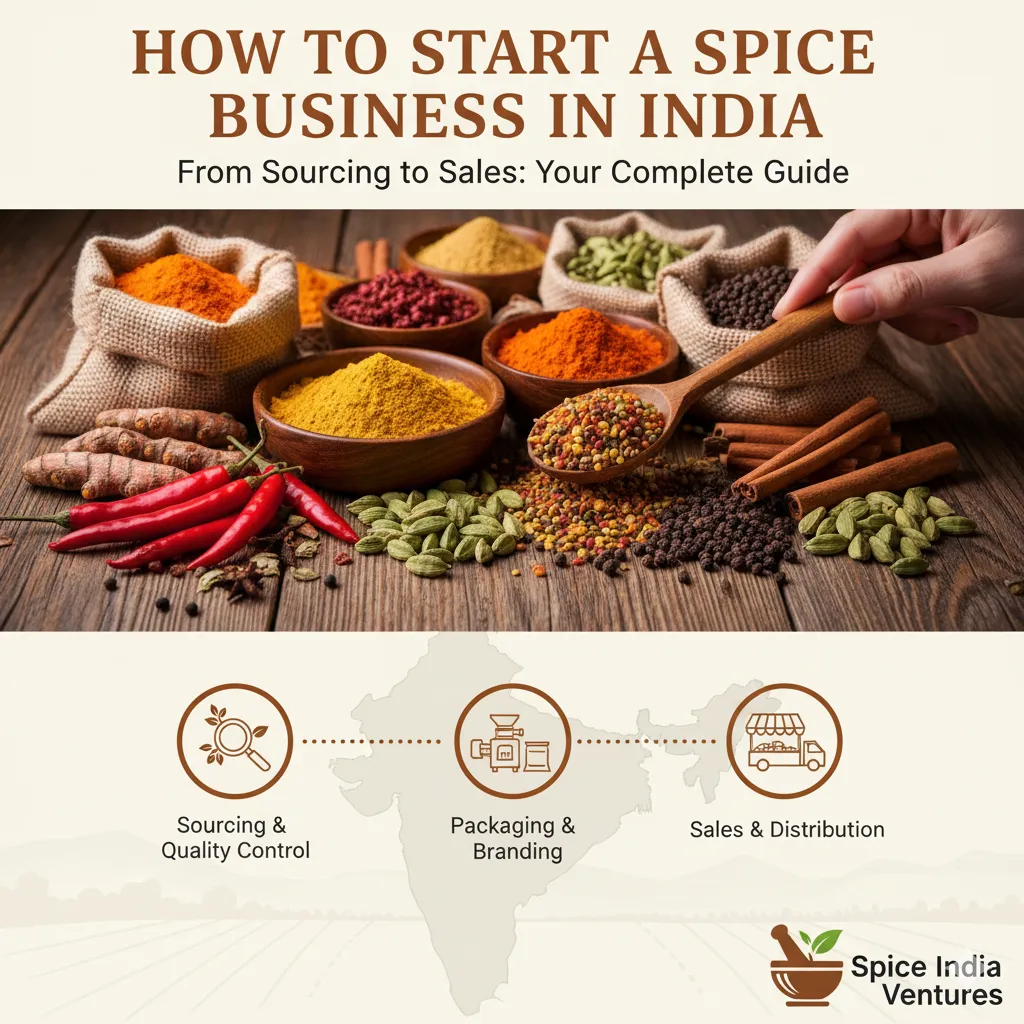

India remains at the zenith of spices. In the year 2023-24, the nation’s exports of spices reached an impressive ₹1.25 trillion, a direct result of the quality we’ve maintained. Over 22 major spices are exported from India, from spicy chilli all the way to turmeric.
A significant space within this market, however, remains branded and marketed poorly. This is the space you are looking for. With the proper strategy and concrete plans, these traditional commodities can be branded modified and sold as premium, high value products all across the world. This guide will show you how.
Read More: Starting a Spice Business in India
Why the Branding of spices is worth multiple billion rupees?
A brand certainly adds value and with that value comes a significant amount of profits, profits which would otherwise not be made. Let me elaborate.
Over these years, the global demand and the purchasing power of the customers has increased exponentially. Foreign consumers, especially in countries like the USA and Europe, are not just looking for spices but whole meals which are wholesome, fast and effortless to prepare.
Such meals are very popular in Europe and the USA and India being the largest producer of spices is something that fulfils this criteria perfectly.
The government makes it a point to assist burgeoning food enterprises with initiatives such as the credit linked subsidy PMFME Scheme. APEDA and the Spices Board of India also help with financial assistance for export promotion and quality certification.
The rich history of spices in India enhances the promotional value of the products. In a world where marketing is everywhere, it is helpful to have a narrative based on originality, culture, and cleanliness to capture the attention of global clientele.
Significant Potential in India’s Spice Basket
Rather than contending within the raw spices marketplace, direct your efforts toward these high growth, lucrative portions.
Powerful Spice Extracts (Oleoresins)
What they are: These are ultra concentrated spices containing its nuances such as flavor, color, and aroma.
What is the Opportunity: Global players in the snacks, drinks, and processed meat segments greatly appreciate the use of oleoresins due to the uniform quality. You can launch a B2B brand that deals in chilli, turmeric, or black pepper oleoresins.
Value Jump: For example, 1 kg of black pepper oleoresin can be sold for 10-12 times the price of 1 kg of raw black pepper.
Read More: Ensure Food Safety in the Spice Industry with Proven Quality Controls
Curated Seed and Spice Blends
What they are: These are ready-to-use organic blends of seeds such as cumin, fennel, celery, and coriander.
What is the Opportunity: The market for certain blends is increasing. Consider “Taco Seasoning” for the U.S. Market or “Chai Masala” for cafes worldwide. Go for bakeries and food processors with certified organic blends. Major export markets for Indian cumin include the USA, Vietnam, and Brazil.
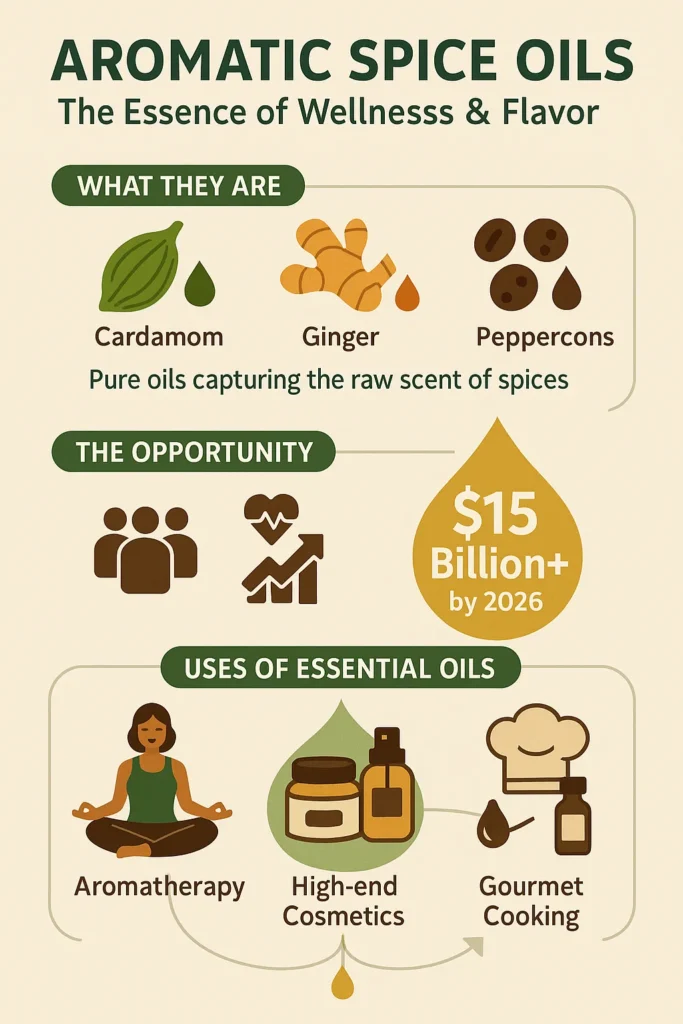
Aromatic Spice Oils (Essential Oils)
What they are: These are various oils that hold the raw scent of spices such as cardamom, ginger, and pepper.
The Opportunity: An increase in population and health-related issues has led to a significant boom in the essential oil market which is projected to reach over $15 billion by the year 2026. You can create a strong brand around your small-batch, and high purity oils intended for use with aromatherapy, high-end cosmetics and gourmet cooking.
Unique Herb and Fortified Mixes
What they are: Dried spices like Indian oregano and basil or powdered spices blended with vitamin and mineral supplements.
The Opportunity: Health and wellness trends suggest marketing products like immune boosters such as “Turmeric with Vitamin D” or “Masala Mixes with Moringa” for added nutrition. These innovative health-oriented blends are a moderate success with the urban market.
Read Our Project Report: Click here
Your Easy 5 Step Action Plan To Launching A Global Brand
Pick your niche and research: Aim to sell a particular product as opposed to a myriad of options. For instance organic turmeric extract, or pepper gourmet oils. There’s a lot of useful information found in the Spice Board as well as the APEDA portals.
Fund and Finance: a detailed project helps a lot in determining financial sponsorship and outline for the business. Small schemes within the MoFPI and the ministry of the MSME are other ways that can be useful in the process to secure funding.
Master Quality & Certifications: Quality ‘Freedom’ is non-negotiable. Engage with Farmer Producer Organizations (FPOs) for farm-to-fork traceable raw materials.
- FSSAI, Spices Board Registration: Applicable for India.
- HACCP, ISO 22000: International buyers’ minimum requirements for food safety.
- Organic, BRC: Access Offer for exclusive-tier European and American areas.
Organic, BRC: Provides access to sought after markets in Europe and America.
Innovate in packaging: Recyclable and eco-friendly packaging embellishes your product as well as aids in brand reputation and awareness. Branded packaging in convenient use sizes, such as single-serving sachets, greatly enhances customer satisfaction. Labeled QR codes simplify product traceability.
Global Presence: Don’t sit and wait for buyers. Attend international food trade fairs such as Gulfood in Dubai and SIAL in Paris. Also, your brand can be promoted on B2B sites like Alibaba and Global Sources.
Read Our Book: Click here
How NPCS Can Help You
Embarking on a spice business is likely to be complicated. That is where NPCS (Niir Project Consultancy Services) comes in. We prepare comprehensive reports. It has a road-map to success with a more comprehensive analysis which includes the spice manufacturing technique, market analysis, machinery, and finances.
To sum it up for you, we determine the feasibility and marketability of your spice business before you spend your savings.
Find the Best Idea for Yourself With our Startup Selector Tool
Conclusion
The spice legacy owned by India should be treasured. The next big opportunity does not lie only in growing spice crops but in their branding. By concentrating on value addition, quality, and intelligent marketing, it is possible to create an immensely powerful and profitable global brand.
The resources and network are present. It is time to transform our legacy into your accomplishment.
Frequently Asked Questions (FAQs)
Is the spice export business really profitable?
Ample confirmation exists to show that it is. There are high profit margins of 25 to 40% and above that can be attained by branding and adding value to products, as opposed to trading raw spice which only provides 5 to 10% profit margins.
Which spices are best for a new startup to export?
Value added products to spices are far more advantageous than exporting raw spices. These products include turmeric and chilli oleoresins, cardamom essential oil, organic blends of cumin and fennel, and health-centric, fortified masalas.
What Government support can I get?
The PMFME scheme subsidises your project cost. The MSME Ministry then has more schemes for technology upgradation. Both APEDA and the Spices Board provide financial support for acquiring certifications and attending international trade fairs.
What are the most quality certifications and why are they important?
For exports, HACCP or ISO 22000 for food safety is a requirement. To access high-value market segments, an Organic Certificate holds high importance. BRC certification is commonly requested by large retailers in the United Kingdom.
What is the investment required in this business?
The investment is highly variable. A blending and packaging business unit at home can be started with a few lakh. However, an oils or extracts processing plant with export certifications needs a much higher investment which is possible through bank loans and government grants.


