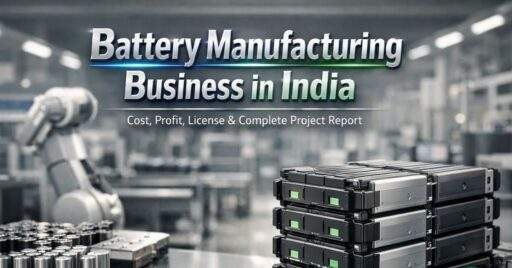


Introduction: Battery Manufacturing Business in India
India is in a hurry to move towards electric mobility and renewable energy. This change is driving a need for reliable forms of energy storage, and battery manufacturing is among the fastest-growing industries in the country. Every electric car, solar system, inverter and electronic device rely on batteries, which means the market demand is strong and long-lasting.
The battery industry in India is already worth thousands of crores and is only expected to increase over the next decade. Entrepreneurs who come into this sector today have the potential of creating a solid business with steady demand and recurring revenue. Unlike some other products, batteries require replacement every few years, which means repeat customers and sales that don’t end.
Types Of Battery Manufacturing Businesses You Can Start
The battery business can be accessed through multiple methods which depend on your available investment capital and your level of technical expertise. Certain business activities require substantial financial resources whereas other business activities can begin with minimal investment and develop into larger operations.
Read the Complete Book Here: The Complete Technology Book on E-Waste Recycling (Printed Circuit Board, LCD, Cell Phone, Battery, Computers) 3rd Revised Edition
1. Manufacturing Lead Acid Battery
Lead acid batteries people commonly use in their cars and inverters and backup power systems. This technology has been used for decades and is still generating stable income as vehicles and power systems are requiring regular battery replacement.
A small to medium scale plant can manufacture thousands of batteries a month and open the battery for local markets. The demand for this business remains constant throughout all urban and rural environments which makes it less risky than emerging technological solutions.
Key Advantages:
- Stable and predictable market demand
- Well established supply chain
- Regular replacement cycle to ensure recurring sales
- Appropriate for first-time entrepreneurs
2. Lithium-Ion Battery Pack Charger Assembly
Lithium-ion batteries are the future of energy storage, and they’re used widely in electric vehicles, solar systems, and portable electronics. Entrepreneurs choose to start battery pack assembly because it requires smaller investments than complete battery production which enables them to benefit from the growing electric vehicle market.(Battery Manufacturing Business)
The business model needs companies to purchase battery cells which they will use to create complete battery packs that include safety features and monitoring systems. As the electric vehicle industry grows, this need for battery packs is gradually increasing.
Why This Business Is Fast Growing:
- rapid growth in electric vehicle sales
- Strong government backing for EV adoption
- High demand from manufactures and service providers
- Opportunity to convert to export markets
Get Detailed Project Report (DPR): Lead Acid Battery Manufacturing Plant Project Report
Investment Needed to Start Battery Manufacturing Business
The kind of battery and the production capacity determines the investment needed. Small-scale businesses can begin at moderate capital and manufacturing plants require a high level of investment.
Estimated Investment Range:
- Lead acid battery manufacturing: 1 crores – 3 crores
- Lithium ion battery pack assembly: Rs 50 lakhs to 2 Crores
- Battery recycling unit: 80 Lakh to 2.5 Crores
- Battery management system manufacturing: Rs 30 lakh to Rs 80 lakh
The total cost includes expenses for machinery and raw materials and factory establishment and starting capital. The business requires proper financial management to enable its operations during initial business activities.

Profit Potential of Battery Manufacturing
Battery manufacturing is a good market for profits as the demand is from various industries. Transportation, telecommunications, renewable energy and consumer electronics are all applications that require batteries, so there is a wide variety of customers.(Battery Manufacturing Business)
Profit margins are usually based on efficiency of production, raw material costs, and product quality. Companies that deliver products with consistent quality and complete their deliveries on schedule will retain customers for longer periods and achieve higher revenue.
In general, manufacturers can look forward to:
- Profit margins between 12% and 30%
- Stable monthly revenue with repeat demand
- Increased profitability with increasing production capacity
The expansion of business operations allows companies to decrease their production costs while increasing their total profits.
Government Support and Subsidies for Battery Production
The government of India is actively promoting the domestic production of batteries to reduce reliance on imports, as well as support the development of electric vehicles. The industry provides multiple financing programs and incentive schemes to support entrepreneurs who want to establish their businesses.
The programs simplify funding access and reduce startup expenses for businesses. The majority of state governments extend additional advantages which include tax breaks and infrastructure assistance to businesses.
Major Government Schemes:
- Production Linked Incentive Scheme (PLI)
- FAME Scheme for Electric vehicles
- MSME Loan And Subsidy Programs
- CGTMSE Collateral-Free Loan Scheme
- Industrial Development Subsidies, State
The financial performance of a new battery manufacturing company will improve when it uses the financial support programs available to it.
Find high-return business ideas based on your budget & ROI
Machinery Needed for Battery Making
A battery manufacturing facility requires particular machinery which works together to create a secure system that achieves maximum productivity. The selection of equipment needs to match both the specific battery production method and the operational level of automation which will be implemented during production.
Battery manufacturing operations require standard machinery which includes devices that build battery components and devices that inject electrolytes and devices that assess battery functionality. The factories of today need to spend their resources on quality control systems because these systems will help them to deliver reliable and safe products.
Typical Machinery Used:
- Plate making machine for batteries
- Battery assembly line
- Electrolyte filling machine
- Battery charging & testing equipment
- Safety systems and ventilation systems
The equipment costs begin at Rs 20 lakh and can exceed Rs 1.5 Crore when production capacity and automated system features determine the equipment price.
Licenses and Legal Requirements for Making Batteries
Businesses must secure multiple approvals before they start production to meet safety and environmental protection requirements. These licenses ensure the quality of the products by both the manufacturer and the customer.
Entrepreneurs need to begin their approval process during the initial stages of their project because approval times can extend over several months.
Important Licenses Needed:
- BIS Certification
- Approval of Pollution Control Board
- Factory License
- GST Registration
- MSME Udyam Registration
- Fire Safety Clearance
Following regulatory guidelines helps businesses to operate smoothly while avoiding legal problems.
Future Potential of the Battery Manufacturing Industry
The future of battery manufacturing in India is very bright. The country is growing its investment in electric mobility and renewables, and they both require efficient energy storage systems. The decrease in production costs and technological progress will increase battery usage in everyday life.
In addition, the increasing use of solar power in residences and businesses is opening up new demand for battery storage systems. Industrial automation and smart devices are also driving more batteries in several industries.
Key Growth Drivers:
- Expansion of Electric Vehicle market
- Increase in Solar energy installations
- Increasing demand for backup power solutions
- Domestic manufacturing policies by the government
- Growth of consumer electronics industry
The requirement for battery manufacturing equipment will establish the sector as a high-demand market which will persist throughout upcoming years.
Steps for Business for Manufacturing Batteries
Successful operation of a battery manufacturing business requires detailed planning which must follow through all stages of implementation. Entrepreneurs should first start by studying the market demand and identifying which type of battery would be best to produce.
The process of project execution includes six steps which involve project report preparation followed by fund raising and factory establishment and machinery installation and license acquisition. Once production starts, the development of a good distribution network is vital to long-term success.
Businesses that prioritize quality, safety, and customer satisfaction have a higher chance of succeeding in this competitive market.
Related Article: Top 6 High Profit Manufacturing Business Ideas in India (2026)
Conclusion: Is Battery Making a Good Business in 2026?
Battery manufacturing is one of the most potential industries in India today. The combination of increasing demand, government support and technological progress makes it a good opportunity for entrepreneurs and investors. Whether beginning with lead-acid batteries or lithium-ion battery assembly, the business provides steady income, as well as long-term growth potential.
For people who want to enter the manufacturing industry, this is the industry that offers a practical way to develop a business with a good earning potential and future-proof. With proper planning and consistent quality, battery production can be a reliable source of income for a number of years.
Frequently Asked Questions (FAQ)
Q1. What does it cost to invest in a battery manufacturing business?
The minimum investment typically begins at around 30 lakhs to 50 lakhs for small scale units of battery assembly and for larger scale production plants, the investment could be 1 crores to 3 crores.
Q2. Is battery manufacturing profitable in India?
Yes, battery manufacturing is considered to be a profitable activity because of the steady demand for them and the replacement cycles. Profit margins usually fall between 12 and 30 percent.
Q3. Which business of batteries is suitable for beginners?
Lithium-ion battery pack assembly and lead acid battery manufacturing are the optimal choice for beginners as they need moderate investment and have good market demand.
Q4. How long does it take to setup a battery manufacturing plant?
It typically takes about three to six months to complete setup, which includes licensing, machinery installation, and production readiness.
Q5. What is the battery industry future of India?
The future is very strong because of the growing demand from electric vehicles, renewable energy systems and consumer electronics. The industry is expected to grow very rapidly in the next decade.