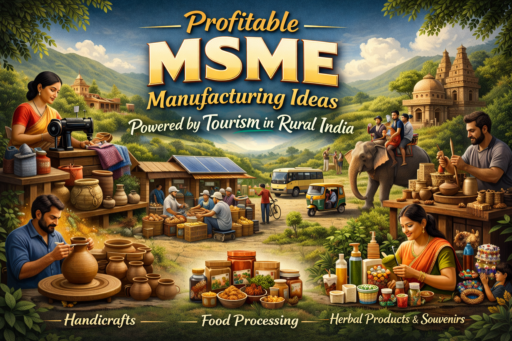


Tourism-driven MSME opportunities are transforming the rural economy of India. What was once considered a purely service-oriented tourism sector is now creating strong demand for manufacturing-based MSMEs. Rural and semi-urban districts are witnessing a rise in tourists, driving continuous demand for products like accommodation, transportation, and local food services.
Tourism is not just about experiences – tourists are also consuming products that they either use during their travels or take back home. Packaged food, wellness products, eco-friendly utilities, souvenirs, and experience-related merchandise are all generating repeatable and scalable revenues thus making tourism-linked manufacturing one of the most promising opportunities for rural entrepreneurs in India.
The government initiatives like Swadesh Darshan 2.0, PRASHAD, the Vibrant Villages Programme (VVP), rural homestay promotions, wellness tourism missions, and the Vocal for Local movement are propelling this transformation. These projects do not only concentrate on promotion but also on the development of the required infrastructure—roads, utilities, digital connectivity, skill training centers, and destination branding—creating ready and accessible markets for the manufacturing MSMEs.
Why Tourism Is a Powerful Trigger for Rural Manufacturing MSMEs
When looking at the unit economics and feasibility of the rural industries, tourism is an advantage that the conventional rural markets do not have.
Read More: Profitable Small Scale Industries- Money making Business Ideas for Startup (when you don’t know what industry to start)-2nd Revised Edition
Concentrated and Predictable Demand
Tourism hotspots draw a bulk of the customers to one place. The demand may be seasonal but it is always predictable, which enables the business owners to arrange the production cycles, storage levels, and working capital in a much more efficient way.
Built-In Brand Visibility
Merchandise that is sold at famous tourist spots picks up visibility in the eyes of customers coming from different places. Such nationwide visibility for the small producers would, in normal circumstances, mean heavy marketing spending. The tourists turn out to be the brand promoters themselves. (Tourism-driven MSME opportunities)
Supply Chain Efficiency
Delocalized production near the tourist such as logistics cost reductions, food products with better quality and longer shelf life—as food MSMEs can now compete with big organized brands.
Key benefits of tourism-led manufacturing include:
- Unchanging “high season” demand
- Faster customers’ trust thanks to location-based authenticity
- Less expenses on transportation and distribution
At last, these factors contribute to a remarkable increase in the rate of survival and profit generation of rural manufacturing startups.(Tourism-driven MSME opportunities)
Read More: The Complete Book on Cold Storage, Cold Chain & Warehouse (with Controlled Atmosphere Storage & Rural Godowns) 6th Edition
Lessons for Rural Entrepreneurs from India’s Industrial Leaders
The idea of tourism as a driver of manufacturing has never been heard of. It is the same as the tactics used by the leading industrialists in India.
ITC developed their rural India operations not by dispersing their product and sales networks but by the creation of a monopoly. They attacked the market with a wide range of goods—from food and personal care to stationery, packaging, and agri-linked items. This is portfolio thinking, the main lesson trained by the market: one market can handle with multiple product lines.
Similarly, the Tata Group was building up their investments in infrastructure—hotels, railways, power and steel—creating a long-term industrial growth ecosystem. The government today in the form of tourism infrastructure at the district and village levels is playing a similar role. Manufacturers of the region who introduced their creative and innovative ideas along with these ecosystems already had a market.(Tourism-driven MSME opportunities0
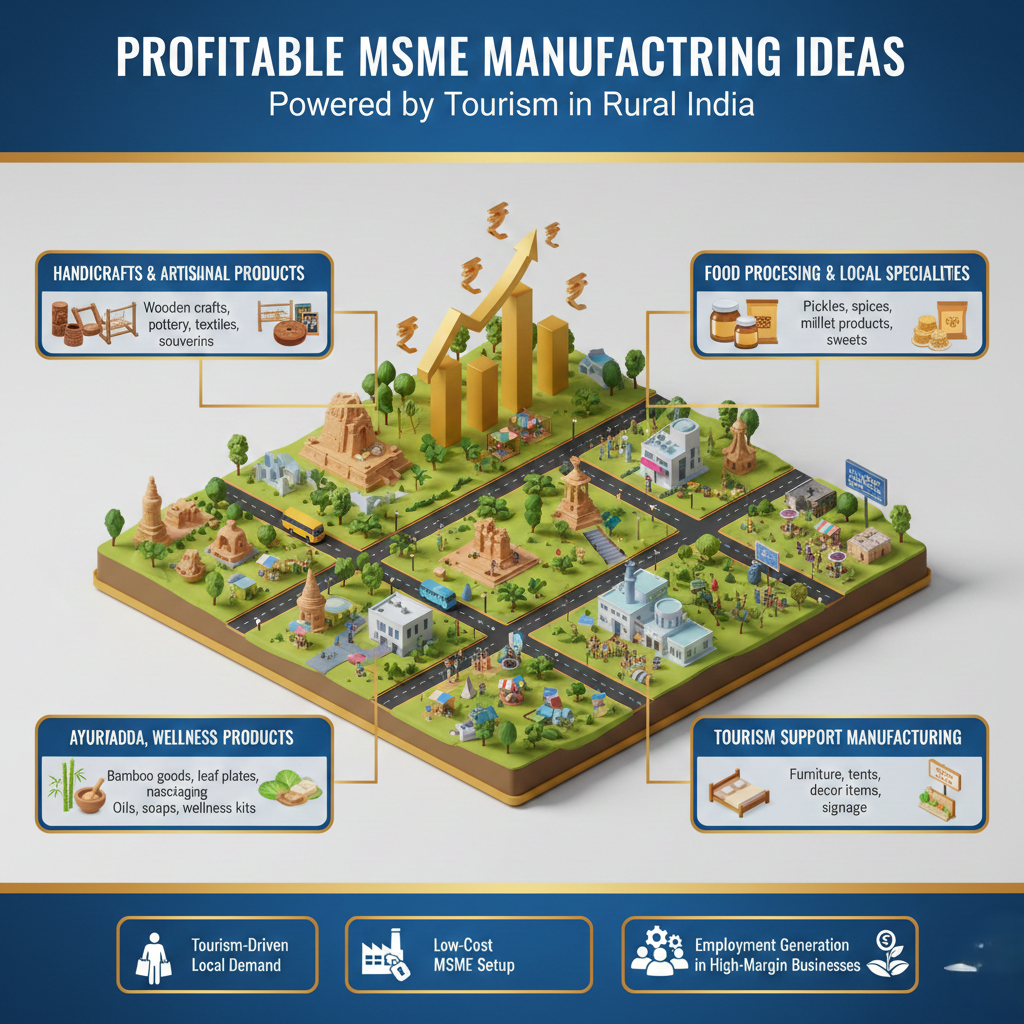
High-Potential Tourism-Based Manufacturing Business Opportunities
1. Packaged Local Food Manufacturing
Food products of high hygiene, portability, and long shelf life are the favorites of tourists always.
The best-performing categories are:
- Millet-based mixes
- blends of spices traditionally used
- Sattu
- Pickles
- Fruit powders
- Herbal drink concentrates
Products with a shelf life of 6 to 9 months are getting more sales than short-life ones as they waste less and have more retailers to supply.
Read More: Profitable Cottage and Tiny Industries
2. Eco-Friendly Packaging and Travel Utility Products
The tourism industry is branding itself through sustainability and the demand for eco-friendly products is increasing fast.
Manufacturing opportunities include:
- carry bags made of jute and cotton
- environmentally friendly packaging using bamboo, paper, and recycled materials
- biodegradable travel kits and cartons
This sector enjoys strong governmental support and rising awareness of sustainability among consumers.
3. Bamboo, Coir, and Jute Utility Products
Handicrafts can be considered traditional and sometimes they can also be turned into modern utility based products which are the main cause behind their large selling.
Successful examples include:
- Bamboo bottles
- Coir mats
- Jute baskets
- Handloom-based home and hospitality décor
Products of everyday use create more demand through repeat purchases than purely aesthetic crafts.
Read More: 50 Successful MSME Business Ideas in India (2025 Edition)
4. Souvenir and Experience-Linked Merchandise Manufacturing
Heritage circuits, pilgrimage centers, and rural festivals are main contributors of branding besides being very potent brand amplifiers.
Best-performing souvenir formats include:
- items with regional identity that serve a purpose
- durable and lightweight products
- merchandise related to local culture or geography
Functional souvenirs are the winners when it comes to margins and repeat sales over the display-only items.
5. Wellness and Herbal Product Manufacturing
The ever-increasing popularity of wellness tourism, yoga retreats, and Ayurvedic destinations is leading to the following strong demand:
- Herbal oils
- Natural cosmetics
- Aromatherapy products
- Wellness and travel kits
Once the domestic market trusts these products, they will have the potential to be exported for a high price and be backed by the company with a strong domestic market.
6. Manufacturing Supplies for Rural Homestays
The growth of rural homestays has resulted in an increase in the demand for:
- Linen and towel kits
- Toiletry sets
- Welcome hampers
- Eco-friendly guest supplies
Collaboration with the networks of rural homestay operations could mean sharing in bulk orders and assured cash flow.
Read More: 10 New Manufacturing Business Opportunities in India for Startups and MSMEs
Investment Range and Scalability
The majority of the manufacturing businesses that are linked to tourism can be set up with a moderate amount of capital input:
- Food processing units: ₹5–50 lakh (depending on capacity)
- Sustainable packaging units: ₹5–30 lakh
- Bamboo, coir, and jute products: ₹10–50 lakh
- Wellness and herbal products: ₹10–40 lakh
The main upside of such businesses is that they will not be limited to the tourism market only as they can easily expand into the retail and export channels.
Managing Seasonality Risk in Tourism-Based Manufacturing
Seasonality is a common risk factor in tourism-related manufacturing but the following measures can help to overcome it:
- Extending product lines
- Targeting both the tourist and local markets
- Acquiring raw materials from local sources to have better control over costs
- Coordinating production with tourism peak seasons
When managed wisely, seasonality turns out to be a planning advantage rather than a drawback.
Conclusion: Tourism Builds Markets, Manufacturing Captures Value
The installation of a tourism infrastructure not only draws people in but manufacturing also gets the long-term value. The roads, heritage sites, eco-tourism centers, wellness places, and guesthouses help the start-ups to access the market which they otherwise might take years to build up.(Tourism-driven MSME opportunities)
The applicants who opted for the feasibility-driven planning, standard manufacturing processes, and balanced product lines can upscale from tiny rural units to nationwide brands.
That’s the reason why serious entrepreneurs collaborate with Niir Project Consultancy Services (NPCS)—not only for business ideas but also for Detailed Project Reports (DPRs) that deal with capacity planning, machinery selection, unit economics, risk analysis, and profitability timelines.
When manufacturing coincides with the tourism-boosted rural markets, a cottage industry can transition from a sustainable village into a national business.
Frequently Asked Questions (FAQ)
Q1. How do rural MSME manufacturers acquire customers quickly?
By fitting their products to those areas where there are already tourists, home stays, the host cities, and the government-supported destinations where buyers exist.
Q2. Which product formats perform best in tourism markets?
Products that are portable, sealed, of lightweight, with long shelf life, consistent quality, and strong regional identity.
Q3. Can tourism-linked MSMEs scale beyond local markets?
Yes. Food products, wellness items, and sustainable packaging solutions can grow into the national retail and export markets.
Q4. What is the ideal investment range to start such a business?
Most of the tourism-linked manufacturing units that can grow either way have a starting range of anywhere between ₹5-50 lakh, based on the product category and level of automation.
Q5. How can seasonal demand risk be managed?
By having a variety of products, attracting customers both from tourism and general retail markets.