
 ITC (Agri Business Division)
 Thermax (Chemical Division)
 SRF
 DCM Shriram Industries
 Deepak Nitrite
 Gujarat Ambuja Exports
Flexible packaging converters, label printers, carton makers and publishers all buy printing inks, and entrepreneurs set up formulation units to supply them. As a printing ink manufacturing consultant, NPCS helps you decide which ink families to make, what plant size fits your market and which approvals apply. Demand is supported by packaging growth, e-commerce and the shift to low-migration and water-based inks. Our team prepares the project report that turns these choices into a clear, bankable plan.
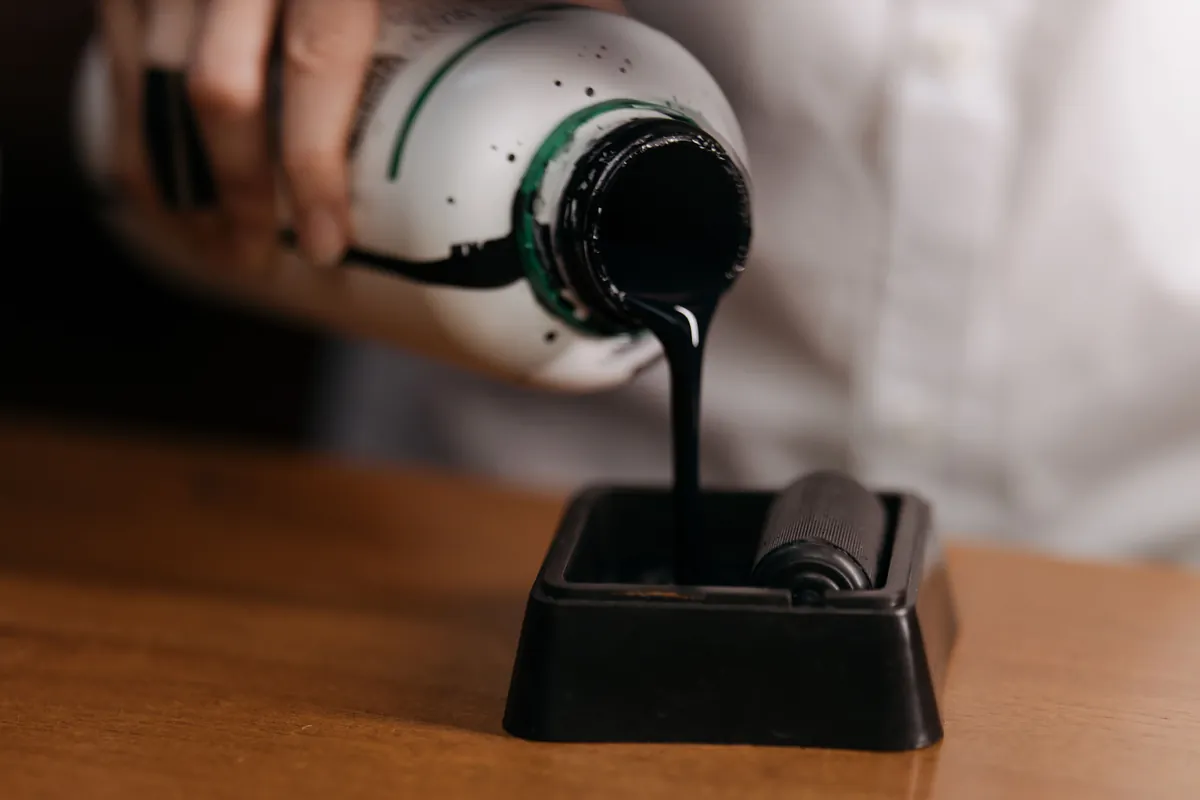
Printing Ink Manufacturing at a Glance
| Typical capacity | ~500–5,000 TPA |
|---|---|
| Land | ~0.5–2 acres |
| Power load | ~100–500 kW |
| Water | Low |
| Manpower | ~15–60 |
| Indicative investment | ~₹1–15 crore |
Investment basis: excludes land.
Figures are indicative ranges. Your project report works them out for your capacity and location.
Market Demand for Printing Ink in India
Printing ink demand follows packaging and print volumes, so your buyers are mostly converters and printers. Growth in e-commerce and a move towards low-migration and water-based inks are shaping what these buyers ask for. Industry is concentrated in Gujarat, Maharashtra, Delhi-NCR and Tamil Nadu. Export potential is medium, and seasonality is low, which keeps demand fairly steady through the year.
- Flexible packaging converters
- Label printers
- Carton and corrugated makers
- Publishers of newspapers and books
Printing Ink Products You Can Make
Your product range decides your machinery and your customers. Packaging inks suit converters, offset inks suit newspaper and book printers, and water-based inks suit buyers moving towards low-migration packaging. Most new units start with one or two families and add others as the customer base grows.
- Flexographic and gravure packaging inks, offset inks, water-based inks, UV-curable inks, screen inks
Printing Ink Manufacturing Process
The printing ink manufacturing process disperses pigments into resins and solvents, then adjusts the result to a buyer's exact shade. Bead mills suit liquid inks, while three-roll mills suit paste inks. UV ink needs its own line. Quality is controlled mainly after let-down, where each batch is matched to the approved shade.
Typical checks cover shade, viscosity, fineness of grind, adhesion and rub resistance. For food packaging, low-migration specifications also apply. A well-equipped shade-matching lab is therefore as important as the mills themselves.
- Premixing
- Dispersion (bead mill or three-roll mill)
- Let-down
- Shade matching
- Quality testing
- Filling
Raw Materials and Machinery for Ink Plants
Pigments, resins, solvents, additives and varnishes are the main inputs, with oils added for offset inks. Pigments are commonly sourced from Gujarat, around Vapi and Ankleshwar, while resins and solvents come from domestic and imported suppliers. High-speed dispersers and bead mills do the core work, so their selection affects both quality and output.
- High-speed dispersers
- Bead mills
- Three-roll mills
- Mixing tanks
- Shade-matching lab
- Filling
Printing Ink Manufacturing Licence and Approvals
Printing ink manufacturing licence and approvals start with unit registration and a consent to establish from the State Pollution Control Board before construction. Ink formulation by mixing is generally Orange because of solvent use, while water-based-only units can be Green. The State PCB fixes the category. No QCO applies, and FSSAI is not applicable.
- PESO approval for solvent storage
- Hazardous waste authorisation
- Factory licence
- Consent to operate before commercial production
| Pollution category | Ink formulation by mixing is generally Orange (solvent use); water-based-only units can be Green; the State PCB fixes the category |
|---|---|
| HSN code | 3215 (printing ink) |
| GST | 18% |
| BIS / quality control order | No QCO |
| Other licences | PESO for solvent storage; hazardous waste authorisation; factory licence |
Choosing the Right Printing Ink Technology
Your technology route should follow your target customers. Bead mills suit liquid inks for flexographic and gravure printers, while three-roll mills suit paste inks such as offset. A UV ink line serves a narrower group of printers but needs separate equipment. Many new units begin with a liquid ink setup and add other routes once orders justify the extra investment.
Choosing the Right Printing Ink Plant Size
Plant size changes cost sharply, since capacity runs from about 500 to 5,000 TPA and investment from about ₹1–15 crore, excluding land. Smaller units usually serve local printers with quick shade matching. Larger units need more land, power and working capital, and they face big competitors directly. Your report should test a few capacities against your market.
Government Schemes and Printing Ink Project Finance
Small printing ink units may look at PMEGP, and state incentives can also apply depending on your location. Lenders expect a clear plan, so a bankable printing ink manufacturing project report matters. NPCS reports are used for bank loans and government programmes such as PMEGP, MSME schemes, Mudra and NABARD-linked projects, subject to each lender's requirements.
What Decides Success in a Printing Ink Unit
Successful operators win printers through service, not price alone. Plan also for the risks that hit margins and compliance.
- Offer quick shade-matching service to printers
- Give steady technical support
- Keep batch consistency high
- Plan for pigment price swings
- Prepare to compete with large players
- Handle recovered wash solvent and hazardous sludge properly
How NPCS Helps You Set Up a Printing Ink Unit
NPCS supports the decisions that shape an ink plant: which ink families to make, the capacity, and the choice between bead mills, three-roll mills or a UV line. Our team assists with machinery selection, vendor selection, plant layout, and installation and commissioning support. We also help you prepare for the approvals and the finance application.
NPCS's published client list records 6 assignments on printing ink projects between 2012 and 2025 for clients in 3 states and 3 countries, including detailed project reports, bankable project reports and techno-economic feasibility studies.
What Your Printing Ink Manufacturing Project Report Covers
- Project introduction and BIS specifications
- Manufacturing process with flow sheet
- Market survey (demand, imports/exports, existing units)
- Personnel
- Plant and machinery with suppliers
- Land and building with layout
- Raw materials with sources and rates
- Financials (project cost, working capital, cost of production, profitability, break-even, 5–10 year cash flow, projected balance sheet, IRR/NPV/payback)
Printing Ink Manufacturing: Frequently Asked Questions
How much investment is needed to start printing ink manufacturing?
An indicative range is about ₹1–15 crore, excluding land. The figure depends on capacity, ink types and machinery. Your project report works out the cost for your planned capacity and location.
Which licences and pollution category apply to a printing ink unit?
Ink formulation by mixing is generally Orange because of solvent use, while water-based-only units can be Green. The State PCB fixes the category. You'll also need PESO for solvent storage, hazardous waste authorisation and a factory licence.
How much land and power does a printing ink plant need?
Typically about 0.5–2 acres of land and a power load of about 100–500 kW, depending on capacity. Water requirement is low. These are indicative figures, and your final needs depend on the ink types and machinery you choose.
How to start printing ink manufacturing?
Begin by choosing your ink families and target customers, then fix capacity and technology. Next, prepare a project report, register the unit, obtain consent to establish and the other approvals, and finalise machinery before construction.
How does NPCS help with a printing ink project?
NPCS prepares detailed and bankable project reports and feasibility studies for ink projects. Our team also guides machinery and vendor selection, plant layout, and installation and commissioning support. Share your capacity and location to get started.