


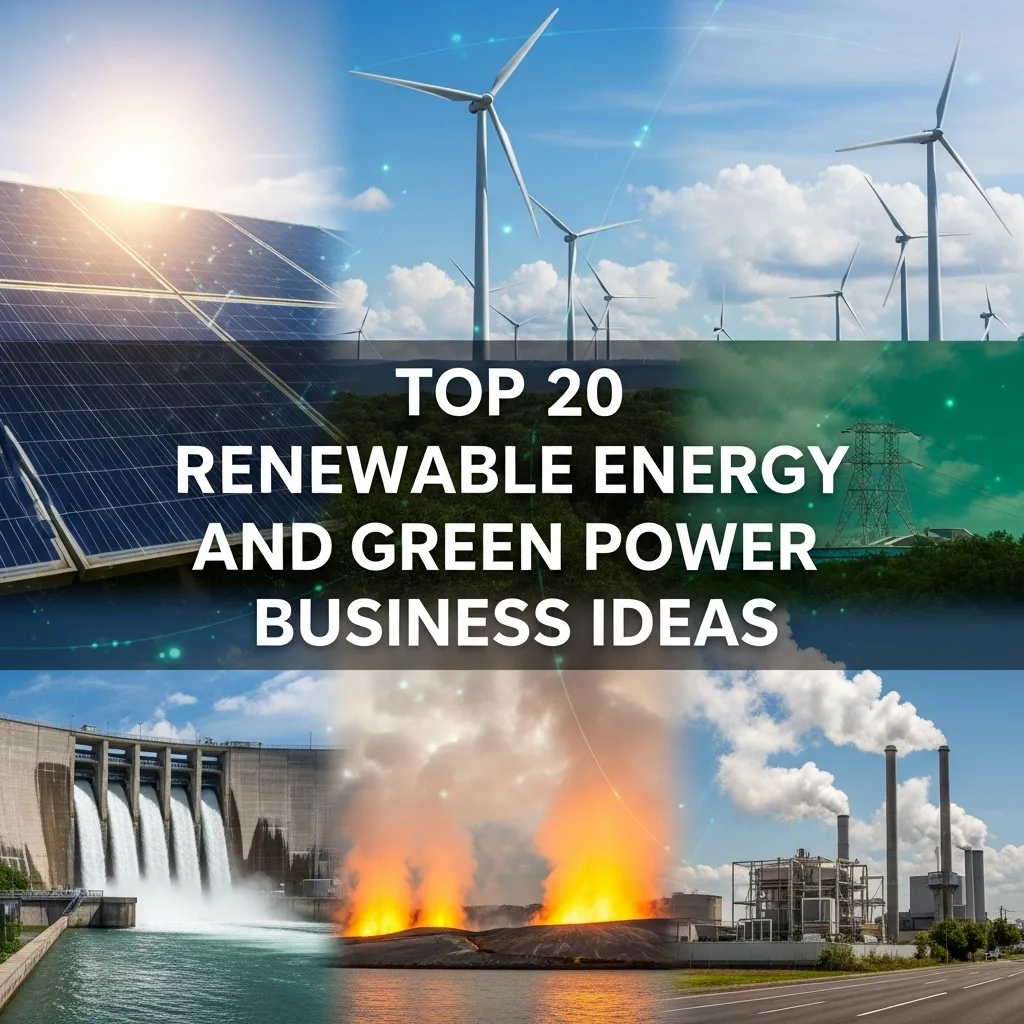
India is moving quickly to develop its renewable energy sector more than ever. The Indian government is taking strong measures to reach net zero emissions by 2070 while constructing 500 GW of renewable energy capacity by 2030.
Due to these significant goals, the clean energy sector is now being flooded with new opportunities for venture creation. Hence, renewable energy is steering India’s green future with solar power, wind energy, biofuels, and hydrogen. Hence, this field is more than ample for investors and startups to pursue for both sustainable and profitable business opportunities.
Manufacturing of Solar Photovoltaic (PV) Modules
By synthesizing sunlight, these solar PV modules convert sunlight into electricity. Hence, with India’s increasing power demand, this business is highly profitable. Besides, government support on domestic manufacturing and export possibilities fluctuate the profitability prospects of this venture further.
Hence, small- and medium-sized manufacturing business owners may find themselves in a profitable predicament if the modules are also targeted. Long term profits, coupled with growth and uninterrupted demand for modules in various sectors suggest these modules are in demand.
Solar Rooftop Power Plants
Solar systems mounted on rooftops are gaining popularity as an option for both households and companies to reduce costs and emissions. Also, several government subsidies make this option inexpensive and easy to implement.
To attract both home and business clients, startups can install solar panels, provide servicing, and offer simple financing. These systems provide savings on electricity costs while producing clean energy. This demonstrates that solar rooftops systems are simple yet lucrative business opportunities in India.
Solar Water Heating Systems
Solar water heaters are capable of capturing Sun’s energy and use it to heat water for home use in the case of individual households, and patients, as well as in hotels and hospitals on a larger scale.
These systems are preferred when it comes to the reduction of electricity bills and overall pollution as a result of their running costs and prolonged lifespans. To achieve bigger targets, an entrepreneur can start with small scale units and later collaborate with housing societies or large institutions.
It can be concluded that this venture is capable of providing not only monetary gains, but also assists India in achieving their green energy goals.
Read Our Book: Click Here
Manufacture of Wind Turbines
Wind energy has some of the lowest costs of generation and is one of the cleanest sources of energy available. Considering India has a long coastline and several windy regions, there is great potential for the manufacture of turbines.
Small and medium turbines can be produced by startups for villages, and gradually diversify into larger models for power utilities. Moreover, the business takes care of rural electrification as well as the industrial power supply.
Thus, wind turbine manufacturing business is bound to have sustained growth and strong international market competitiveness.
Development of Wind Farms
Wind farms provides clean and renewable electricity to several communities and industries. Due to favorable government policies and consistent tendering for projects, the business promises strong potential.
Entrepreneurs can acquire land in windy regions and collaborate with partners, investors, or utility companies to execute the projects. In addition, they can sell electricity under long-term supply contracts. Thus, wind farms provide resilient income and reduce the carbon footprint, as well as be a sustainable energy source for generations to come.


Biomass Power Plants
Biomass power plants manufacture electricity utilizing both agricultural by-products and crop residues. Given thair large agricultural waste production, India’s biomass power is both inexpensive and environmentally beneficial.
Biomass entrepreneurs have the opportunity to establish mini plants in the vicinity of agricultural areas thereby ensuring a constant supply of raw materials.
In addition, biomass projects allow residue burning farmers to earn additional income and also diminish pollution. Hence, it fosters rural development by offering biomass electricity and supports the underlying philosophy of integrated rural development.
Biogas Production Units
This is the transformation of organic waste into a clean source of energy and a natural fertilizer. Biogas is also a wonderful substitute for liquified petroleum gas and facilitates better waste management. Farm, dairy, and even municipal biogas plants can be established by young entrepreneurs.
Profit can be generated through the sale of gas and dried compost. Moreover, the production of biogas offers substantial profit while promoting a sustainable, waste recycling circular economy. Thus, biogas production simultaneously attains profit, eco-friendliness, and improved social conditions.
Read Our Project Report: Click Here
Production of Biofuel (Ethanol and Biodiesel)
The immense interest in biofuels stems from the blending policy of ethanol in India and the increasing cost of traditional fuels. These fuels auger well for the environment as they reduce the reliance on fossil diesel. Entrepreneurs have an opportunity to produce ethanol or biodiesel from jatropha, sugarcane, and even from used cooking oil.
Furthermore, they have the potential to service domestic as well as international markets. Due to the policy support and increasing demand, biofuel production continues to be among the most lucrative renewable energy ventures in India.
Mini and Micro Hydropower Projects
Electricity from the mini and micro hydropower plants is generated from small rivers and streams. These sources have the advantage of requiring very little land, and they produce steady output, making them ideal for rural electrification.
Entrepreneurs can work with local governments or cooperative associations to bring power to the more remote villages. In addition, the plants have very little adverse environmental impact. Therefore, hydropower projects provide employment, clean energy, and contribute to equitable development across regions.
Geothermal Energy Projects
Electricity from geothermal plants is from the heat that is generated from the core of the earth. India is new with this kind of industry but it is highly beneficial. Businessmen can start with intermediate projects around the Himalayas or volcanic areas and eventually progress towards industrial power generation.
Furthermore, the interest of the government in funding the research of clean energy makes this industry favorable for initial investors. Hence, in future, geothermal energy will significantly enhance India’s renewable energy resources.
Waste-to-Energy Equipment
Waste-to-energy plants is the solution of two problems which is the generation of power and disposal of waste. With modern cities facing great problems with the disposal of landfills, this technology is of great importance. Businessmen can collaborate with city governments to create power plants that generate electricity from waste.
In addition, such collaborations are largely in the form of public-private partnerships with favorable policies. Therefore, waste-to-energy projects are a source of revenue, increasing urban cleanliness, and generating renewable power.
Read More: Top 20 Green Energy Business Ideas
Units for the Production of Hydrogen Fuel
Hydrogen is predicted to be the fuel of the future. The industry is growing rapidly since the launch of the National Green Hydrogen Mission in India. Start-ups can establish wind and solar powered, renewable energy small plants to produce and hydrogen and fuel for industrial and transport users.
Also, the hydrogen fuel industry opens great possibilities for export. The sector is, hence, high growth, government backed and offers the unparalleled opportunity to pioneer clean fuel technology.
Solar Powered Cold Storage Facilities
Following harvest, a significant amount of produce goes to waste in India due to a lack of adequate storage facilities. The diesel fuel powered cold stores, improves the diesel cold storage problem. Such units can be set up by entrepreneurs and maintained in agriculture deficient regions, where they can then be leased to cooperatives and traders.
This business, in addition, can create a net work distribution across agricultural regions. This business, on the otherhand, averts food wastage, facilitates farmers and creates net positive income throughout the year by offering storage facilities.
Solar Powered Desalination
A prominent issue in coastal regions and islands is the scarcity of freshwater. Desalination plants that use solar energy convert sea water to usable water. This system can be set up by new organisations serving the local communities or tourist oriented establishments.
The units, in addition, create an avenue for the use of renewable energy by offering affordable clean water supply. This business, thus, promotes sustainability, pure profit and addresses the pressing issue of water scarcity.
Hybrid Renewable Energy Systems
Whereas most renewable energy systems suffer from intermittency, hybrid systems integrate solar, wind, and battery energy storage to ensure constant energy output and availability. Their functionality twenty-four hours a day, seven days a week improves system reliability, and adds to grid stability and security.
There is also an entrepreneurial opportunity to construct hybrid microgrids systems in rural areas, industrial parks, and even at tourist resorts. Plus, there is also the opportunity to construct intelligent system which minimizes the use of non-renewable energy sources.
Consequently, hybrid systems provide an assurance of energy availability while guaranteeing substantial profitability in the long-run.
Read More: Top 10 Emerging Green Business Ideas for Aspiring Entrepreneurs
Energy Storage Solutions
Energy storage assists in the balancing of the energy systems supply and demand, which is a challenge faced in most renewable systems. There is a growing demand of batteries for electric vehicles and solar farms, which makes battery production highly consequential.
Startups can specialize in the production of lithium-ion and sodium-ion batteries for electric vehicles and other energy storage applications. They would also provide battery recycling services for batteries that have been exhausted and/or used.
Therefore, it is a safe a safe bet that participating in energy storage systems will ensure that there is system profit and long-term demand.
Renewable EV Charging Stations
Renewable energy powered chargers should be placed at electric vehicle parking and battery swapping terminal to charge the vehicles while the passengers go about other activities. This saves the users valuable time, as charging stations are usually the biggest time-usage.
These chargers can be solar and wind powered, which makes them green and highly efficient. There is opportunity available for setting them at highway parking, office buildings, and shopping malls.
By integrating fast charging and online payment functionalities, these systems also save users a lot of time. As a result, renewable energy powered charging systems have high promise for profit as well as significant customer demand.
Read More: 50 Green Business Ideas for Aspiring Entrepreneurs
Projects of Green Hydrogen
In industries like cement and steel, green hydrogen has the potential to serve as a replacement for fossil fuels. It additionally stands to create, and sustain, export opportunities as demand continues to grow globally.
Industries are able to establish hydrogen production facilities adjacent to industrial centers, supplying infused energy to major consumers. Furthermore, India’s Hydrogen Mission provides substantial funding and policy support. As a result, projects focused on green hydrogen will unlock immense business potential while advancing industrial decarbonization.
Algae-Based Biofuel Production
Algae can produce biofuels using only sunlight, water, and carbon dioxide. It grows fast and even treats wastewater. Entrepreneurs can build algae farms to produce fuel, fertilizer, and biomass.
Moreover, this business supports environmental conservation. Consequently, algae-based biofuel offers innovation, sustainability, and high profitability at the same time.
Smart Grid and Energy Management Systems
Smart grids improve electricity efficiency and prevent power loss. Because digital technology is advancing rapidly, this sector has major potential. Startups can develop AI or IoT systems to monitor, predict, and manage renewable energy flow.
Furthermore, these tools help utilities save energy and money. Hence, smart grid solutions combine innovation, technology, and strong demand in one profitable package.
How NPCS Supports Renewable Energy Businesses
Niir Project Consultancy Services (NPCS) helps entrepreneurs start renewable energy ventures with confidence. It prepares detailed project reports, feasibility studies, and complete market analysis.
NPCS also includes process charts, equipment lists, and full financial projections. Moreover, it helps assess risks and profits before investment. Therefore, NPCS provides expert guidance and ensures smooth execution from planning to operation.
Find the Best Idea for Yourself With our Startup Selector Tool
Conclusion
Renewable energy is reshaping India’s economy and environment. Every project—from solar roofs to green hydrogen—offers great potential for innovation and profit. Because of strong government policies, new technologies, and expert help from NPCS, startups can easily enter this market.
Therefore, renewable energy businesses not only earn well but also build a cleaner, brighter, and more sustainable future for India.

FAQs on Renewable Energy Startups
1. What is the most profitable renewable energy business in India?
Solar module manufacturing and rooftop installations bring the highest profits due to strong demand and incentives.
2. How much capital is needed to start?
Small solar projects need ₹10–20 crore, while large plants may require several crores depending on size.
3. Are there government incentives for startups?
Yes, schemes like PM-KUSUM and the Hydrogen Mission offer financial and tax support for renewable projects.
4. Can renewable projects attract foreign investors?
Absolutely. India allows 100% foreign investment in renewable generation and manufacturing.
5. What is the long-term future of renewable energy in India?
By 2030, renewables will supply nearly half of India’s electricity, creating jobs and boosting exports.