


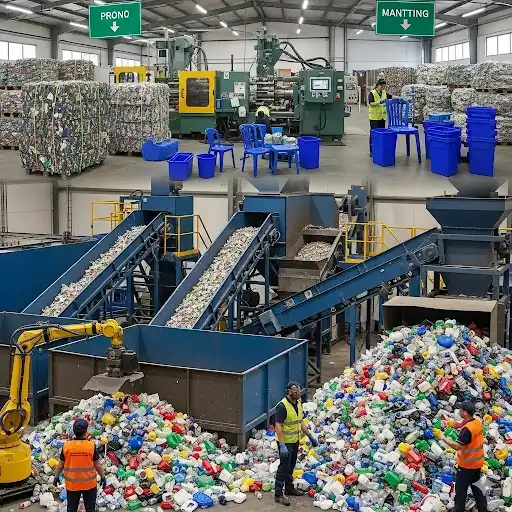
Like the fastest growing industry for sustainability. Government organizations and corporations spend a lot on machines deployed for use in an effort to lead de-politicization.
Plastics have the ability to create completely recyclable goods every time you think it should use plastic. Using large properties resistant to high temperatures and preferably suitable for immediate disposal, because it was often the best way to solve the problems of waste.
Although we cannot neglect the gene effect of biodegradability of synthetics due to the large toxic discharge.
The advantage of a much better strategic position from the global area for the overall growth of the industry to comply with strict regulations on environmental output and strategies to raise awareness of the new shape of the circular economy.
Development looks full paths through innovations that provide new approaches to plastic recycling. Attracts the potential for innovation; Companies that will invest in sophisticated technologies and systematic collection settings.
Plastic Recycling: Key Industry Drivers
The rapidly growing increase in the industry is attributed to many factors-from them are the world-changing interest in land waste and the necessary research in the limited nature of soil burial and other waste.
Large paternal social projects from maternal countries that want to save the world from unsatisfactory performance of waste generators who cannot maintain appropriate wear, scars or waste care?
In many cases, EPR has entered the game. Manufacturers must take responsibility from now on. Induced plastics are used in many industries with this packaging strategy; This will be even more abandoned because the growth of industries will rest for virgin plastics by promoting Down-Stream recycles.
Many other wills, such as eternity safe for souls, for the nutrition of the unfortunate. Crucification of plastics, which were considered non -recyclable, must be provided by technological advances in sorting and even chemical reception.
Read More: How to Start Recycling Business of Waste Plastics
Plastic recycling of companies: challenges
Since the future of the segment is clear, the challenge cloud still hangs along its horizon. All these challenges should be the main for these entrepreneurs. Problems include an ineffective system of waste collection and department.
Recycled shredded plastics often find mixed waste so that processing costs could become very high and thus defeat the purpose, because many eventually destroy from the inside. This ineffectiveness caused many recycling races to fight for high -quality and consistent ingredients for themselves.
Another accident block in the discussion of the establishment and operation of the plastic recycling plant is the cost factor, with the notion that consultations with high expenditure are often necessary to create high -capacity machines, which is associated with advanced sorting mechanisms and specialized units.
There is no disadvantage for beginning companies.
It is not enough at this point. Several companies seem to hesitate to use recycled materials just because of concerns about durability and quality, but then welcome innovations that would solve the problem. As a result, companies are strategic because the market is highly competitive with fluctuating demand. Ditto at unstable prices.
There’re not much also for disadvantage for the start-up businesses.
At this point, it gets unstylized. A few companies seem hesitant in using recycled materials just because of concern about durability and quality but then welcome innovation to address the problem. As a result, companies strategize as the market is highly competitive with fluctuating demand. Ditto for unstable prices.
Read More: Profitable Plastic Waste Recycling Plant Business Opportunity
How to start plastic recycling
Start with the fact that every successful set of plastic recycling is achieved by a well -planned step by step implementation. First, perform a study on the market to find out local buyers and if they appreciate the demand for these recycled products in the near future.
The entrepreneur should turn to this part whether the next step is, as soon as it is reasonably decided, mechanical or chemical recycling. Mechanical recycling includes plastic shredding and then pelletizing. Chemical recycling with density dissolves plastic into its components for reuse.
The cameras use their languages after learning how to concentrate and clarify and confirm every part of the things they want. Invest the resources hard in the garbage collector, upgrade them using suitable types of materials. They helped discuss many other arguments on the processing strategy, for which one also assumes financial evidence that in itself create a current strategy for different levels.
Getting a good position is very vital. It must be close to potential buyers and suppliers of raw materials (waste).
Read Our Project Report: Click Here
Marketing also plays a key role. Recycling companies should emphasize their sustainability and develop relations with industries. Such as building, packaging and textiles that require recycled plastics. By creating quality and innovation, you can build confidence in the market.

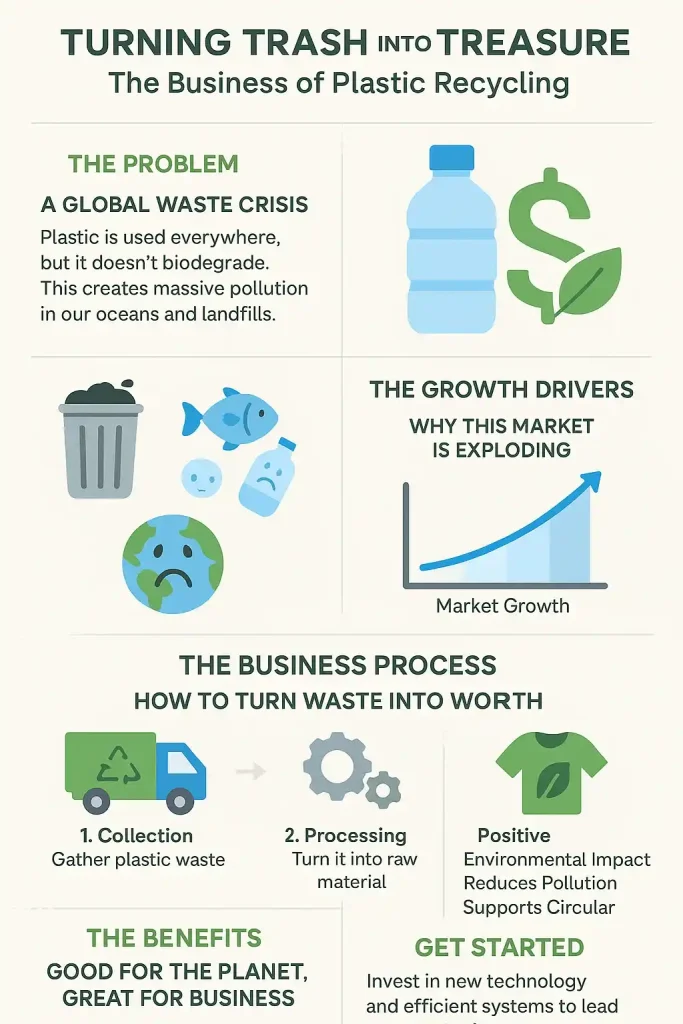
Plastic recycling: proven procedures for success
Businesses that are successful in recycling are those that focus on efficiency and innovative ideas. The quality of these goods can be improved by investing in technology sorting and cleaning. Marking campaigns and community awareness can help increase the waste department at the source. This will reduce processing costs.
It is important to have a strong supplier chain. A permanent stream of plastic waste can be ensured by partnership with local communities, municipalities and waste management companies.
The diversification of their product offers is another way of succeeding in successful recycling companies. They produce pellets, leaves and fibers or even finished goods such as furniture and building material.
Keep a step with the latest government policies and adherence. Many regions provide tax incentives or financial incentives to companies in the recycling industry.
Read Our Book: Click Here
Industry: Opportunities for growth
Plastic recycling offers many opportunities to grow. Recycled plastic is becoming increasingly popular across industries, as global trends will move towards environmental and zero waste.
Companies are used to achieve more and more recycled content to achieve sustainability goals. Manufacturers also experiment with composite and biodegradable plastics.
Recycling technological innovations also open new business opportunities. The chemical recycling industry has enormous potential, as it can also break down complex plastics and use it again. Businesses can explore the possibility of manufacturing products with added value from recycled materials.
These include high -quality fabrics, building panels or 3D fibers. Digital platforms and supplier chain monitoring systems facilitate the buyer. They easily find recycles and create organized marketplaces for recycled goods.
Find the Best Idea for Yourself With our Startup Selector Tool
Conclusion
Plastic recycling is no longer just a niche or a small company. In the global economy it has become the main force. Businesses that are able to recycle and use plastic waste have great potential. Environmental regulations are tightening and consumers require sustainable products.
Innovations and planning can help turn challenges such as high setting costs and inconsistent supplier chains into occasions. Entrepreneurs who enter this area have the opportunity to create profitable businesses and contribute meaningfully to environmental protection. This will prepare a way for circular economies.

Plastic recycling: often answered questions (FAQ)
Q1. How much investment is needed to start plastic recycling business?
The investment depends on the scale. Small units may only require modest funding to cover basic equipment and space. Extensive equipment with advanced sorting technology and chemical recycling can require much more.
Q2. What types of plastics can be recycled?
Some plastics are too complex to recycle through chemical methods. Others can be processed mechanically.
Q3. How do recycling companies make money?
They earn revenue from the sale of recycled plastic leaves, pellets, fibers or finished products. Business can receive government incentives, retreats or contracts with companies that need recycled content.
Q4. What are some of the biggest challenges you face in running a recycling company?
Key challenges include inconsistent waste collection, high setting costs, market demand and quality control problems. Proper planning and partnership can help alleviate these risks.
Q5. Is the plastic recycling trade environmentally friendly?
Plastic recycling is environmentally friendly. Reduces waste of greenhouse gases. This is the best way to reduce the environmental damage caused by plastics.