


There is few fields as changed at the same time as much as nanotechnology has changed the modern engineering and materials science. It started as a niche research area but has expanded to electronics, energy, health care, aerospace and advanced manufacturing. Nanotechnology is becoming a “frontier” for researchers, technocrats and entrepreneurs who must keep up with the progress of materials science, and has real commercial implications.
A Technology Reshaping Multiple Industries at Once
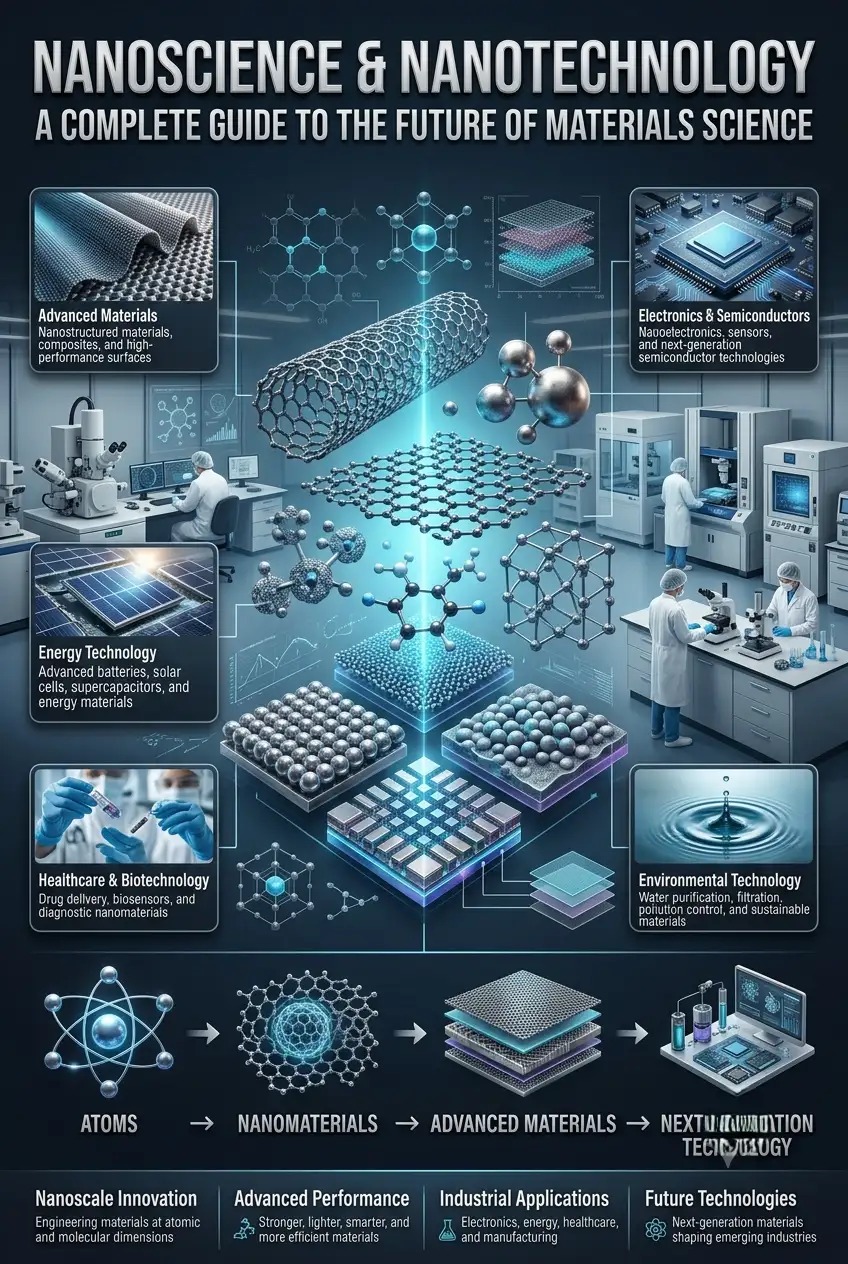
At the core of nanotechnology lies the capability of building systems with function at the molecular and atomic level. When it comes to applications, that’s where it’s already being used: stronger, lighter composites for aircraft and automotive parts; faster, more efficient semiconductors for electronics; drug-delivering composites for biomedical research; and next-generation materials for energy storage and nuclear applications.
This field is unique in its breadth of sector coverage. In contrast to most industrial technologies that remain confined to a single vertical, developments in nanomaterials have the potential to spread out: A new advance in the characterization of nanowires can have a ripple effect on electronics manufacturing as well as on the design of biomedical sensors. That is why it is a subject that is still continuing to receive research funding and industrial interest worldwide, even in India’s burgeoning materials science and advanced manufacturing industry.
Market Demand and Industry Momentum
The commercial motivation behind nanotechnology is that the nanomaterial may be stronger, more conductive, more reactive or more efficient than the conventional material, but consume much less of the material. It is this performance boost that has kept nanomaterials as the main focus of R&D pipelines in electronics, chemical, defense, and energy industries.
The nano materials segment has been consistently one of the fastest-growing sectors of the larger materials science sector, consistently reporting growth in the double digits over the past ten years in several materials market assessments. The relevance of this for India is two-fold: as a large pool of contract research and materials production capacity, and as a demand for home-grown innovations in electronics, energy storage, and advanced coatings.
Future Opportunities and Emerging Trends
There are a number of trends that are defining the next steps of nanotechnology, and all have implications for researchers and entrepreneurs:
- Nanoelectronics and miniaturization: Today, miniaturization and nanotechnology are becoming critical factors in the design of next generation chips and devices, as traditional scaling of semiconductors is coming to its limit.
- Nanostructured materials are also being increasingly used in energy-related applications such as batteries, solar cells, and coatings that are energy efficient.
- Biosensors, diagnostics, and drug delivery using nanoparticles are one of the fastest growing application areas in biomedical and healthcare applications.
- The use of advanced materials and composites: The use of nanocomposites is still increasing in industries such as aerospace, automotive and defense due to its strength-to-weight performance enhancement.
- Research-to-commercial pipeline: There is an increasing number of innovations in the field of nanomaterials that are transitioning from lab-scale research to pilot and commercial production, making technically competent entrepreneurs and startups more appealing.

Business Potential for Researchers, Entrepreneurs, and Investors
Nanotechnology is a very special area of the innovation world because both strong scientific knowledge and business savvy are rewarded. If you’re a businessman or investor weighing this field, the options are pretty limited: equipment for manufacturing nanomaterials or nanocomposites for industrial applications, niche characterization and testing services, licensing of a formulation containing nanomaterials, or a research contract with a larger company in electronics, energy, or health care.
But without strong technical skills, none of these paths can be entered. A shallow understanding of nanotechnology does not necessarily lead to an actionable business or research plan: there are many synthesis pathways, characterization techniques and structure-property relationships that must be carefully, solidly established before they can be exploited in a commercial application.
Where Researchers and Entrepreneurs Often Get Stuck
There is one particular wall that everyone seems to bump into when they enter the nanotechnology world, from a research or business perspective—there’s a host of different techniques and material systems and getting a coherent, applied understanding from the various academic papers is really challenging. Questions regarding characterization of nanowire, carbon nanotube behaviour, properties of nanocrystalline films or formulation of the nanocomposite require a consolidated reference material, not just snippets of journal articles.
This is exactly the space where a well-structured, application-oriented handbook earns its place on the shelf.
Introducing the Nanoscience and Nanotechnology Handbook
The Nanoscience and Nanotechnology Handbook, from H. Panda, published by Asia Pacific Business Press Inc. (a sister publishing house of NIIR Project Consultancy Services), has been designed to deliver just such a comprehensive, hands-on foundation in a single resource. The handbook covers a large range of nanomaterial systems and provides a collection of experimental research, structural characterization data, and applied insights in a single place, with 608 pages.
The book covers topics such as design of protein-based nanomachines, metastabilities in nanocrystalline silicon, nanoscale characterization of nanowires, thermopower measurements on nickel nanowires, multi-walled carbon nanotube emitters, nanoporous electrodes, nanocrystalline silicon films, carbon nanotube dispersion, nanocomposite film conductivity, and the magnetic properties of nanospheres.
The handbook is organized in a consistent, applied format (experimental methods, results, structural analysis and discussion) that is more like a working guide for those who engage in hands-on research work or want to evaluate the potential application of nanomaterials in industry.
What You’ll Find Inside
- Design and characterization of protein-based nanomachines
- Metastabilities and structural behaviour in nanocrystalline silicon
- Nanoscale characterization methods for nanowires, including morphology and periodicity analysis
- Thermopower and electrical property measurements on nanowire systems
- Carbon nanotube emitter fabrication and current-voltage characteristics
- Nanocomposite film conductivity and magnetic nanosphere properties
- Applied research spanning electronics, materials engineering, and nanostructure fabrication
Who Should Read This Handbook
This handbook is built for:
- Researchers and academicians working in materials science, nanotechnology, or applied physics
- Engineering and R&D professionals in electronics, energy, or advanced materials industries
- Entrepreneurs and investors evaluating nanotechnology-based ventures or manufacturing opportunities
- Graduate students and technical professionals seeking a consolidated, experiment-based reference
- Consultants and technocrats advising on materials innovation or nanotech project feasibility
Why This Handbook, Why Now
Nanotechnology’s trajectory is not slowing down — if anything, the range of practical applications keeps expanding as fabrication and characterization techniques mature. For anyone trying to build real expertise or evaluate a nanotech-linked opportunity, having a single, well-organised reference that ties experimental methods to real material systems saves a considerable amount of time that would otherwise go into piecing together fragmented sources.
This handbook is built to function as exactly that kind of working reference — one to return to across different stages of research, product development, or technical evaluation.
Purchase the Handbook
The Nanoscience and Nanotechnology Handbook is available now.
Author: H. Panda
Publisher: Asia Pacific Business Press Inc. (APBP)
Price: ₹1,675 / US$ 44.95
You can purchase the handbook through the following channels:
- NIIR / NPCS Website: Buy on niir.org
- Amazon: Buy on Amazon.in
- Flipkart: Buy on Flipkart
If you’re researching, teaching, or building something in the nanotechnology space, this handbook is worth having close at hand. It’s a working reference, not a casual read — built to support real technical decisions, not just background reading.

Your Investment Deserves the Right Opportunity
Every serious investment begins with choosing the right sector and the right business model. With hundreds of industrial opportunities available across India’s manufacturing and clean-energy landscape, making the most informed choice is crucial. Niir’s Startup Selector tool helps entrepreneurs, MSMEs and investors identify the most suitable business opportunities based on their investment capacity, location and interests, ensuring their capital is directed toward the venture with the best fit.