


Maize Wet Milling India
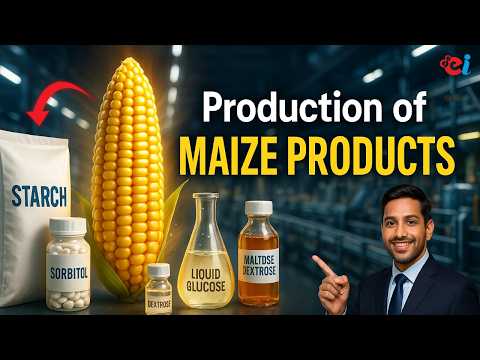
The corn processing industry in India operates through a gradual process of fundamental changes which is now underway. The use of maize as a feed material for poultry operations and its trade as unprocessed grain have been the main market outlets until now but the crop is beginning to establish itself as a vital agricultural product. Today, corn-based derivatives, such as starch, glucose, dextrose and sorbitol, are essential raw materials for pharmaceuticals, processed foods, textiles, paper, adhesives and personal care products.
The agro-processing sector has developed into a primary industry for maize wet milling operations. India’s corn processing sector serves as an attractive investment opportunity because domestic demand grows while the country depends on imports for high-purity derivative products.
Read More: Maize (Corn) Products in India (Starch, Glucose, Dextrose, Sorbitol) Trends, Opportunities, Market Analysis and Forecasts (Upto 2030-31)
Maize Production Base for India
As per official data of the MoA&FW, India produces more than 36 million metric tonnes of maize every year. The country is one of the leading producers of maize in the world, where cultivation is spread in various regions of Karnataka, Madhya Pradesh, Maharashtra, Telangana, Andhra Pradesh and Bihar.
The agricultural sector develops strong agricultural resources which result in less than 25 percent of maize production being transformed into commercial products. A majority of production is still diverted towards:
- Poultry and animal feed
- Direct human consumption
- Trading and exporting of raw grains
This low level of value addition indicates a structural gap between agricultural production and industrial utilization.
Industrial Demand for Corn Based Products
Maize wet milling is a procedure which transforms raw corn into multiple value-added products that various downstream industries utilize.
Important Products and Applications
- Maize Starch
Used extensively in textile warp sizing, paper and paper board manufacturing, pharmaceutical tablet binding and food processing.
- Liquid Glucose
A critical ingredient in confectionery, bakery fillings, jams, jellies, dairy products and beverages.
- Dextrose Monohydrate
Widely used as an intravenous fluid, in fermentation processes, oral rehydration salts, and sports nutritional products.
- Sorbitol
A high value derivative used by toothpaste manufacturers, cosmetic formulators, vitamin syrups and nutraceutical brands.
Rising consumption of processed foods, growth in domestic pharmaceutical manufacturing and rising personal care markets have combined to produce a steady growth in demand for maize derivatives.(Maize Wet Milling India)
Read More: Maize (Corn) Products in India (Starch, Glucose, Dextrose, Sorbitol) Trends, Opportunities, Market Analysis and Forecasts (Upto 2017)
Major Growth Drivers of Corn Processing Industry
Several macro and sectoral trends are facilitating the growth of the maize processing industry in India in the long term:
- Booming production of processed foods and beverages
- Growth of India’s pharmaceutical production base
- Increasing use of starch based adhesives and bio-based ingredients
- Increasing demand from oral hygiene and personal care segments
- Policy focus on agro-processing and import substitution
Together these factors have led to a stronger business case for new maize wet milling capacity.
Leading Corn Wet Milling Companies of India
India’s organized maize wet milling capacity is concentrated amongst a limited number of large players. The structure of the industry is oligopolistic with less than ten companies responsible for a majority of installed capacity.
Read More: Maize, Corn and its By Products, value added Products, Derivatives, Maize Processing Industry, Corn Starch, Dextrose, Liquid Glucose, Sorbitol, Oil, Gluten, Germ Oil, Wet Milling, Maize Starch Plant & related Products, High-Fructose Corn Syrup (HFCS)
Major Industry Players
- Gujarat Ambuja Exports Ltd.
One of the largest agro-processing companies in India with an estimated capacity of maize wet milling of over 4,000 tonnes per day.
- Riddhi Siddhi Gluco Biols Ltd.
A leading manufacturer of starches, modified starches, glucose and sorbitol as having good domestic and export presence.
- Sukhjit Starch & Chemicals Ltd.
An established name in the field of starch and starch derivatives supplying textile industry, paper industry and food industries.
- Gulshan Polyols Ltd.
A leading manufacturer of sorbitol and specialty chemicals for the pharmaceutical and personal care markets.
- Roquette India Pvt. Ltd.
A multinational player in the sphere of high value starch derivatives and pharmaceutical excipients
Other important manufactures include Universal Starch Chem Allied Ltd, Tirupati Starch & Chemicals Ltd and Anil Ltd.


Capacity Insights
The top three companies have a dominant share of organized wet milling output
Capacity concentrating geographically in select states
Several industrial and pharmaceutical areas are still under-served
Read More: Maize Starch & Sorbitol Manufacturing in India: Import Substitution Opportunity for MSMEs
Domestic Processing vs Demand Gap
Despite sufficient availability of maize, India is still importing pharmaceutical grade of sorbitol, specialty glucose syrups and refined starch derivatives. This imbalance is most evident in pharmaceutical hubs like Gujarat, Telangana and Himachal Pradesh: local demand often exceeds domestic supply.
Key Reasons for the Gap
- Limited high purity refining and purification infrastructure
- Lack of regional processing capacity, close to demand centres
- Reliance on imports for stable quality requirements
- Increased logistics/procurement costs for manufacturers
Bridging this gap is also a major opportunity for domestic producers.(Maize Wet Milling India)
Investment Opportunity in New Maize Wet Milling Units
The gap between supply and demand has provided a good investment case for new entrants. Establishing integrated maize wet milling plants nearer consumption centers can bring multiple benefits.
Advantages of New Units Manufacturing
- Reduced transportation and logistics costs
- Faster response to regional customer demand
- Improving supply chain reliability
- Rather, strong import substitution potential
- Ability to serve pharmaceutical and food grade markets
Integrated facilities have the benefit of multiple revenue streams, as starch, glucose, dextrose and sorbitol can all be produced from the same raw material.
Integrated Maize Wet Milling Process
an average maize wet milling process operation:
- Steeping – this involves soaking maize kernels in water to soften the endosperm.
- Grinding & Separation – Germ, fiber, gluten and starch slurry are separated.
- Starch Processing – The starch is either refined and dried or sent for further conversion.
- Enzymatic Hydrolysis – Starch is hydrolyzed into glucose syrup.
- Downstream Conversion –
- Crystallization, dextrose monohydrate forming
- Hydrogenation results in sorbitol’s formation
Additional Revenue & By-Products
- Corn Germ Oil – for edible oil, and food formulations
- Corn Gluten Feed – Animal nutrition markets
Maximization of by-product utilization represents a useful aspect towards profitability of plants.
Read More: Why India Still Imports Sorbitol? Maize Processing Industry Capacity & Business Opportunity
Importance of Techno Economic Feasibility Studies
Maize wet milling operates as a business that requires both financial resources and advanced technological systems. Before investing, a detailed techno-economic feasibility study is important so as to assess:
- Raw materials availability and raw material pricing
- Technology selection and plant configuration
- Market Demand and product mix
- Capital investment and operating costs are
- Financial Return and Break Even Analysis
- Scalability and Future Expansion Potential
Professional feasibility reports help investors keep the capacity and risks to a minimum and realistically match capacity to market.
Market Outlook and Conclusion
India’s corn processing industry is poised for steady, long-term growth. Rising processed food consumption, pharmaceutical expansion and increasing use of maize derivatives in personal care products will continue to drive demand.
Maize wet milling operations enable agricultural advantages to create industrial processing which results in unique business possibilities. The sector provides MSMEs, startups and mid-sized investors with strong business opportunities which will help their companies grow while reducing dependency on foreign products and building local supply chains.(Maize Wet Milling India)
Frequently Asked Questions (FAQs)
Is maize wet milling profitable in India?
Yes. Integrated plants producing food-grade and pharmaceutical-grade derivatives are commercially attractive.
Why does India import sorbitol?
Due to limited domestic capacity for pharmaceutical-grade refining and regional supply gaps.
Can small entrepreneurs enter this sector?
MSME-scale projects become economically viable when planners develop effective plans for their operations.
Which states are suitable for new plants?
The states of Gujarat Telangana Maharashtra and Himachal Pradesh provide strong market needs along with complete infrastructure and industrial development systems.